What happened to me?
As a follow up to my previous blog post about what happened to my website I wanted to write a bit about what has been happening to and with me. After a peak in creative activity in 2019 a few things happened which greatly affected my ability to be creative.
2019 was good!
If you have been following my work for a while, or if you’ve read any of my Year in Review blog posts you’ll have seen a steady increase in creative activity over the years. The peak of this was probably 2019. I felt very much at a high point in terms of creative activity and general enthusiasm for life. Highlights of this year include my solo exhibition at Czurles-Nelson Gallery in Buffalo, an Algorave performance at SXSW, the British Library and Corsica Studios, and being in conversation with the amazing Howie Lee at HKW in Berlin. 2020 also got off to a great start with badcirculation doing a performance at ICLC in Limerick and then I did a performance at Cafe Oto.

From there, though, everything got worse. On a global level of course lockdowns and the pandemic started. It should go without saying that this was a terrible time for so many people. On a personal and creative level things started to go downhill.
NFTs, bro
The first hit to my creativity was NFTs. In 2020 I witnessed a fracturing of the digital art community due to the sudden popularity of NFTs. I’m actually no stranger to blockchain and NFTs. I had contributed some art to the Plasma Bears NFT project in early 2019, and had toyed around with the idea of blockchains being useful for copyright around 2016: Digital images, which can be infinitely duplicated, cannot easily base their value on their scarcity. So, a unique “non-fungible token” representation can hold the financial value. Similar to how a signed copy of a print can have more value than an unsigned print.
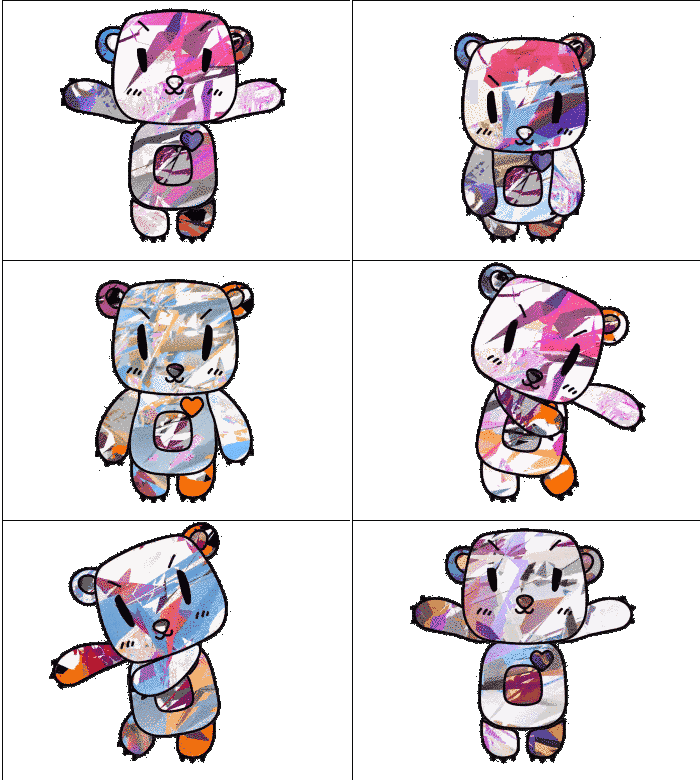
However, on an implementation level I felt and still feel that NFTs are just terrible! Beyond a few more community-focused initiatives e.g. hic et nunc all I could see in the NFT space in the early 2020s mirrored bitcoin, blockchain, and the NFT space more broadly: exploitation, opportunism, theft, and hoarding of resources.
Seeing artists you know and respect go all in on blockchains and NFTs was tough to see. Perhaps naively I thought that because we shared common interests around open source software, creative coding, and glitch art, we would also be wary of NFTs and tech bros.
With that said I was somewhat envious of the enthusiasm and energy that formed around the more community-focused NFT spaces. People posting “gm” and “wagmi” was a bit cringe, but artists were also excited by digital art again. People liked sharing and collecting NFTs from their peers. Sure, the amounts they were being sold for were in the $10s - $100s range, but people were happy. There was a sort of mutual support.
There were even some artists who were making significant amounts of money. A well-known artist (who I won’t name) who has been practising since the 90s chimed in to say that, because of NFTs, for the first time in their career they were finally earning a living. Who was I to challenge this, especially when the alternative was to continue struggling, and especially at a time when so many people were losing their jobs.
The debates carried on and I overall I felt demoralised and demotivated. So, I took a step back and for the most part I stopped making digital art. I wanted to do a monthly set of gif packs but, alongside my own poor planning skills, I just didn’t want my work to be associated with what I saw as a very toxic and volatile environment.
Down with the sickness
As the world slowly started to open up in mid-to-late 2021 and the NFT hype died down I started to get back into making art again. Then, in May 2022 I got quite ill. I lost a lot of weight and was admitted to hospital for a few days. I’ve been open about this with friends but I don’t really want to go into all of the details on my website and have a permanent public record of it.
The next two-to-three years of recovery were some of the toughest years. A lot of hospital/GP visits, medications and rest. I’m very thankful to all those family and friends close to me for taking care of me during this time.
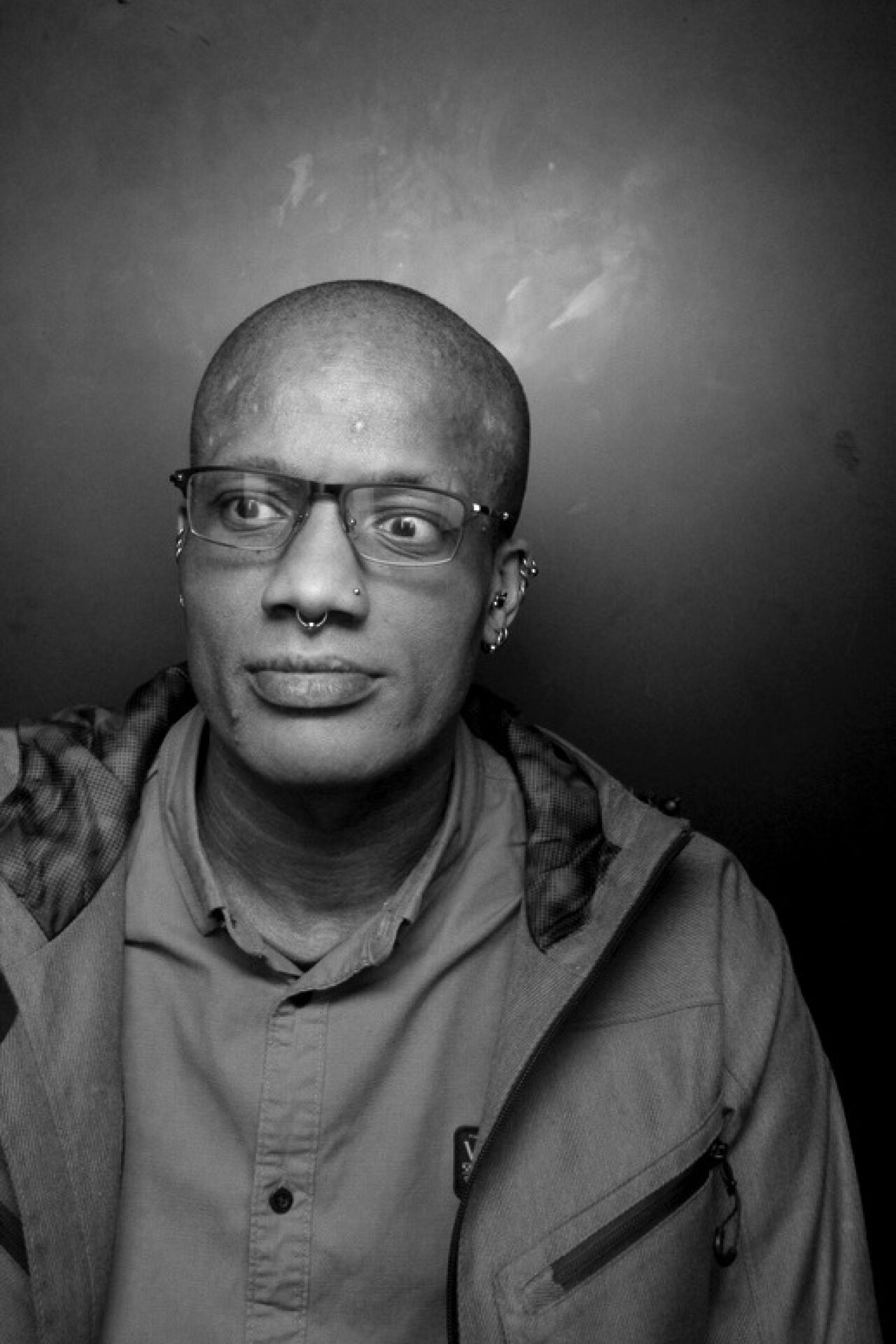
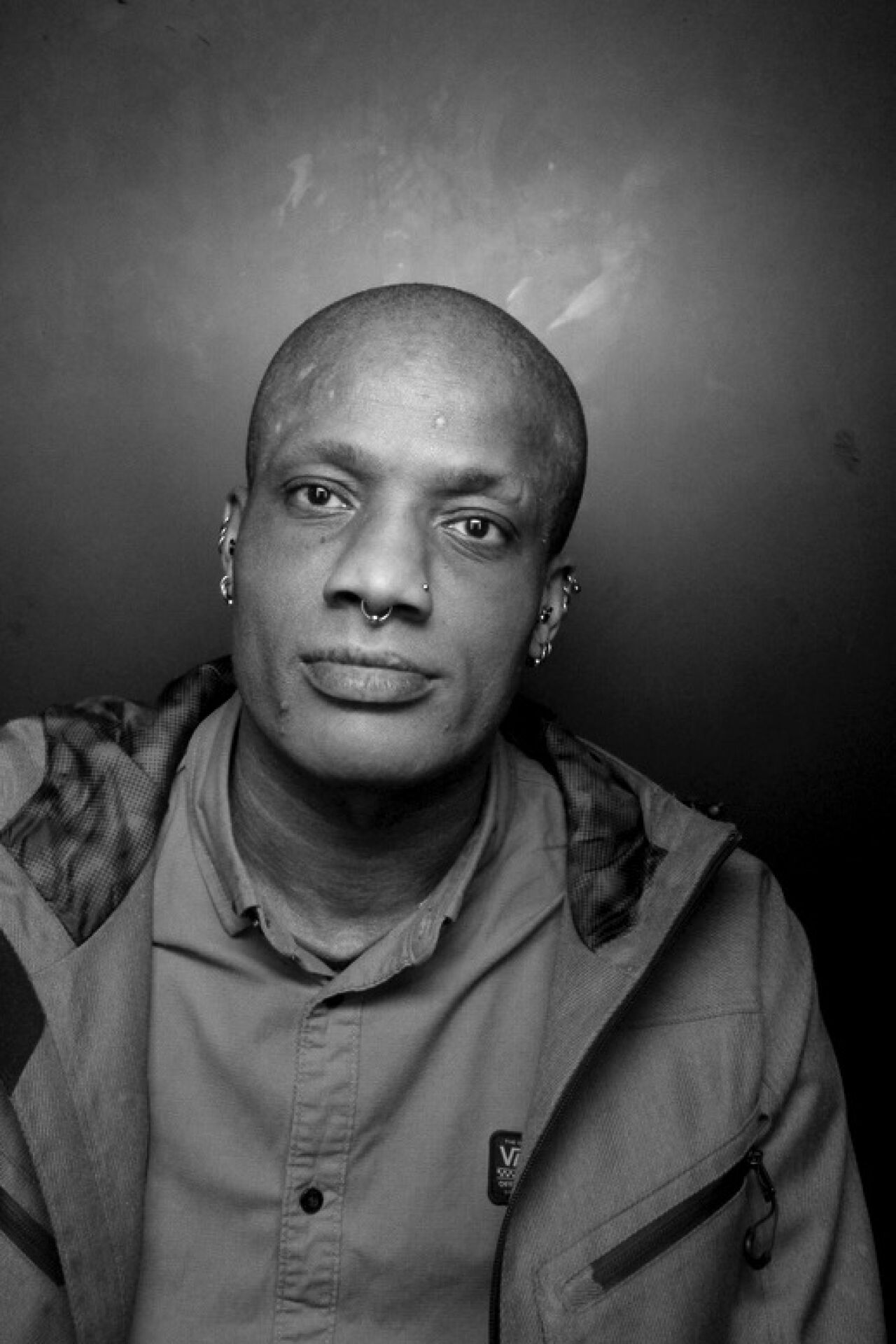
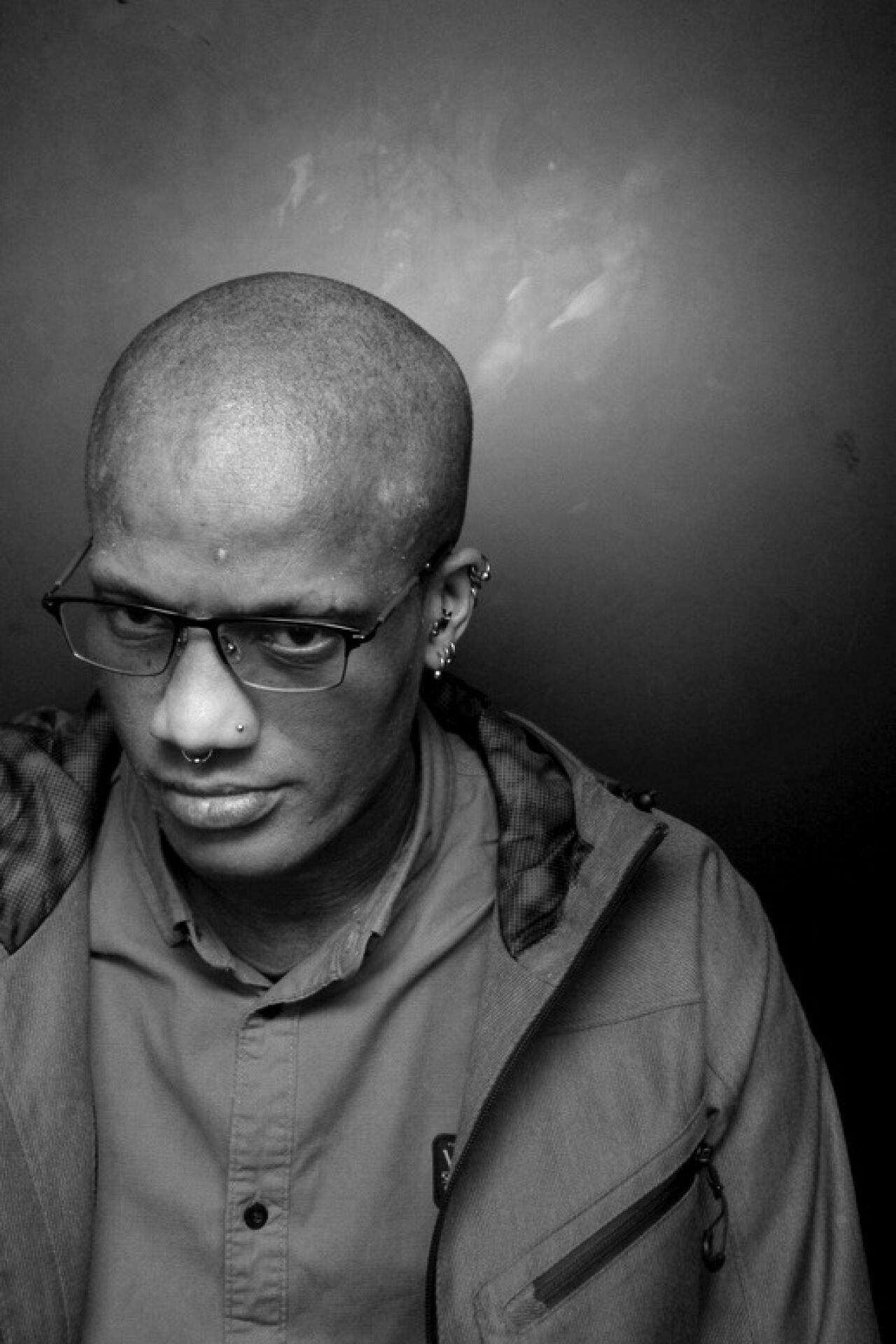
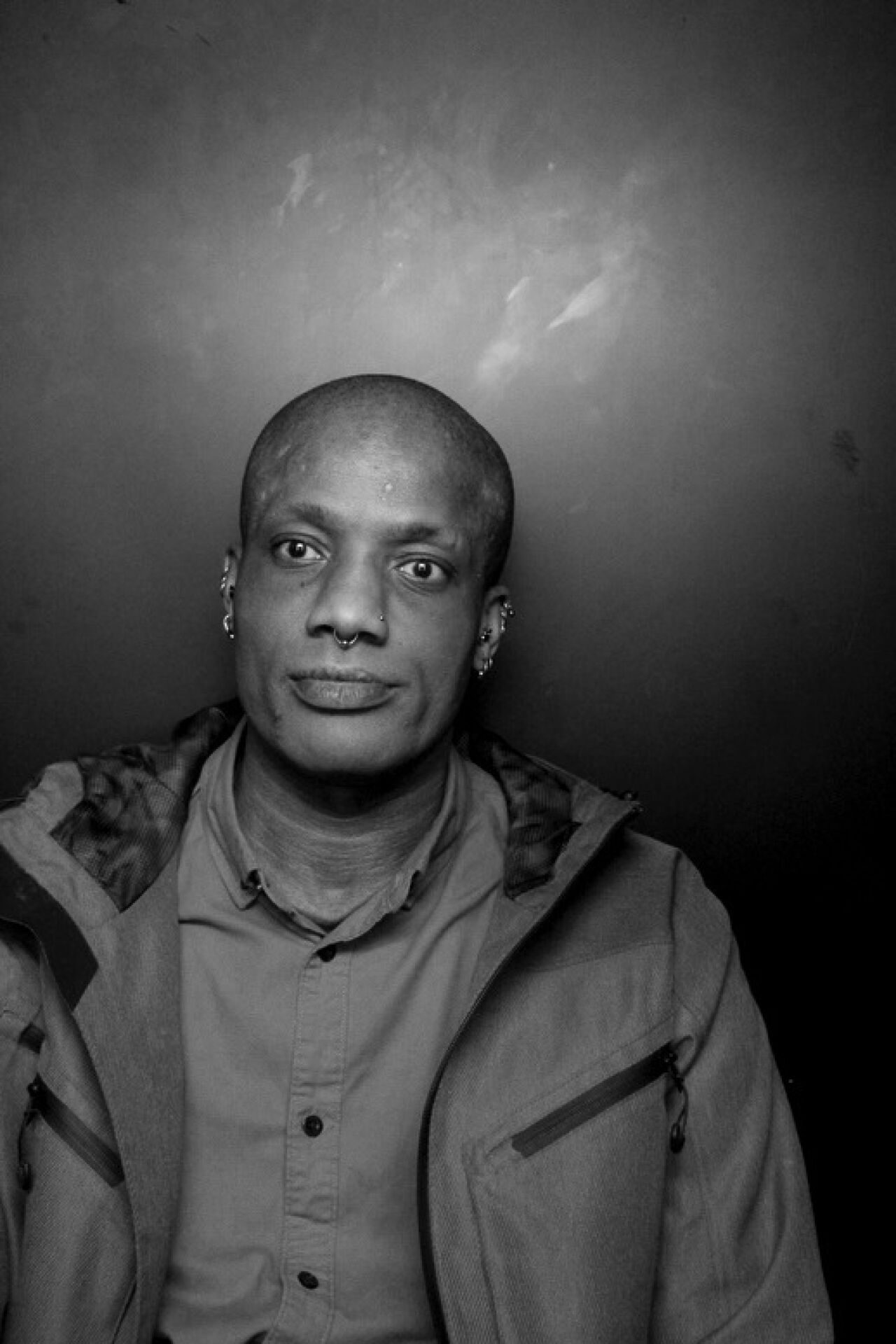
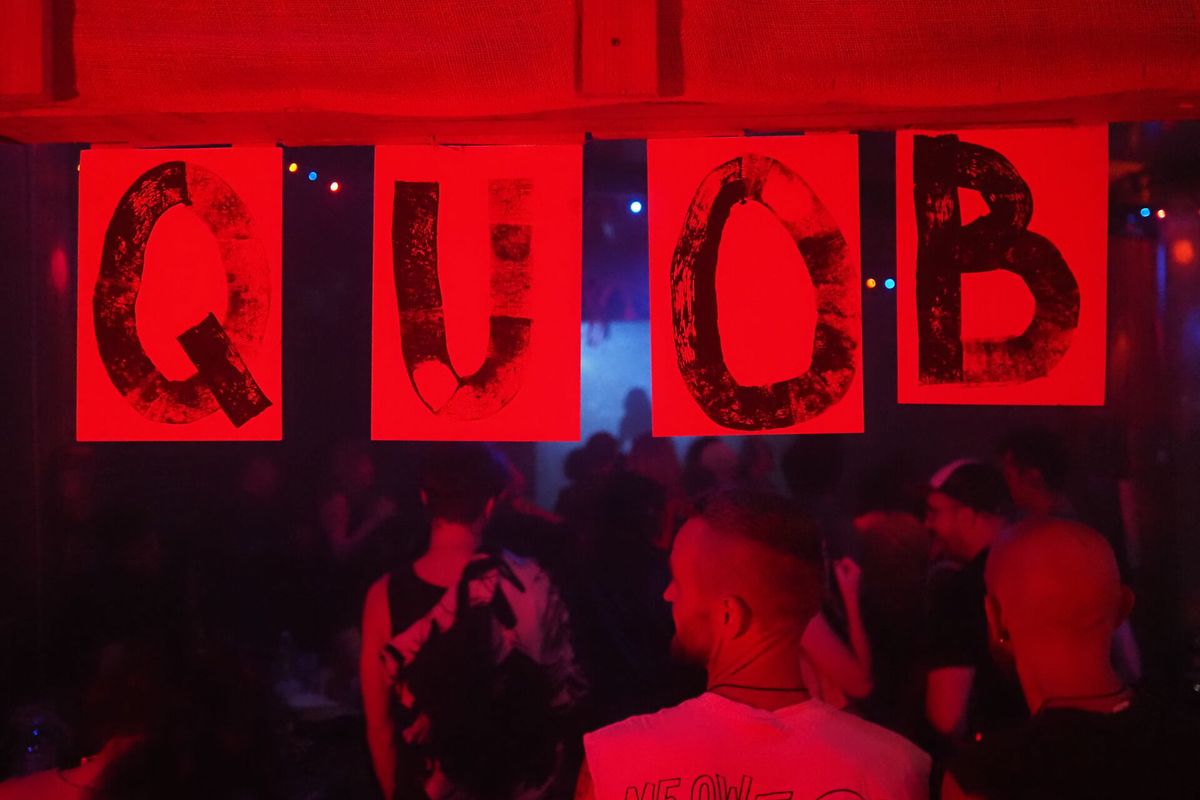
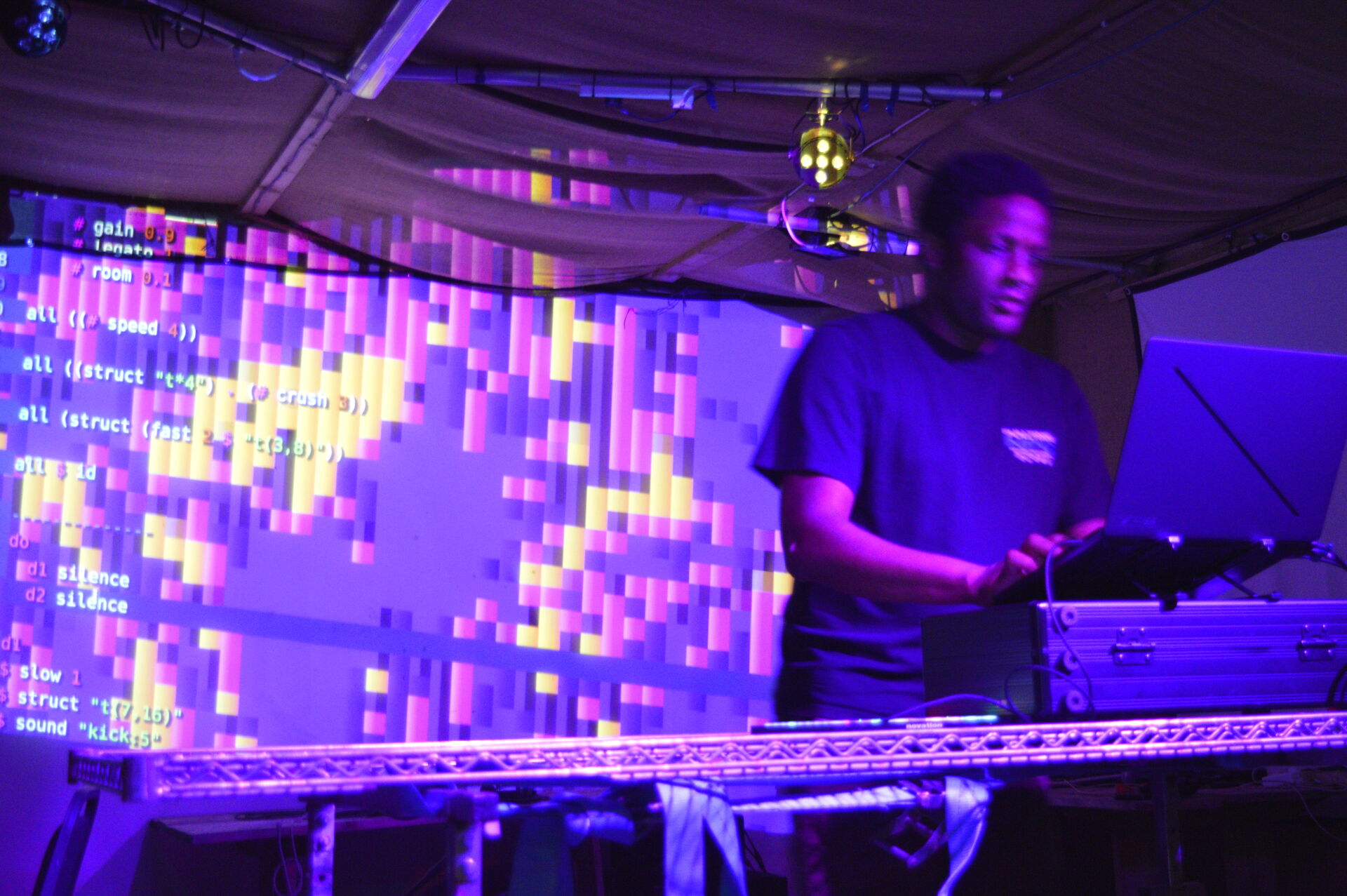
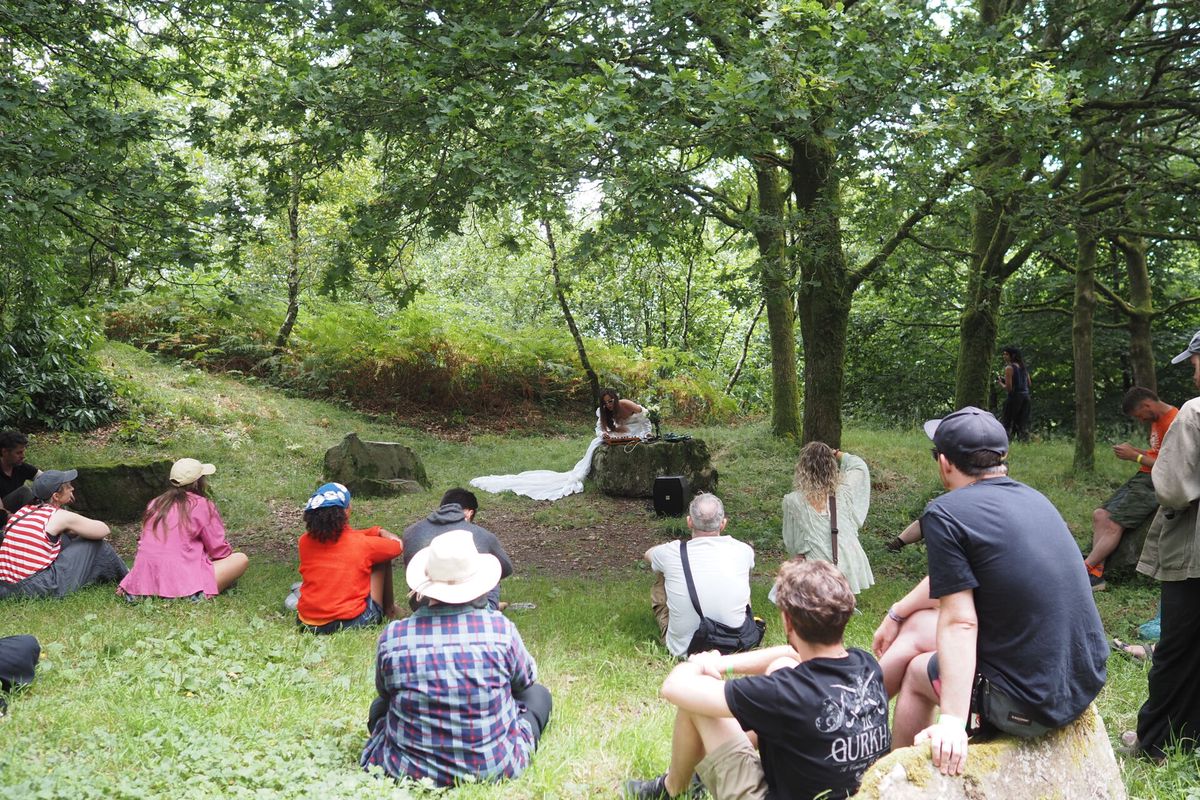
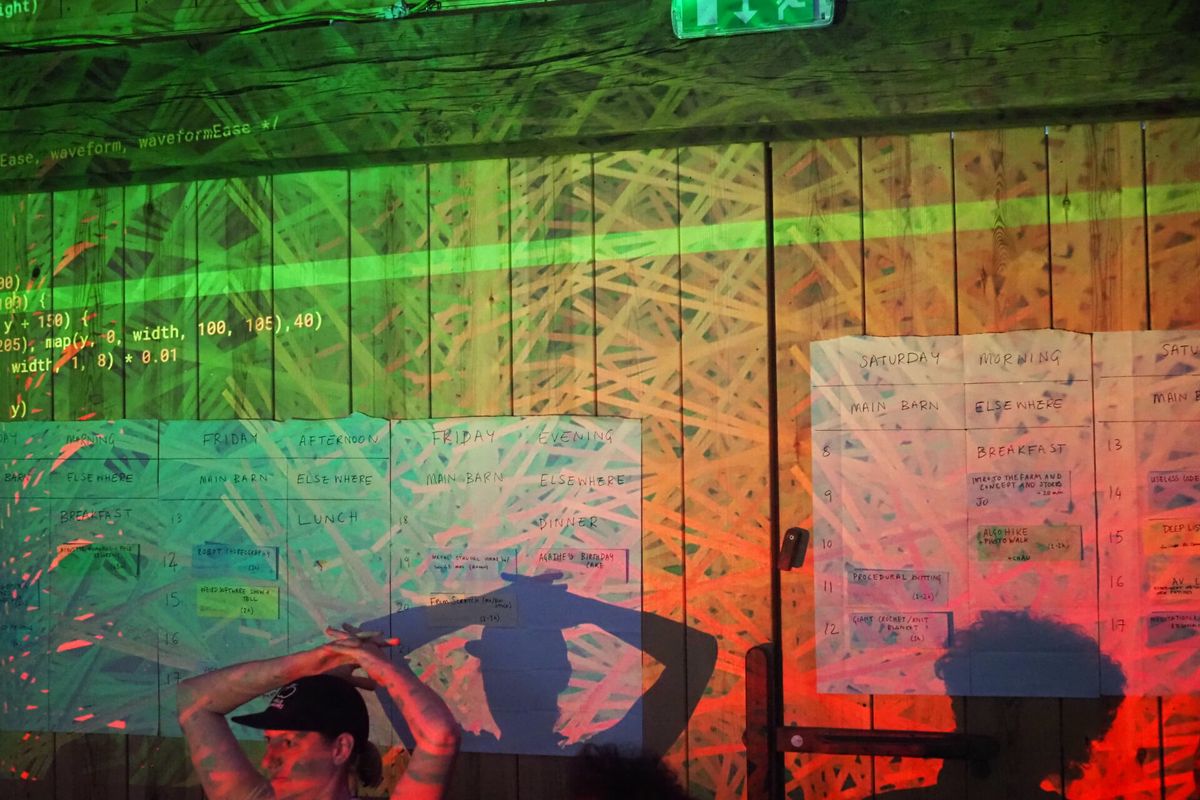
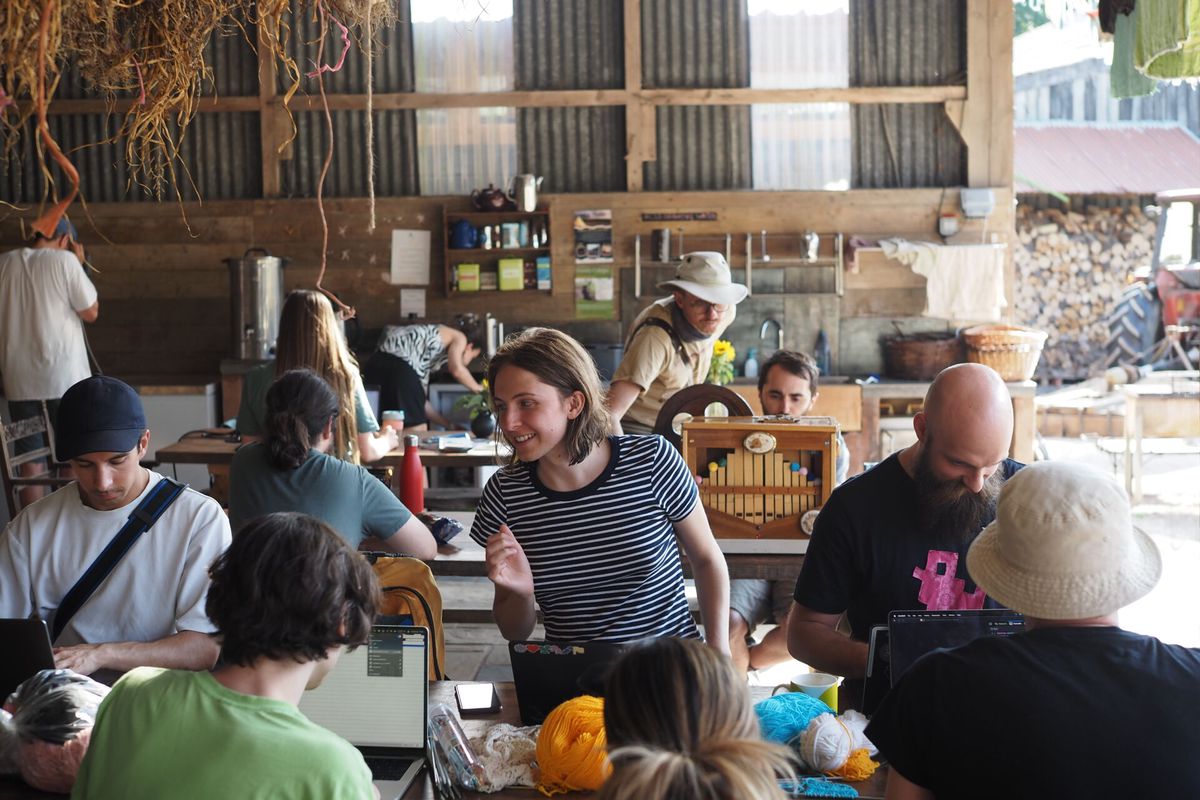
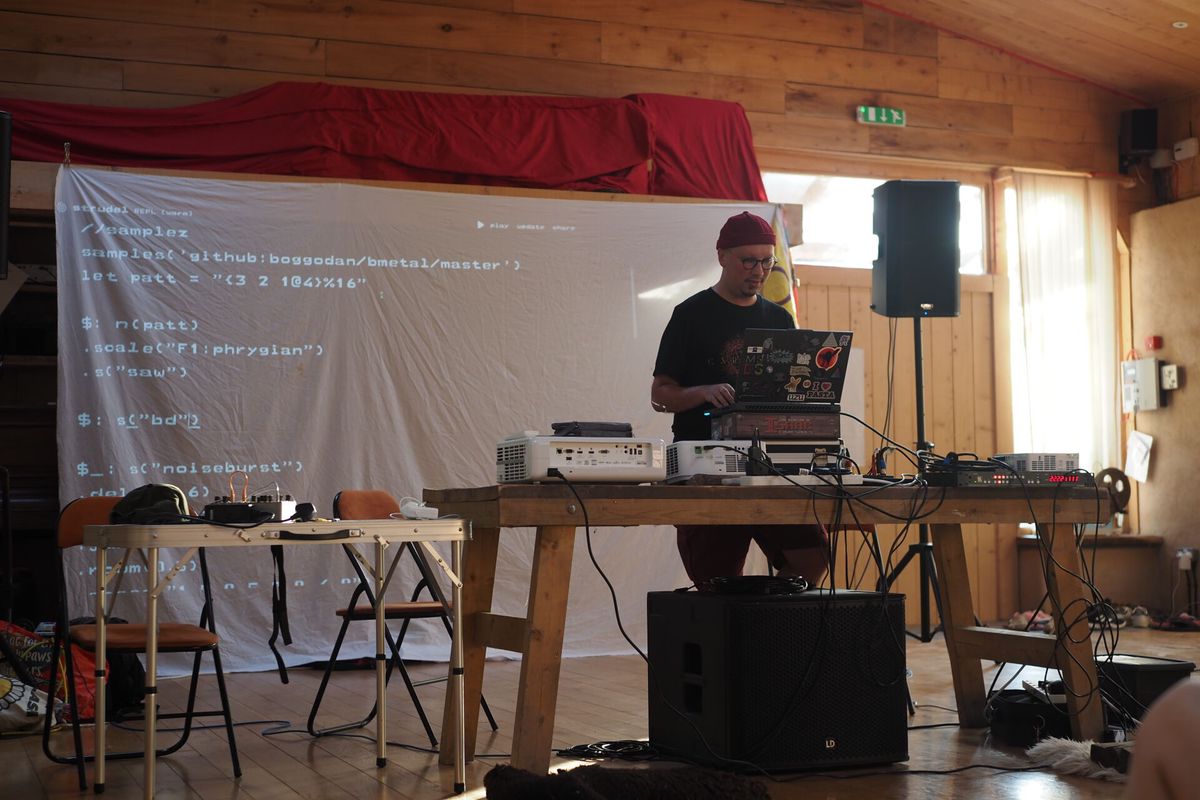
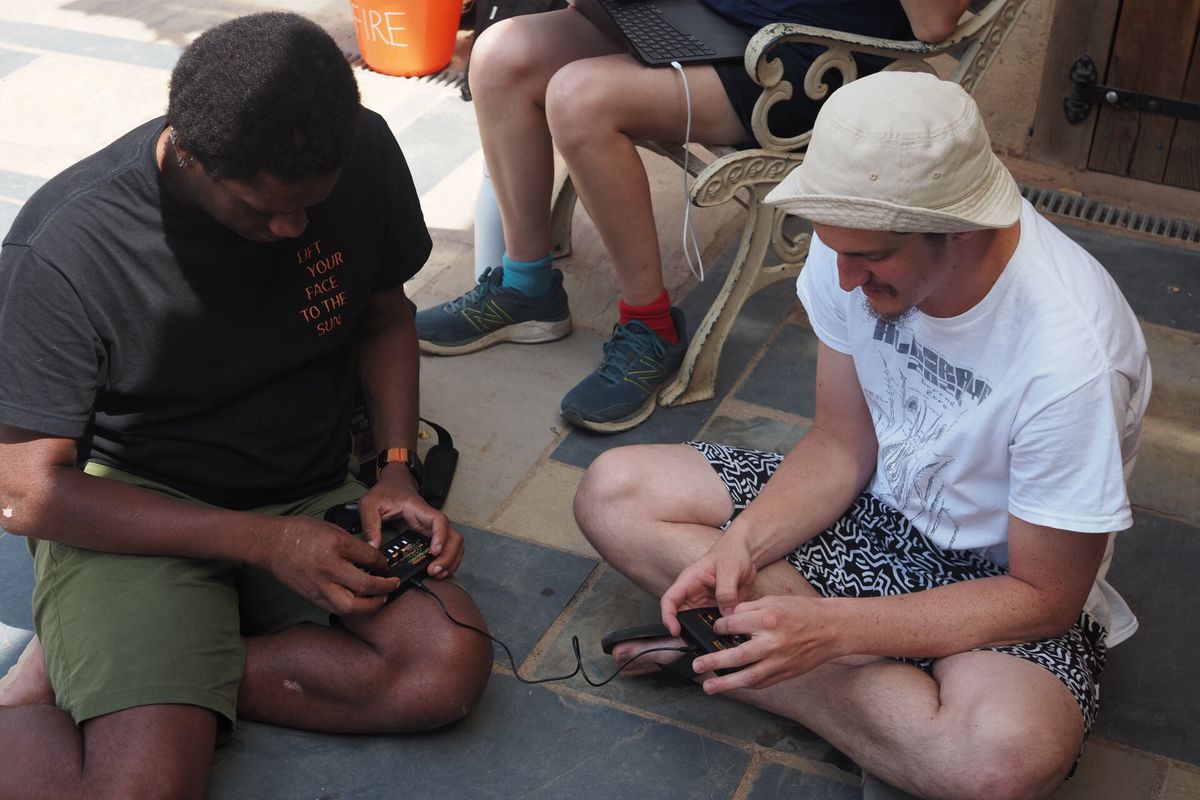
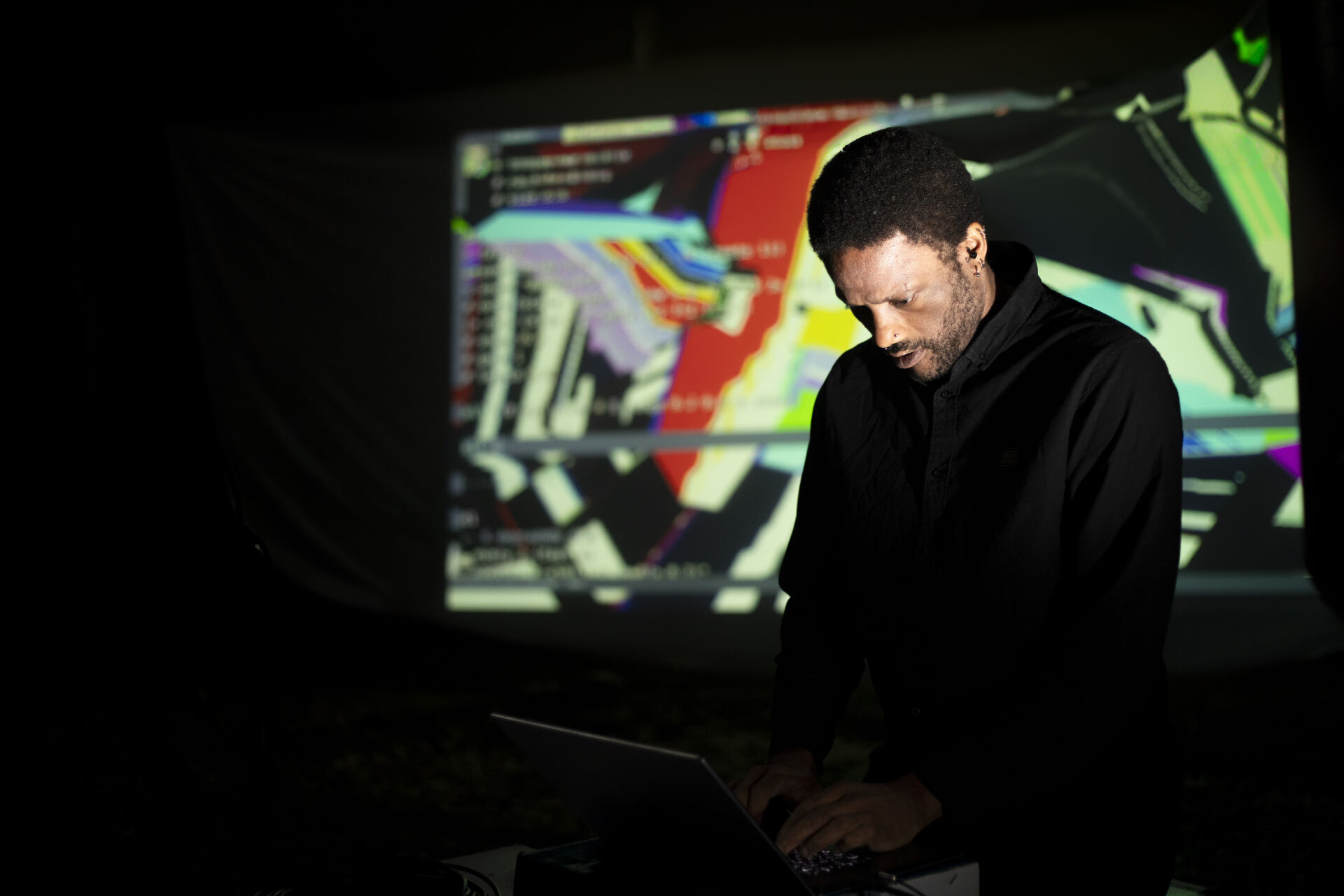
These photos were taken just after performing at the Control Shift Algorave in 2023. You might think everything looks normal here but I personally think I look, well, kinda frail.
In a way I’m lucky that the majority of my work can be done from home. In the few hours that I was awake each day I could find the energy to make an animation or set something to render and then go back to sleep. Projects like Hyper Object, my Mondo Radio show, the Disruptive Frequencies artwork, and being a judge on the Small File Photo Festival were all projects done in the spaces in between feeling ill.
In June 2022 I should have been at AMRO with Maria/badcirculation but illness kept me at home. Thanks to Flok I was still able to perform from my bed in the UK with Maria on stage at the festival in Linz. Looking back I find it kinda funny that after the performance ended I literally just rolled over and went back to sleep!
Otherwise most of my activities from 2022 - 2025 were performances and workshops. These were relatively short activities that required me to do something intense for a day or two and then I could spend a few days recovering.
I was still able to complete some visual arts projects, but this was at a much slower rate and output than in previous years. For example, the A Boy is a Gun exhibition should have taken place in 2023 but Vivid Projects were understanding of my situation and so let me postpone it to 2024.
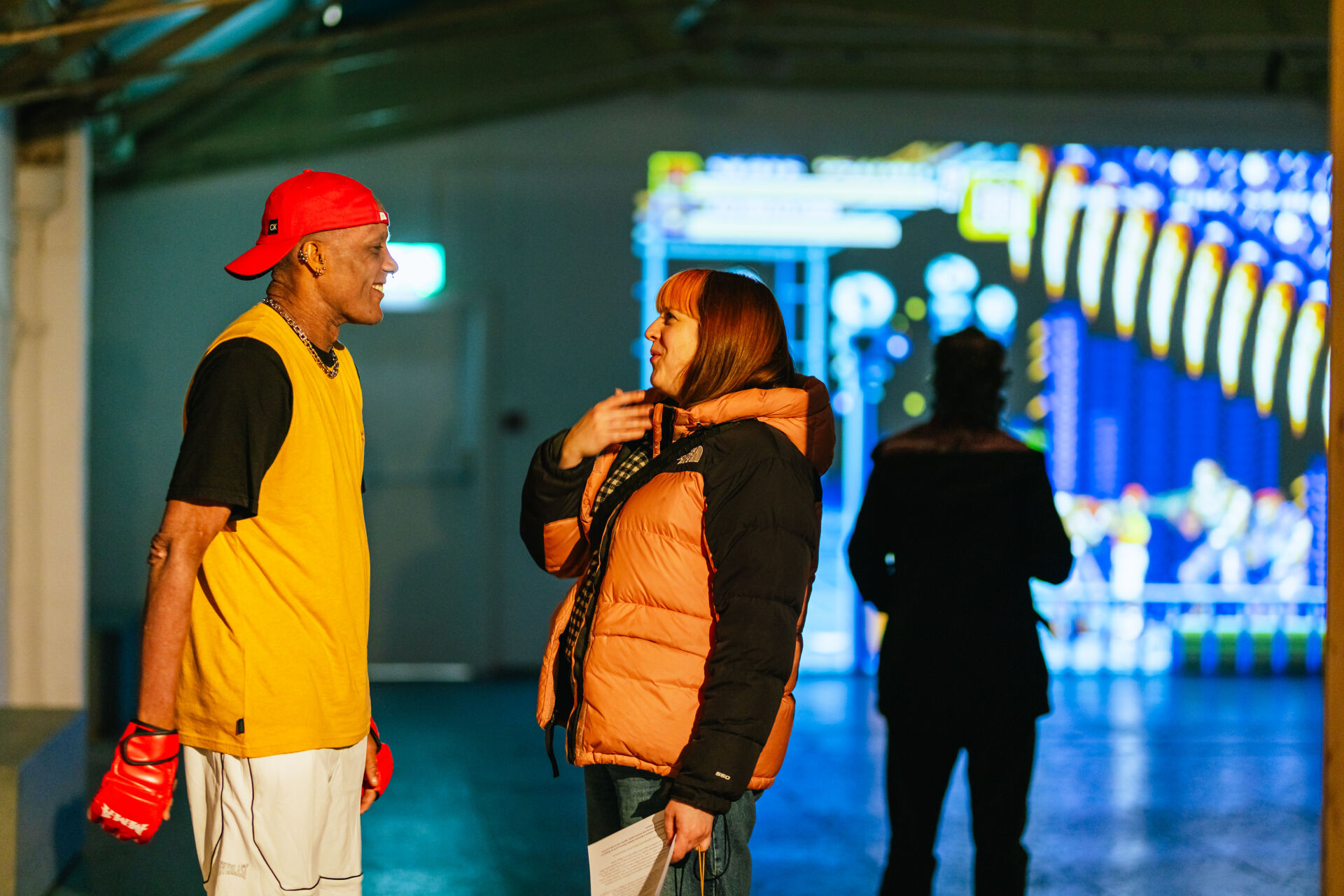
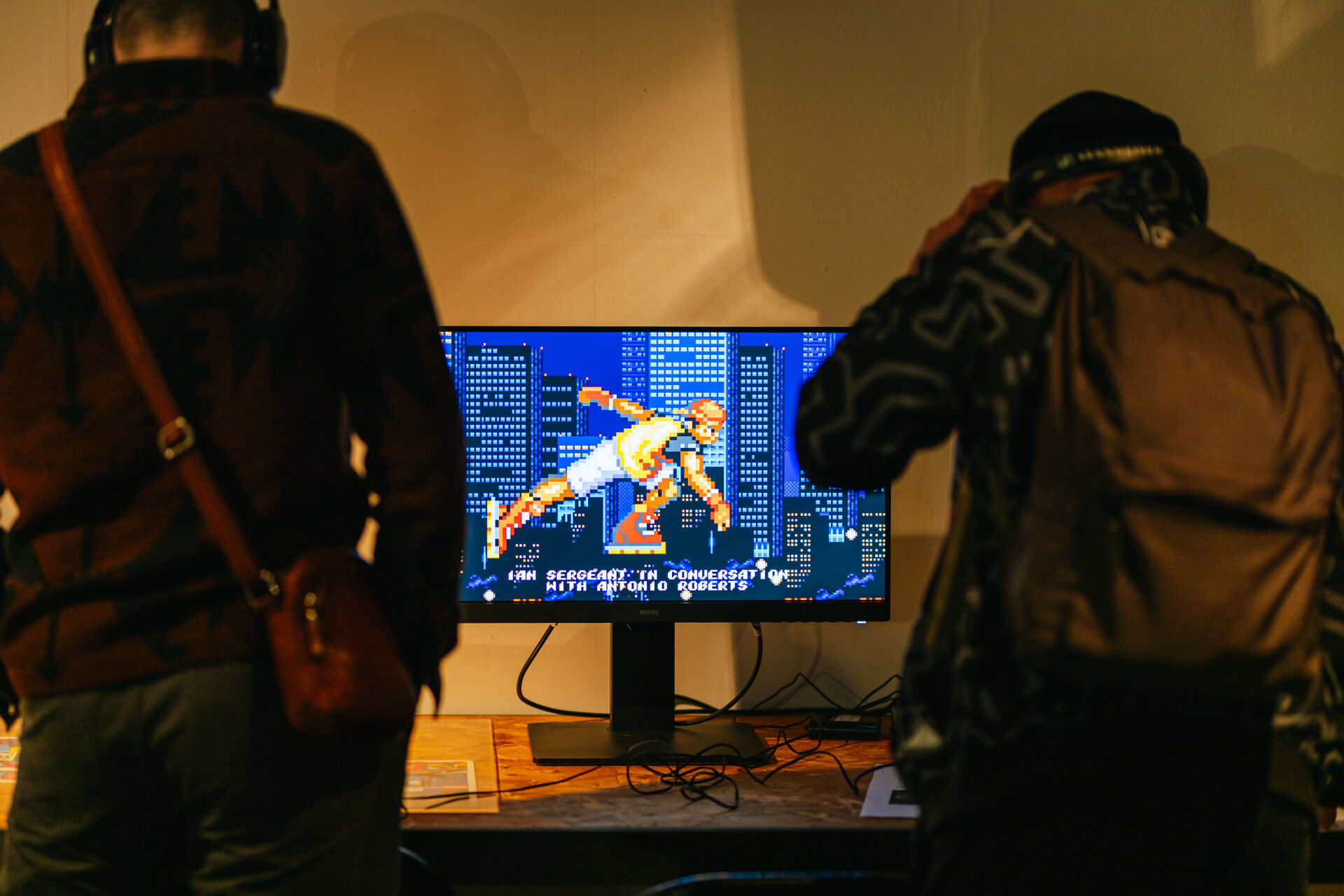
(Algo|Afro) Futures continued during this time, albeit with a break in 2024. I am fortunate to have had assistance from additional mentors Alex McLean, Gary Stewart, and Tyger Blue during this time.
Also in 2024 I did a series of workshops with Site Gallery’s Society of Explorers which culminated in the Cyber Cafe exhibition.
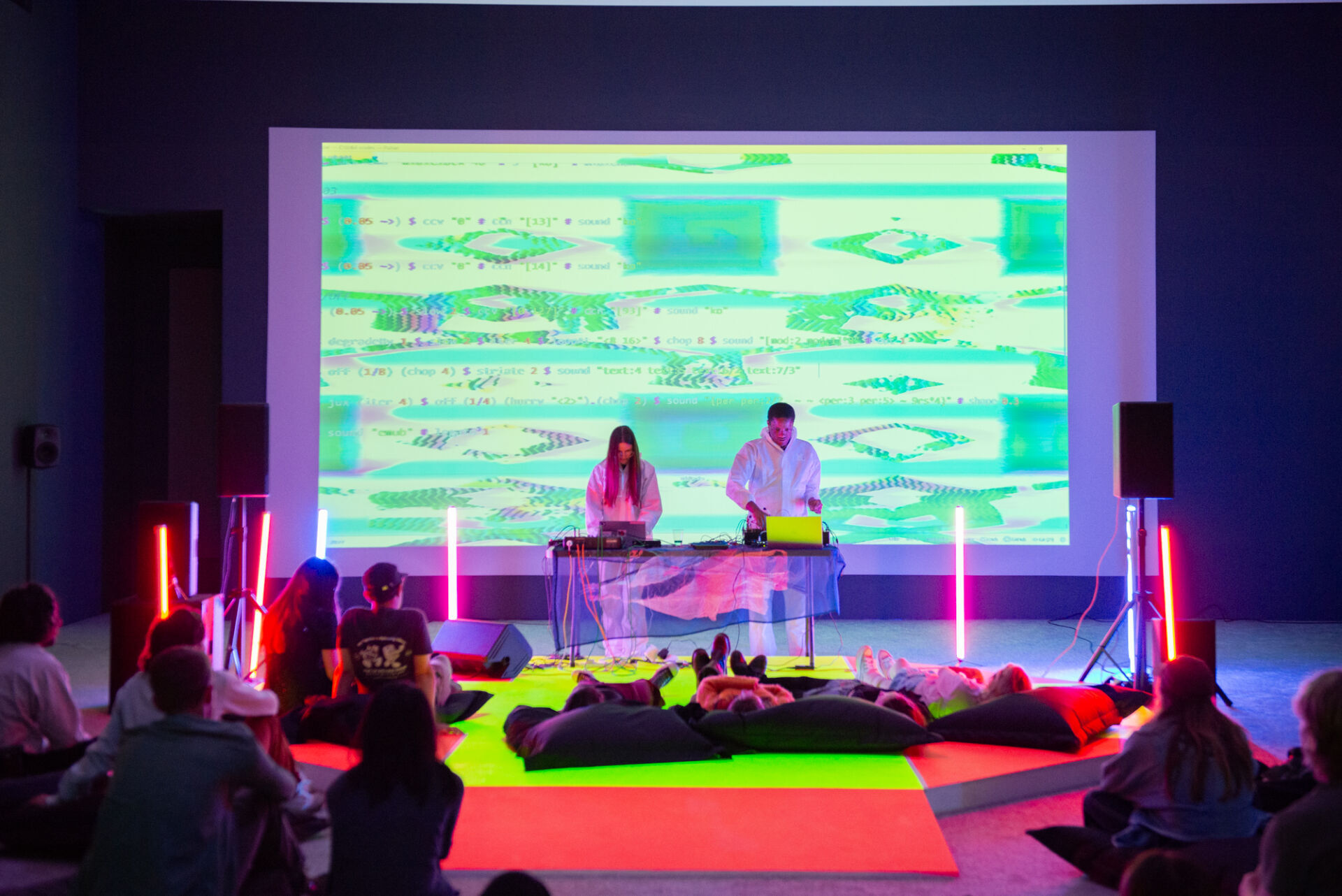
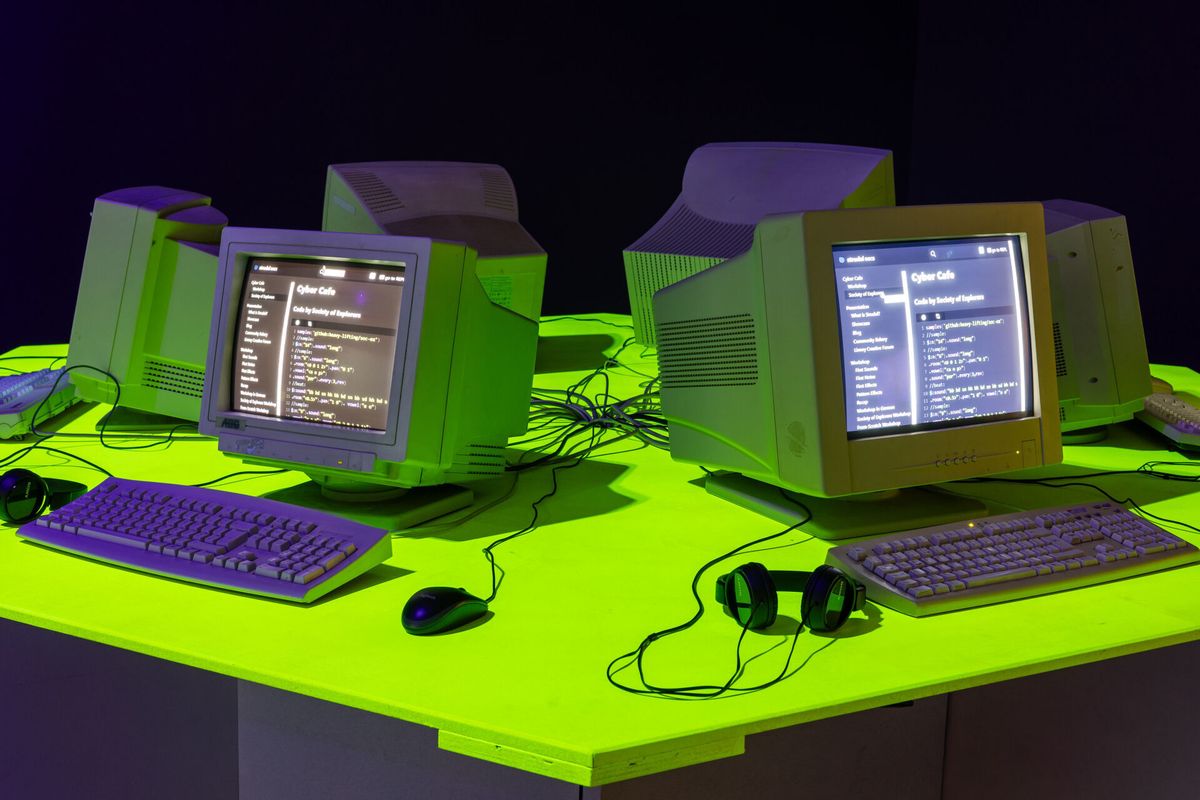
In general, though, I just didn’t have the energy to put into lots of small projects, applying to open calls, or writing project proposals. I relied heavily on people reaching out to me with proposals. There were a few invitations which would have been amazing but I outright declined because I couldn’t find the head space to do it. If you’re reading this from one of those projects I turned down get back in touch!
There were otherwise definitely times that I pushed myself too hard and I suffered as a result. For example I enjoyed performing at DA Z in Zurich in October 2022 with my Algorave friends, and then going to Piksel In Bergen to teach Hydra, but a week away living out of a backpack across two countries took a toll on my health, especially so soon after falling ill.
Similarly, going to Adela festival in 2023 to do a badcirculation performance should have been a chance to celebrate and bring the energy that I couldn’t at AMRO. Instead I spent every moment outside of performing in the hotel bed. The hosts were very caring and understanding about this <3.
I also feel a sense of regret about the activities I did take part in where I wasn’t able to be at my best. For example, I had big aspirations for my Pattern Club residency but illness struck again. Sure, I was ill so can’t be too hard on myself but I wish I could do it all over again.
I probably should have done less and focused on recovering but I also needed to attempt to maintain my practice and, y’know, earn a living!
My health slowly improved and by Summer 2025 I was finally approaching something resembling normal. I wrapped up (Algo|Afro) Futures, spent two weeks in June teaching at NØ SCHOOL NEVERS and then in October I spent two weeks in Argentina for Festival Tormenta and Algoraving with GEIKHA, irisS, munshkr, and more.
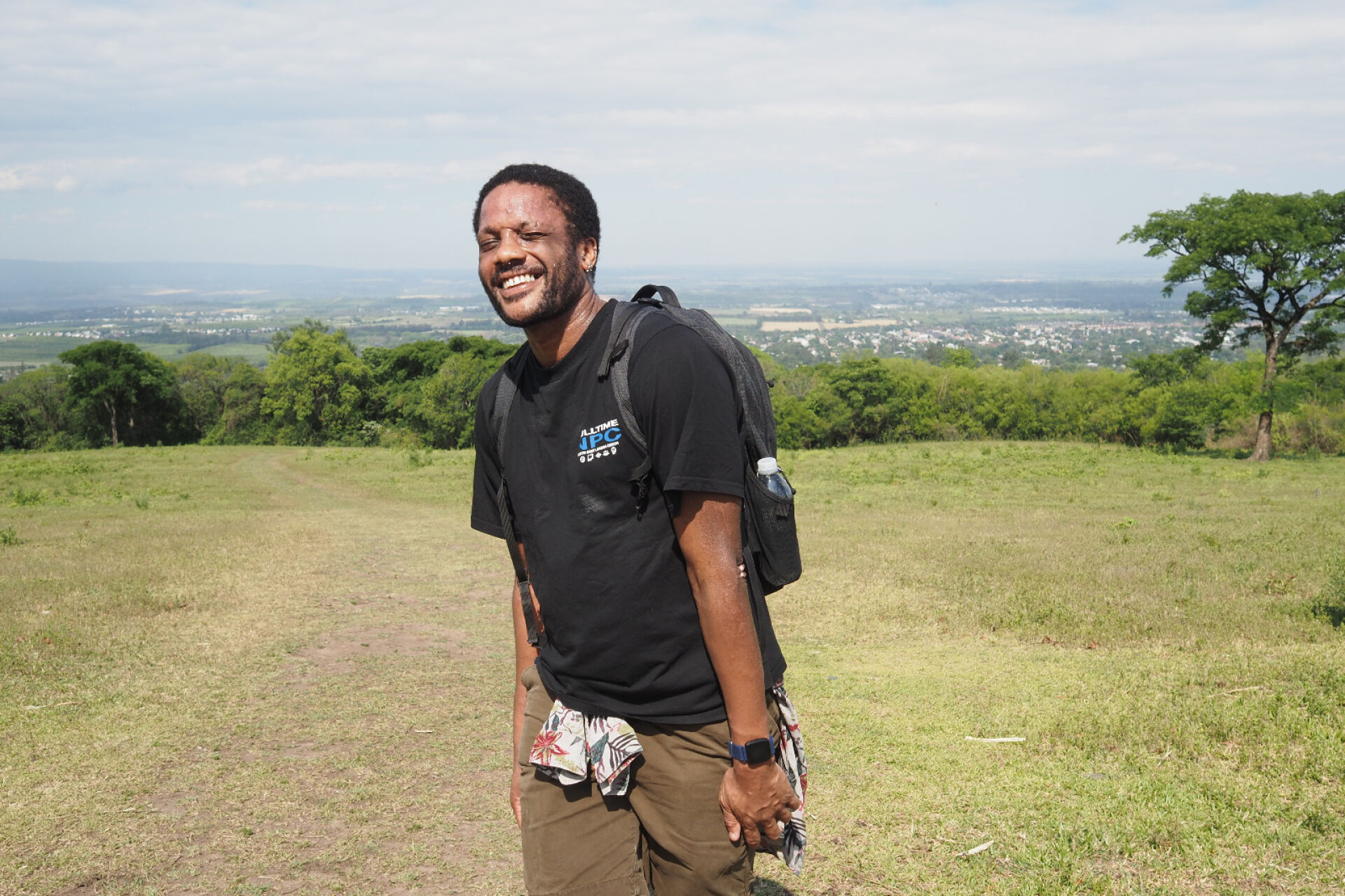
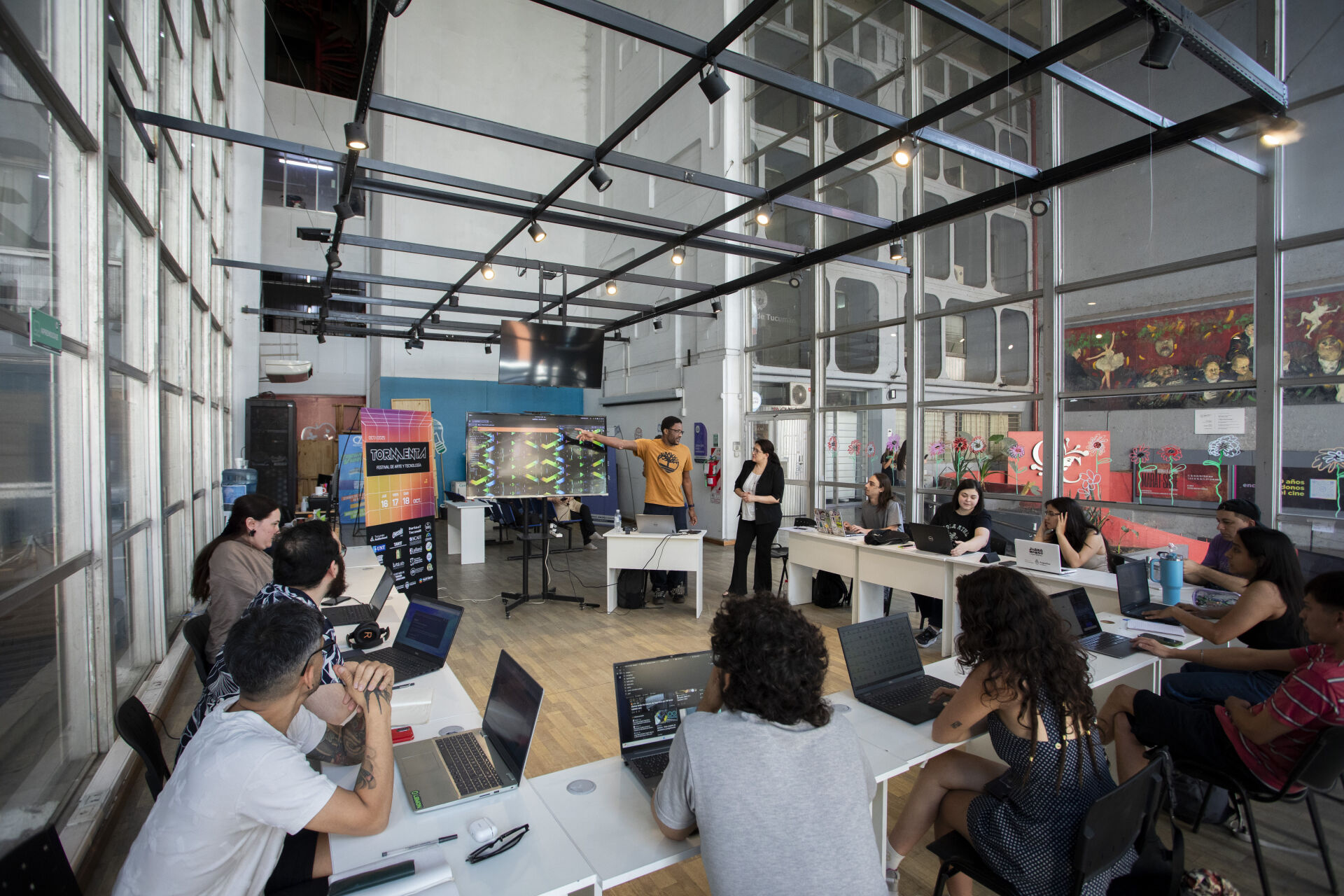
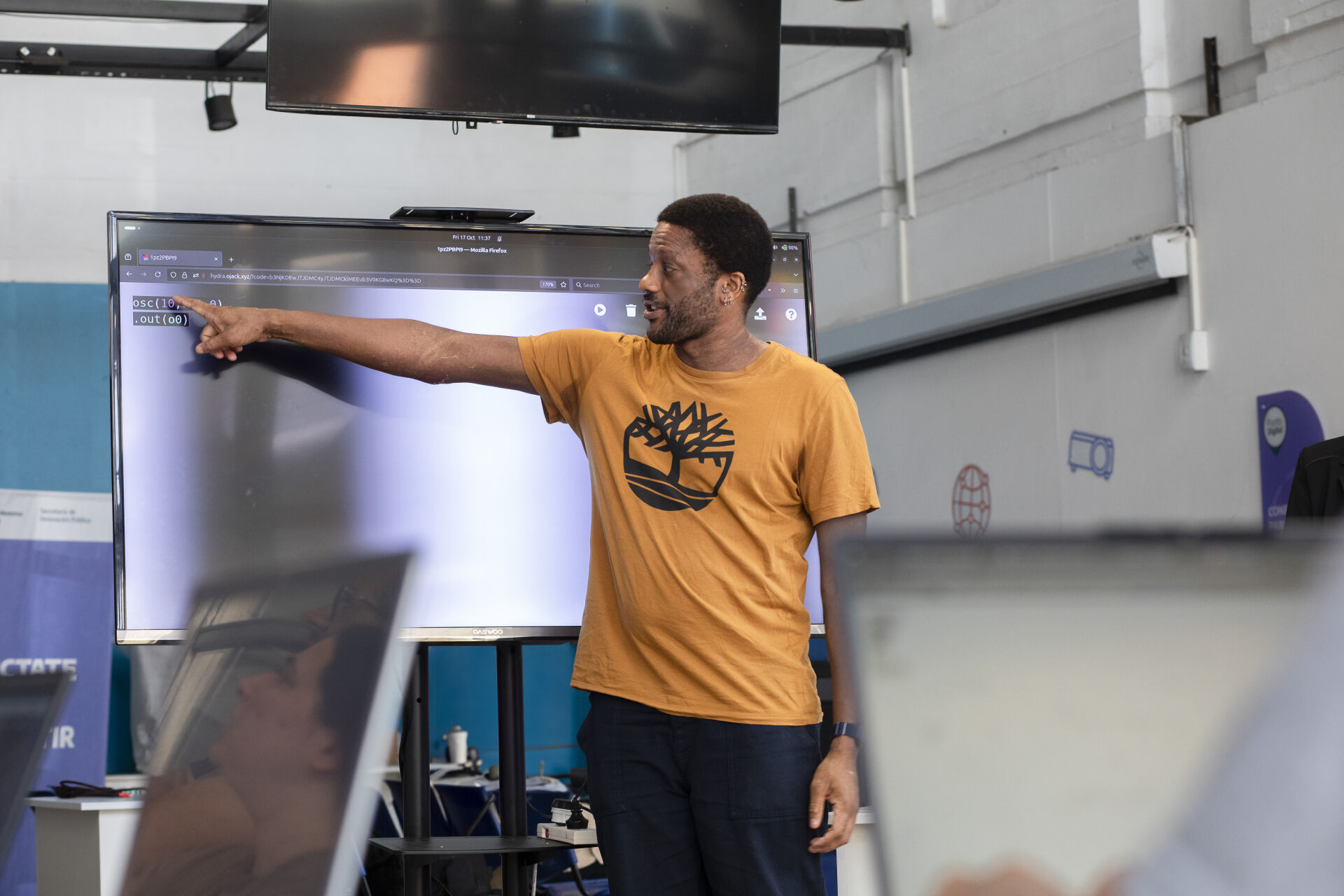
These were amazing opportunities to meet old friends and make new ones, and to travel the world, but also it was really amazing to not have my health get in the way. After 3.5 years I could just be normal.
Move fast
As 2025 drew to a close I began to make plans for how I could spend 2026 fully getting back into my practice. This process involved a lot of reflection and considering my place in today’s art world. I’ve had a professional art career dating back to at least 2008 (as evidenced by my projects and events listings) and a lot has changed in that time.
Digital art is definitely more widespread than in the early 2000s and there’s better provision for it in education, contemporary galleries, and in more traditional galleries and museums. This wasn’t the case when I first started my practice, where sometimes even trying to exhibit a video felt like an uphill struggle! I’m glad to see this has changed and that there’s a lot of energy and excitement around digital art.
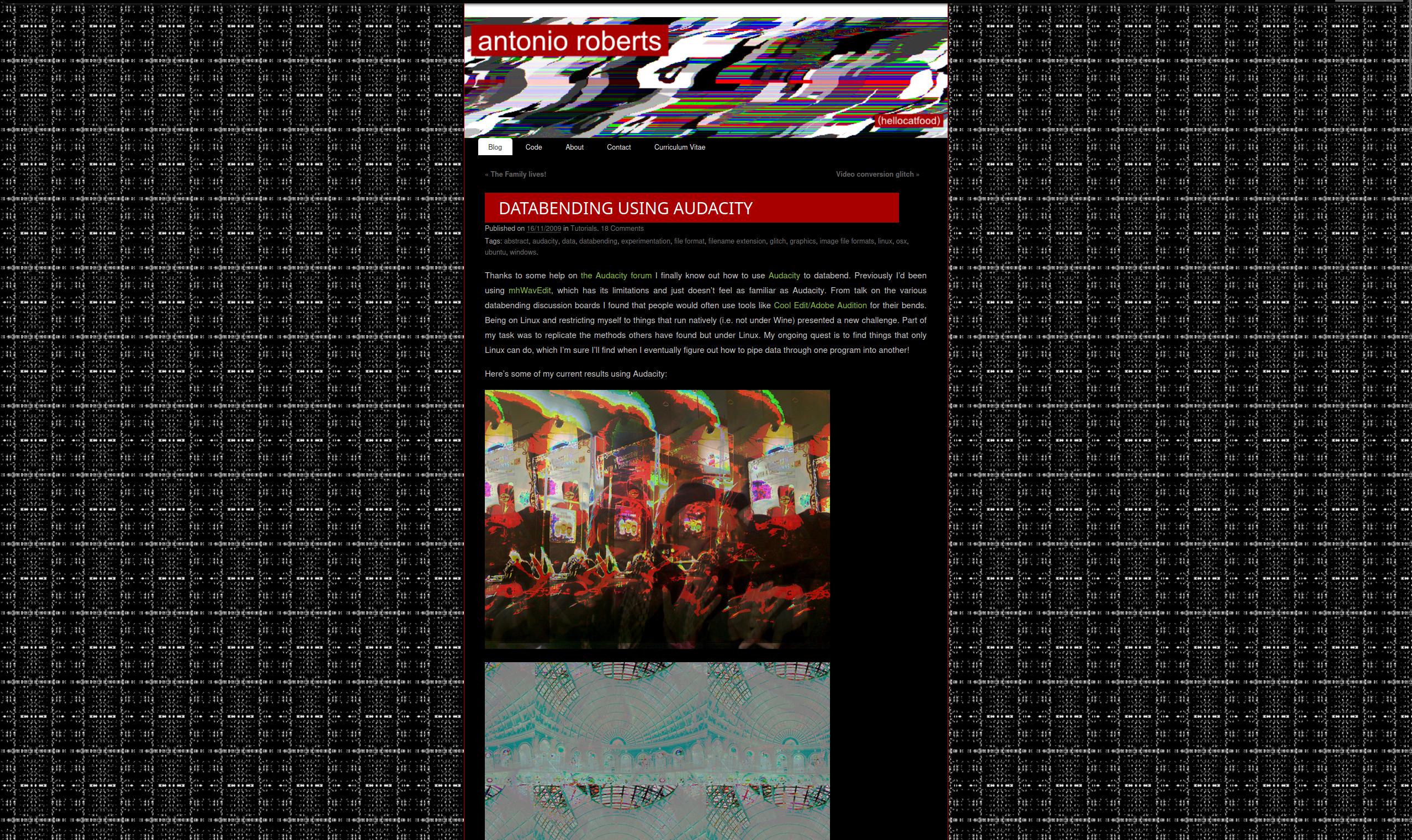
On the downside things move so much faster on the internet now. The internet of the 2010s was a lot slower, and you could have faith that if you invested days or weeks writing a blog post, creating an artwork, or creating a video it would be seen by your peers. The best example of this was my Databending in Audacity tutorial, which was the output of months of research and testing. It went on to have a lifespan of many years and introduced me to the global glitch art community.
Now, though, the lifespan of things posted on the internet can be measured in minutes. Algorithmic feeds encourage the constant publishing of “content”, with no guarantees that it’ll be seen by anyone. And it’s subsequently pushed so far down feeds that who knows if it’ll ever be seen again. It’s completely unrealistic to expect anyone to publish engaging work daily or weekly and doing so would just lead to burnout. It all just feels like a game where the rules aren’t clear and are changing every minute. I really don’t have the time or energy for that but it feels like the only way to be an artist today.
To add to this I am now seen as a mid-career artist. I think there is an assumption that artists/musicians who have had decades-long careers now have enough financial and institutional support and are somewhat stable or settled. Right now for me the opposite feels true. So many opportunities for funding and exhibiting prioritise early-career artists, without clearly defining what early-career is or why the opportunity excludes those not fitting that definition. This isn’t to say that early-career or young artists shouldn’t receive more support. In fact, I have been part of and delivered programmes and workshops specifically for these groups. The question I have is what support is there for those starting or restarting their career at a mid/later stage in their lives. After some time away from fully investing in my visual art/exhibiting career I feel like I am starting again and finding that support is limited.
So many applications!
So, with that assessment of the current situation I got planning and got active! I applied to quite a few large and small open calls. Many were rejected and a few were successful. It was tiring to invest so much creative energy and time only to be rejected but it was also a useful exercise to get back into writing applications and thinking about how I describe my practice and ideas.
I also took stock of what I have already achieved and what artworks, processes, and projects I can revisit or extend. A trap I have fallen into in the past is thinking that I need to have completely new ideas for each project. It took me a while to realise that it’s sometimes absolutely fine to iterate on existing ideas or even just exhibit completed works again. With this in mind I spent a lot of late 2025 and early 2026 cleaning up scripts, polishing processes, and revisiting projects. I posted occasional clips of experiments on Instagram and Mastodon in a very noncommittal way. It was encouraging to see how they were received and it gave me ideas for what I wanted to focus on going forward. Here’s a few of the things that I think I’m going to work on in the future:
PDF “glitching”
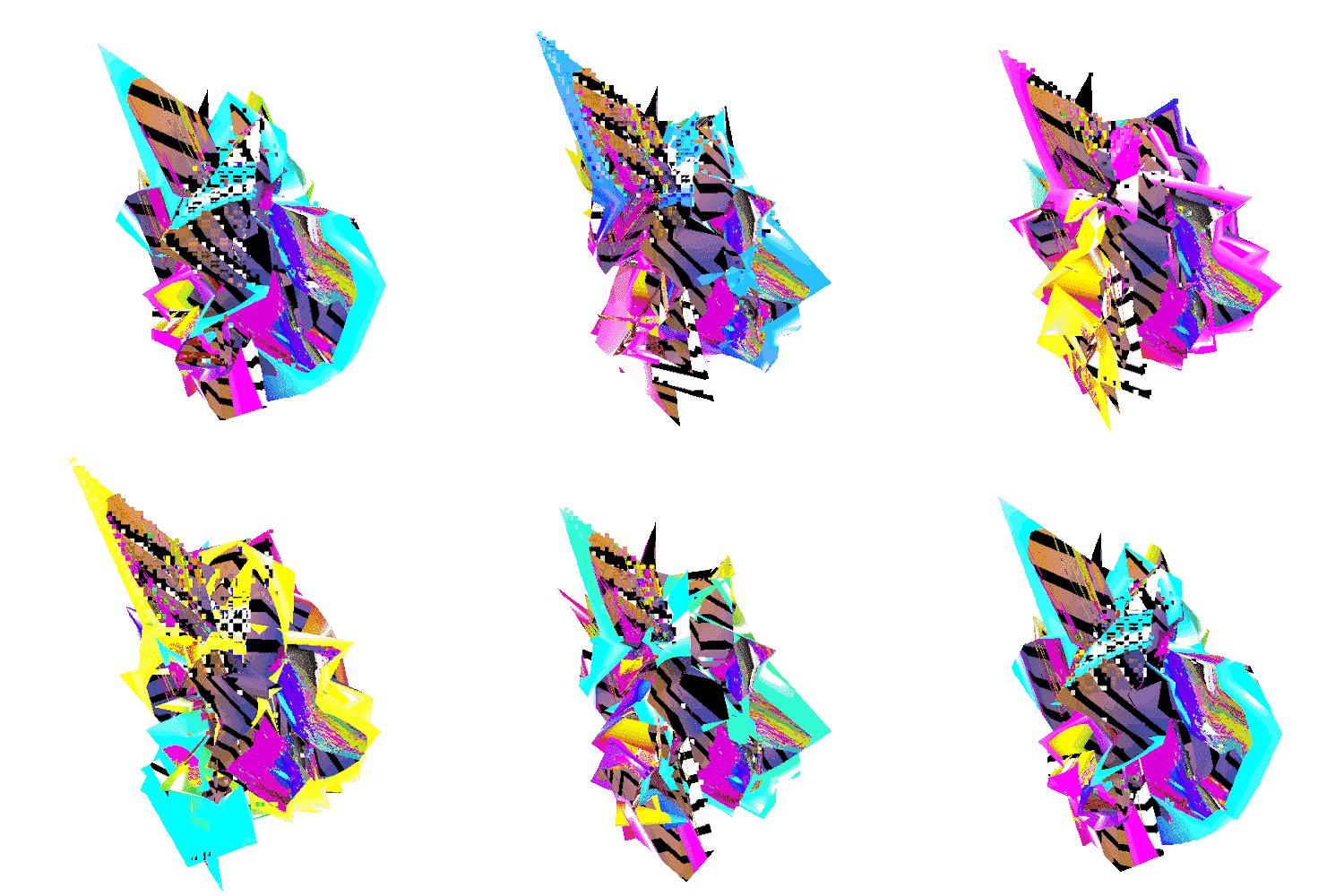
One of the first experiments I shared was my “pdf glitches” in December 2025. It’s technically not a glitch as there are no errors occurring, but the way that I have used the software to create these pdfs definitely counts as creative misuse. The result is these very dense and chaotic-looking documents.
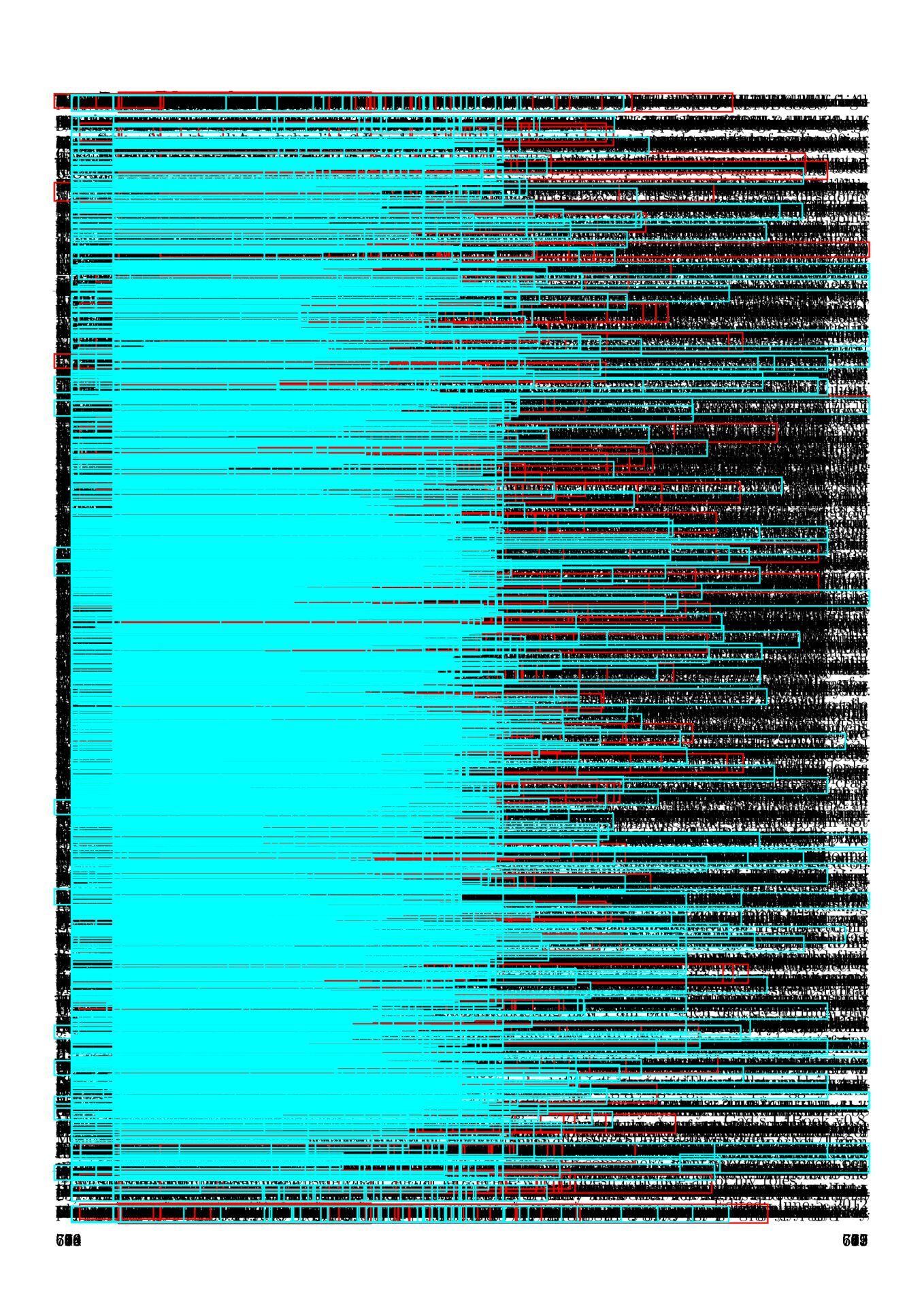
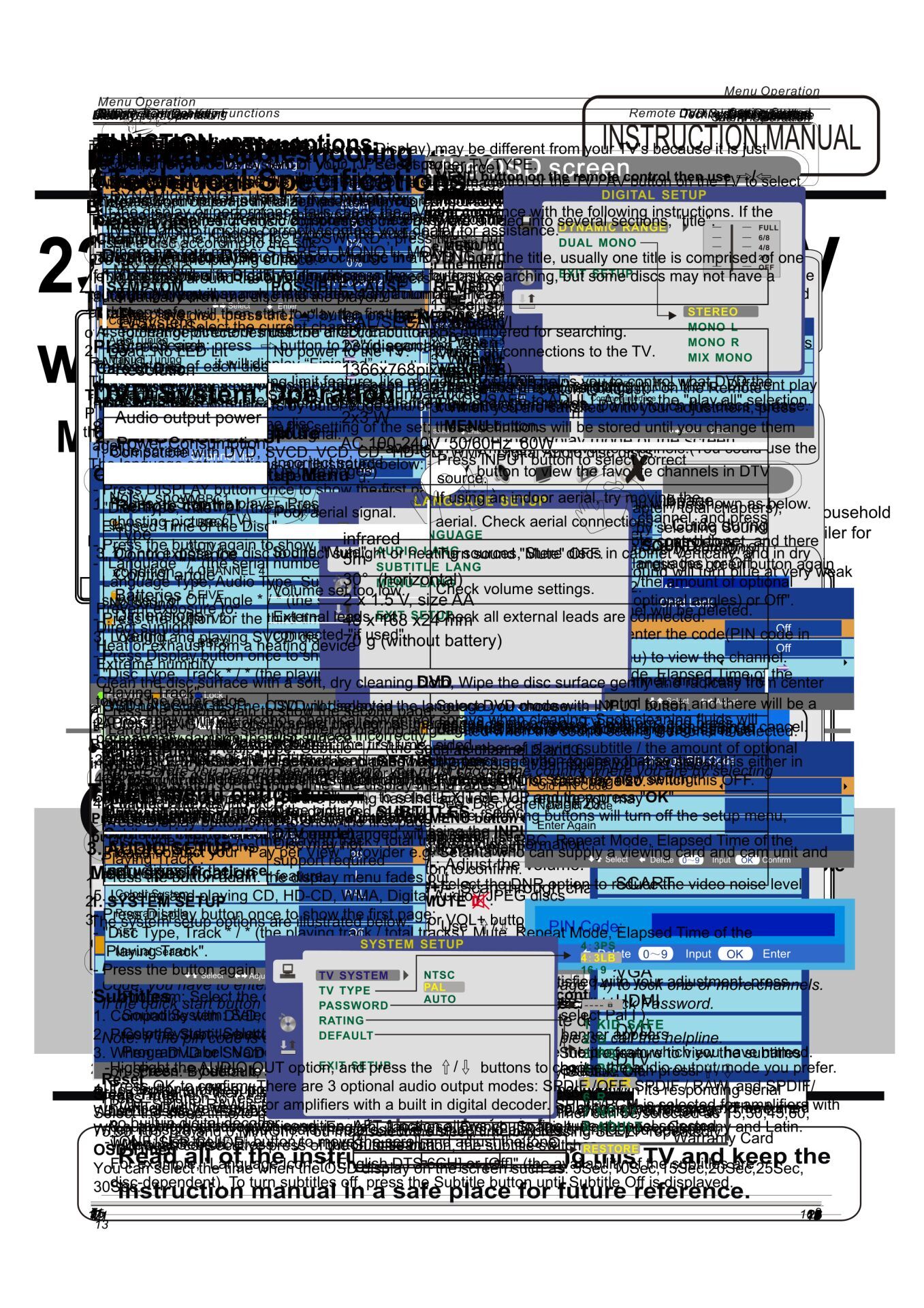
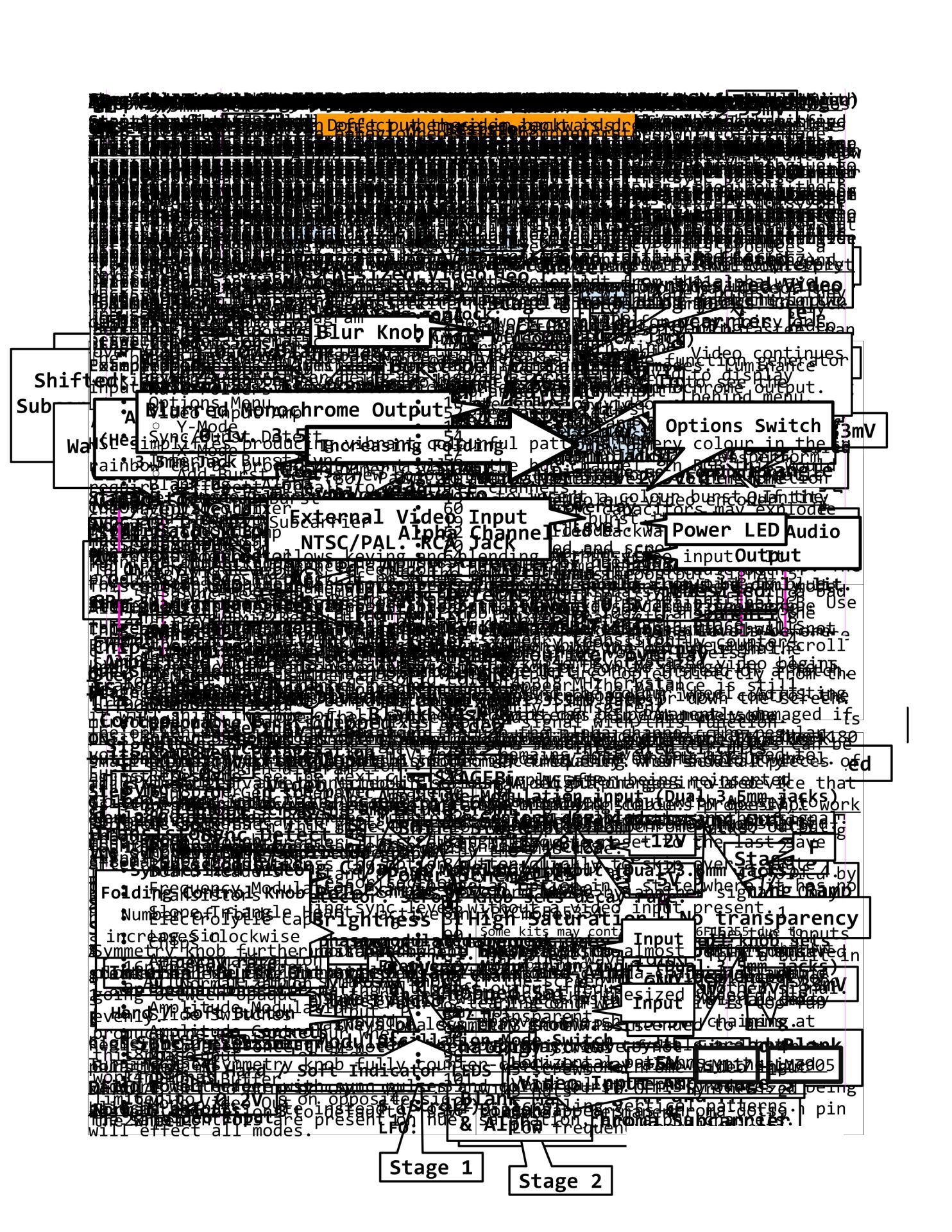
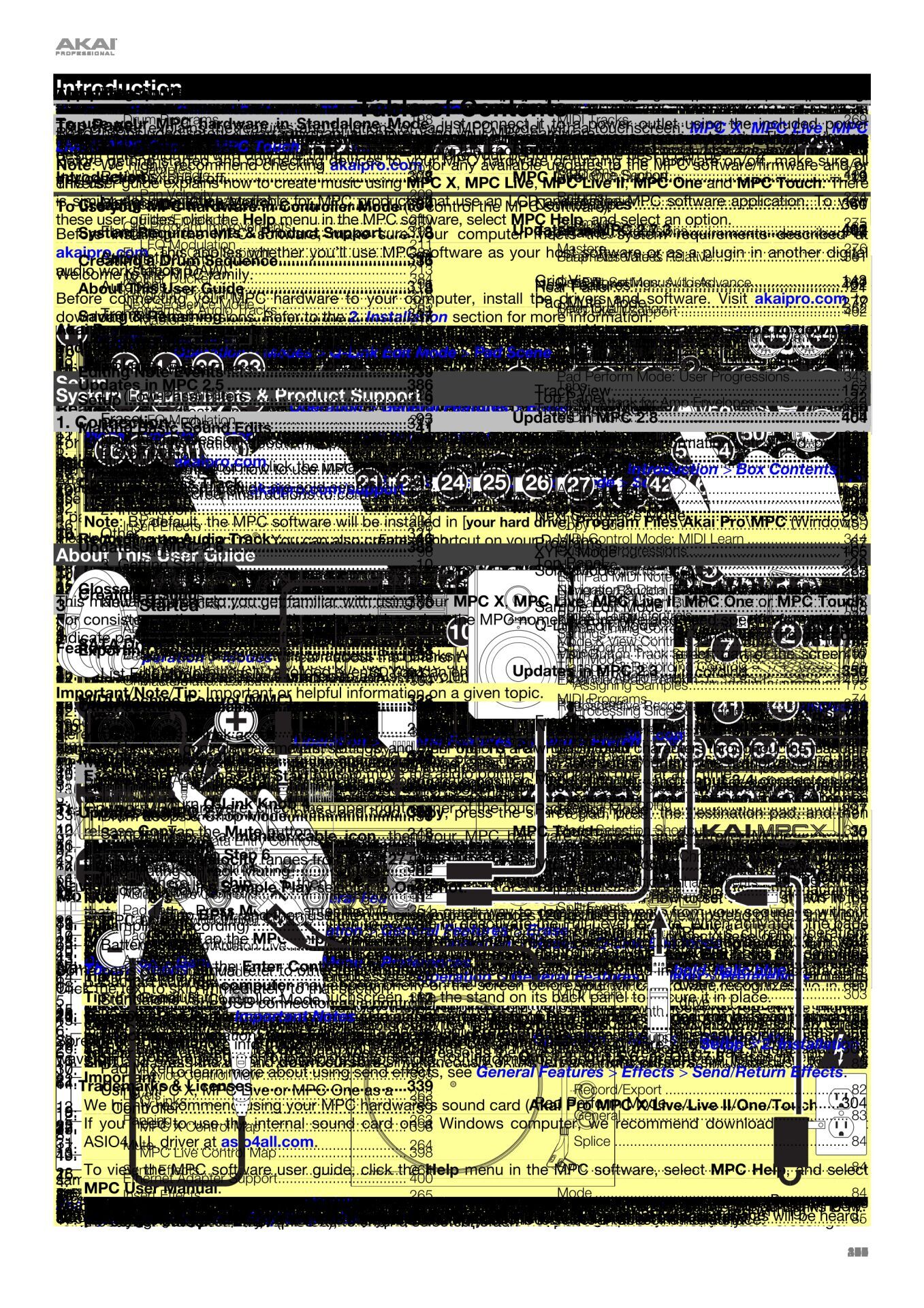
These proved to be quite popular and I plan on producing a more curated selection of them at some point. I’d like to have them printed quite large.
Creating JPGs in Pure data
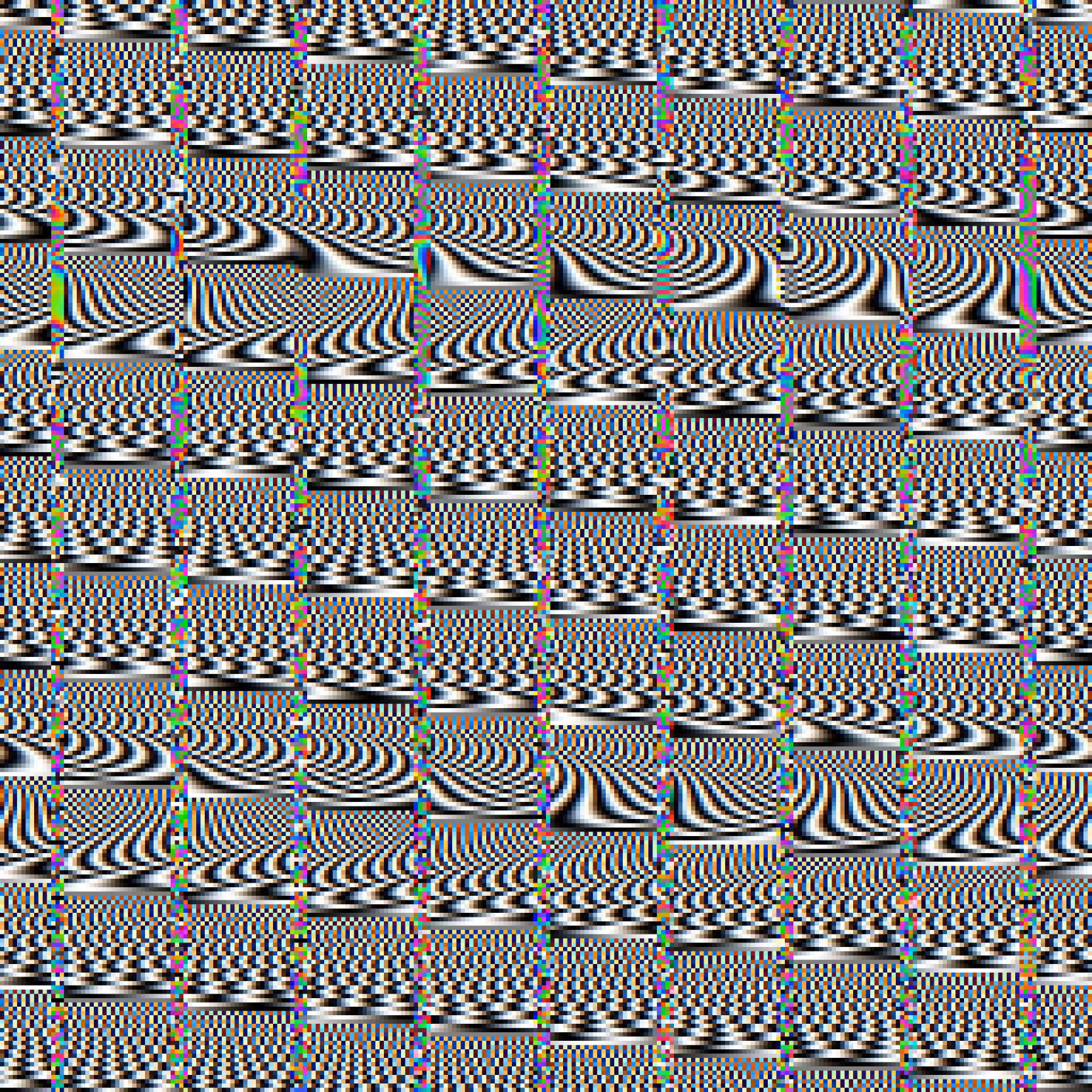
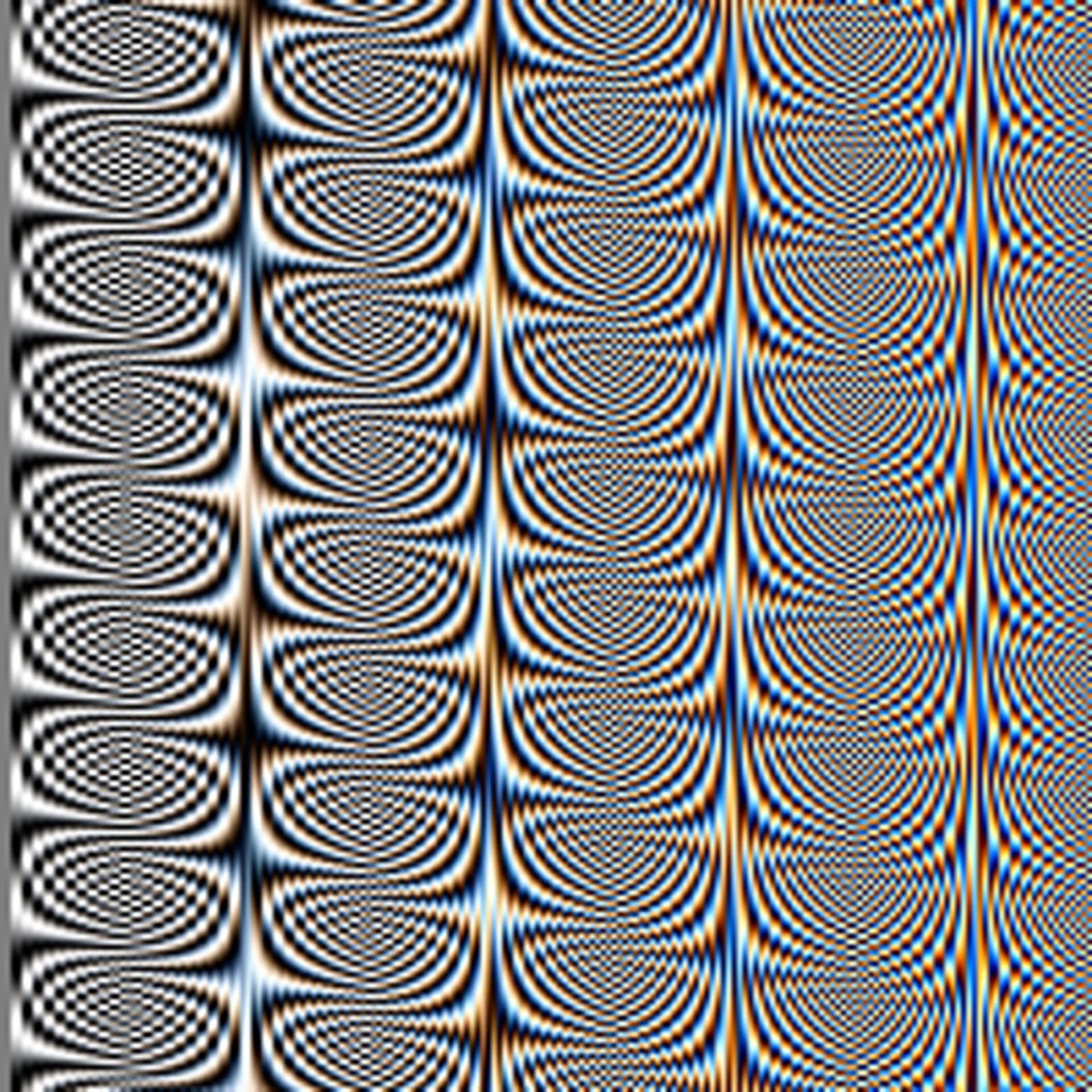
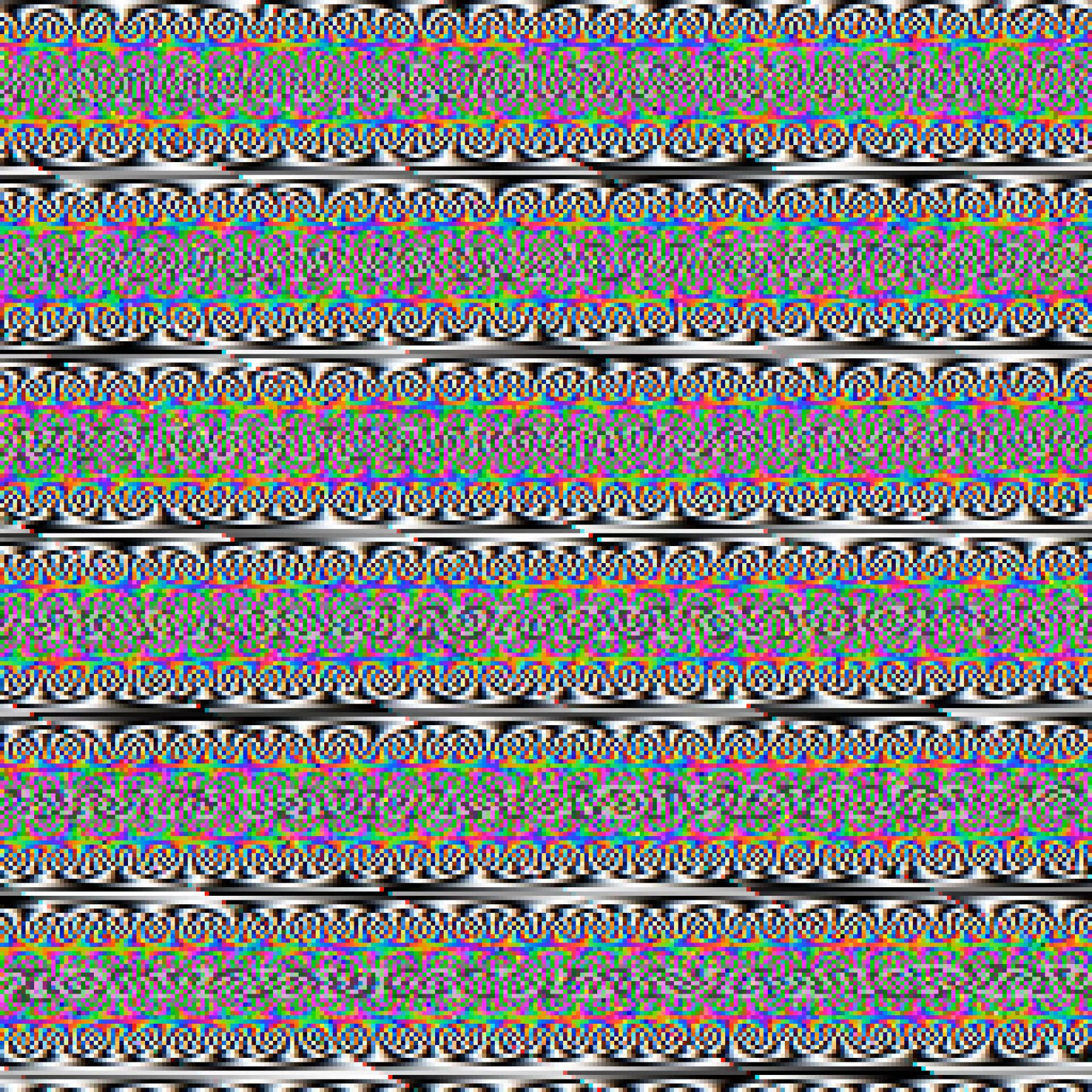
This was something that I started in 2012 and first exhibited with Some of my Favourite Songs. I think the methodologies for creating these images have other applications and so for about a year I have been creating some new images.
hellocatfood EP
I’ve been a performing musician since 2018/2019 and I think it’s now finally time to make some proper recordings. It’s a daunting and time consuming process but something which I know I’ll only get better at the more I do it. I have a few songs already written. Some are new but most are ones which I’ve played a lot over the years. Here’s one of my favourite live recordings which will hopefully give a sense of what’s to come.
I am considering whether to pursue releasing this on a label. I’ve witnessed how going through a label can be beneficial but can also introduce lots of delays and complications. I’m open to discussion on this but I may just go independent for this first release.
Glitch typography
With the release of I Am Sitting in a Room in 2010 I also released the Dataface typeface, which was essentially the typeface used in just one frame of that video.
Aside from that I haven’t done much in the way of typography and glitch art, at least not for my own practice.
I did create a glitch variable typeface for a commercial project in 2021. Creating that was quite a learning process and one I intend to document at some point. I also want to do more with other forms of typeface glitching and generative typography.
Databending
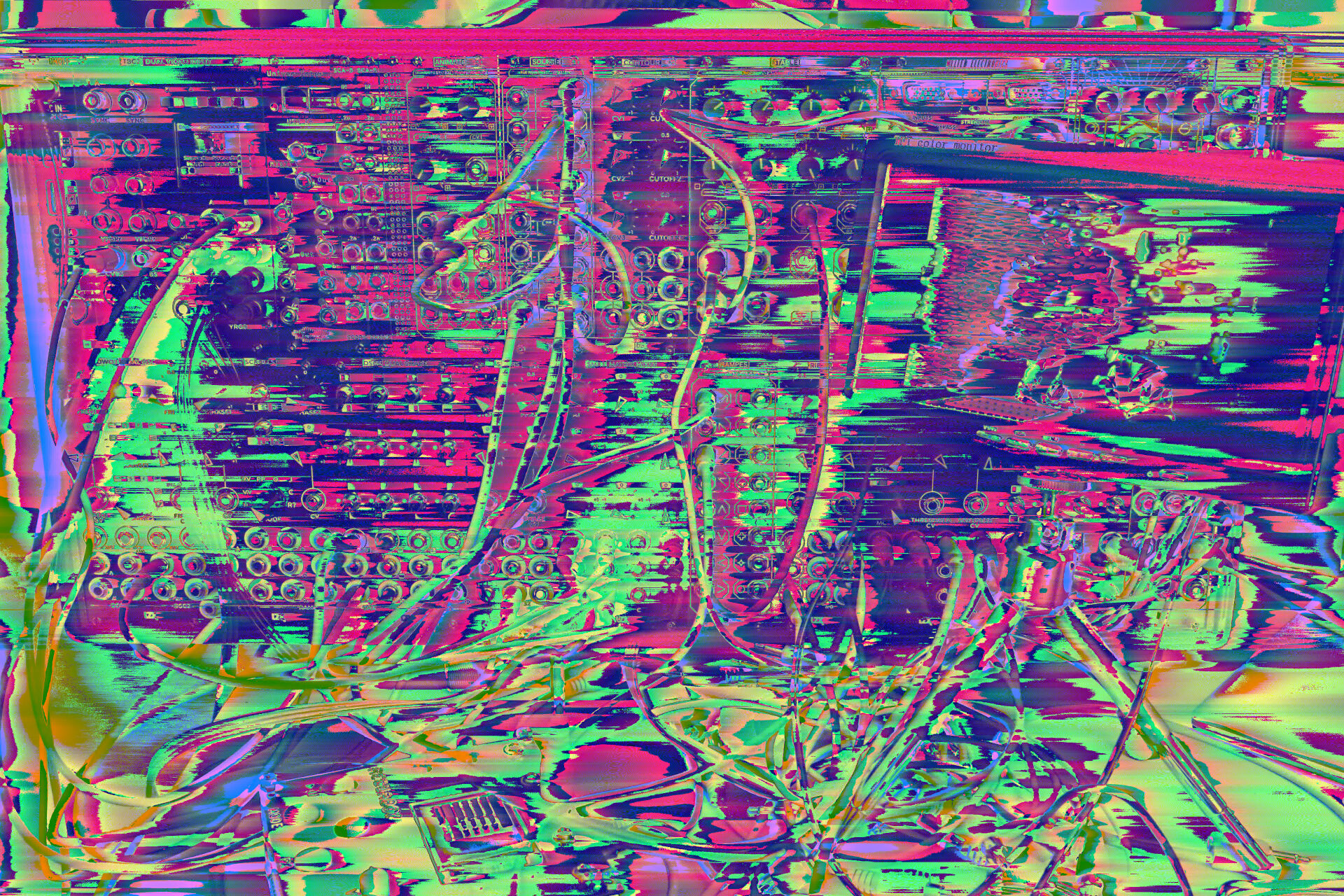
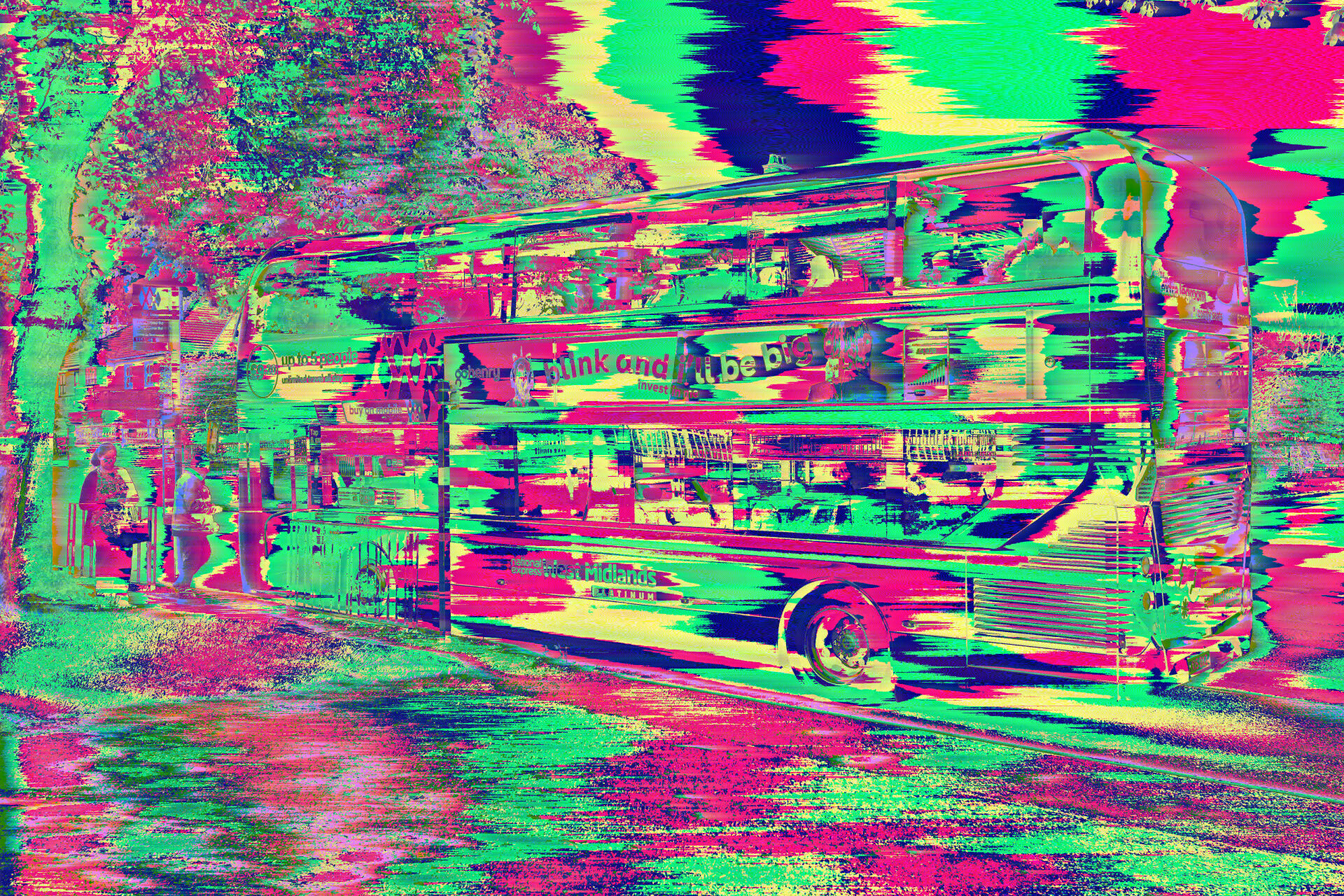
Databending is how my career started and so it feels fitting for me to revisit it to see what more can be done. I think the limit has perhaps been reached on what Audacity can do for databending, so I have been exploring other software with interesting results so far.
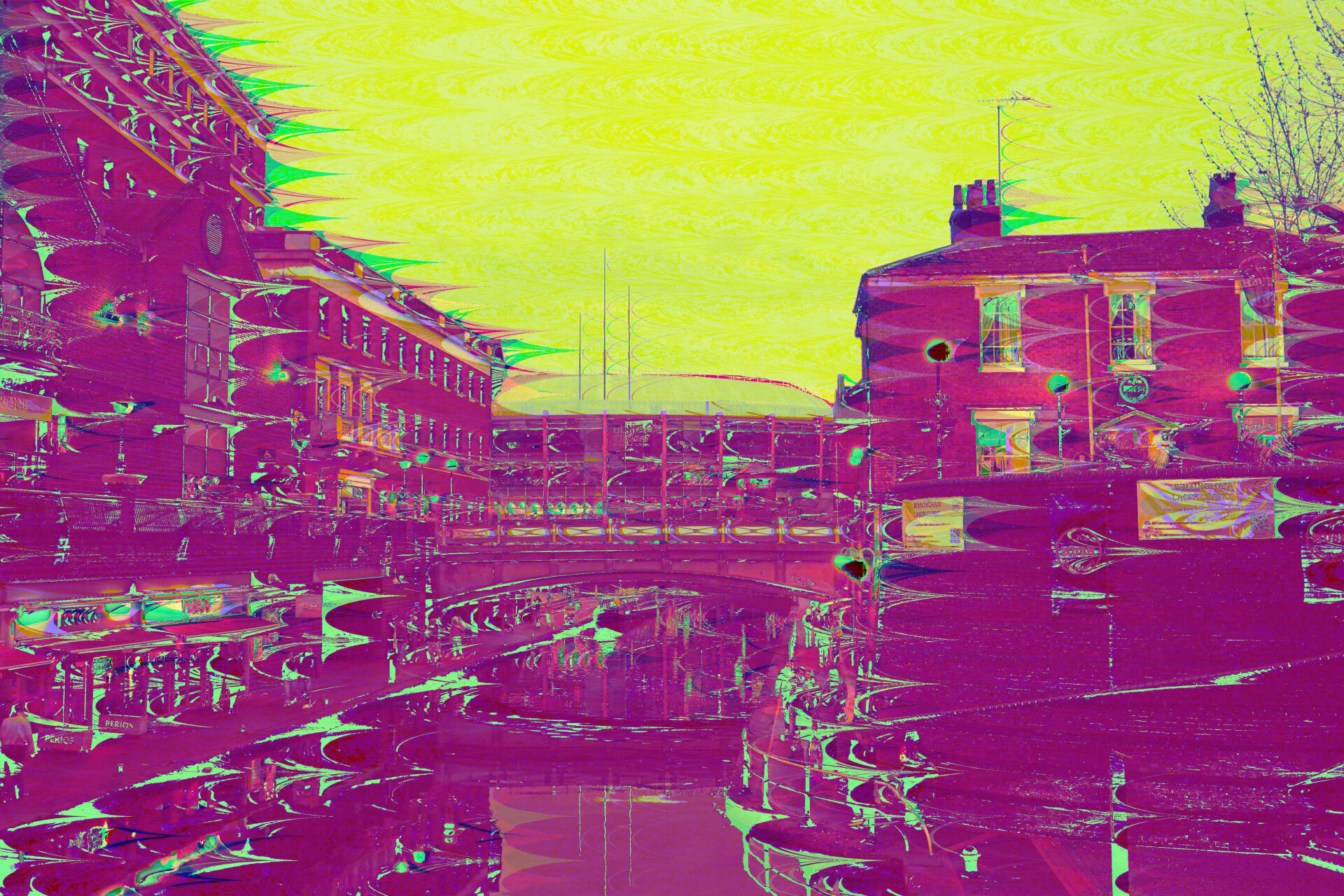
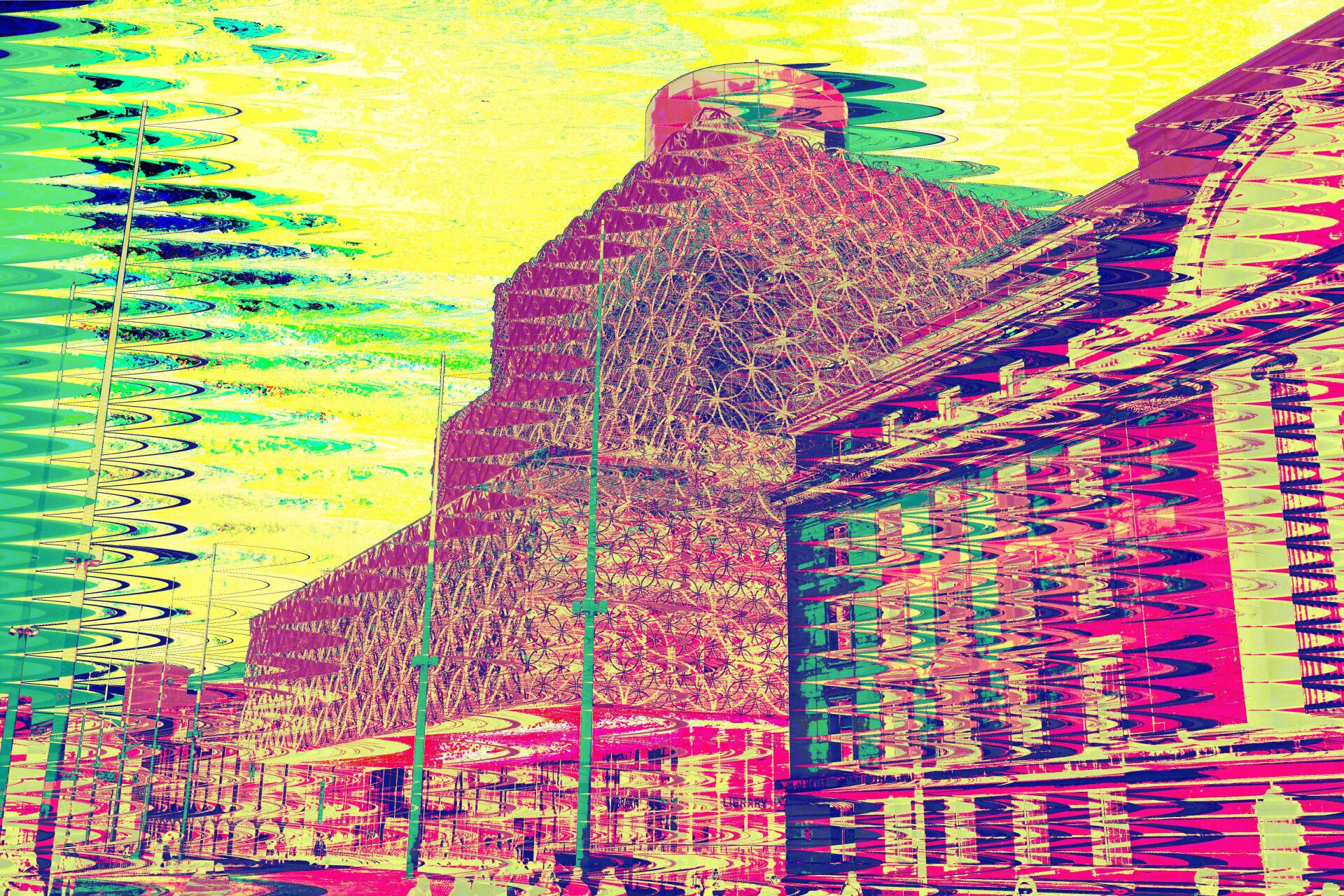
Pixelated patchwork
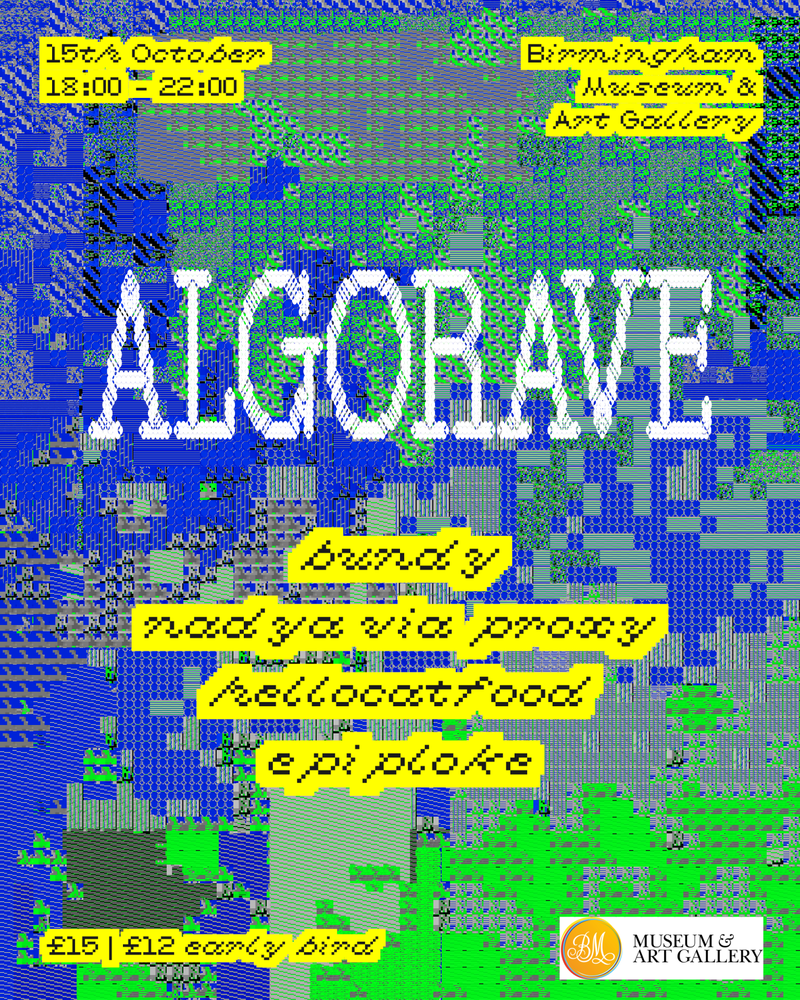
Perhaps I’m in an algorithmically curated rabbit hole, but I have noticed a resurgence of pixel art imagery over the years. In particular people making pixelated images using tiles from computer games. I used to do a bit of this in 2012, in particular with this image series. I never did much with it beyond a few posters, and even more recently with the Algorave BMAG poster.
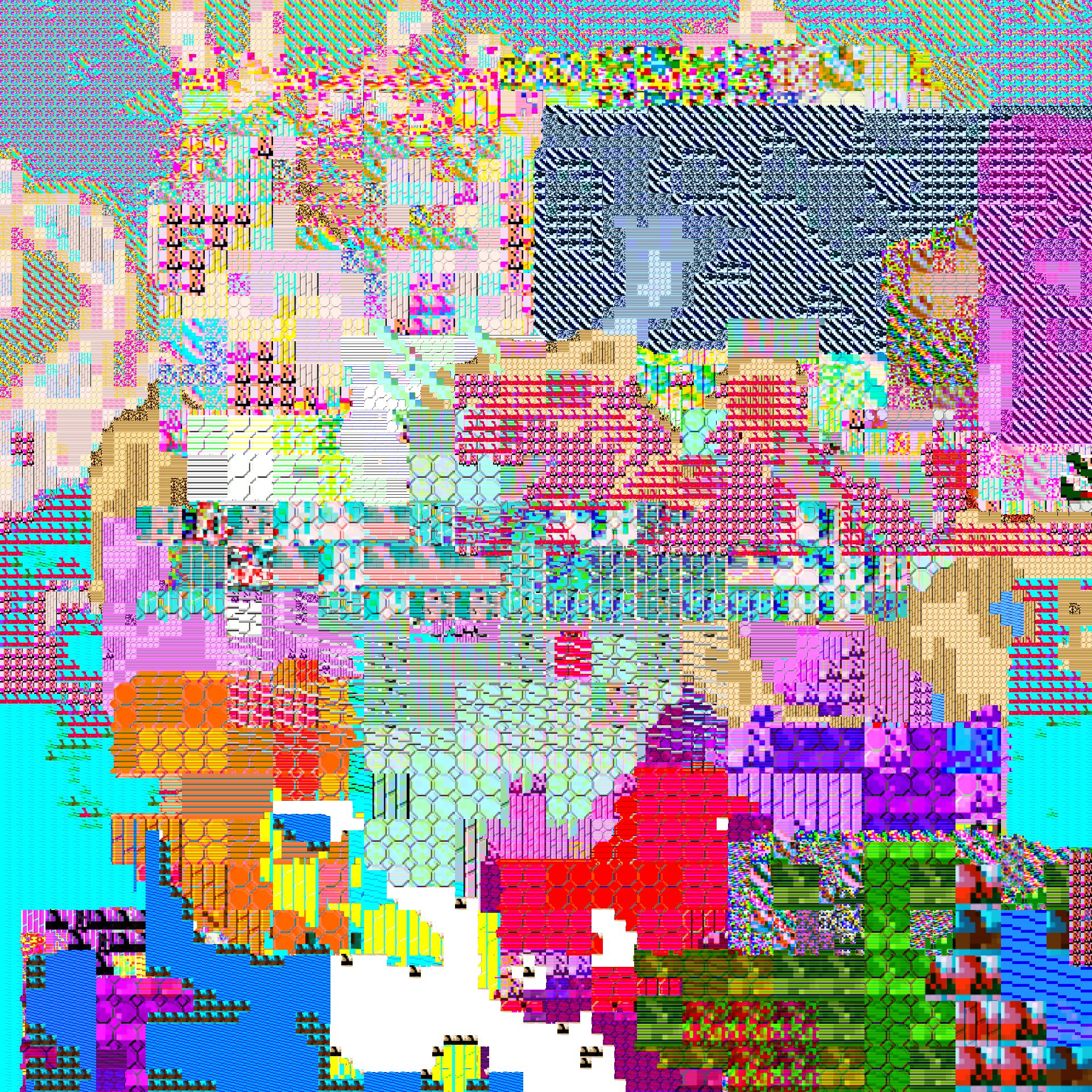
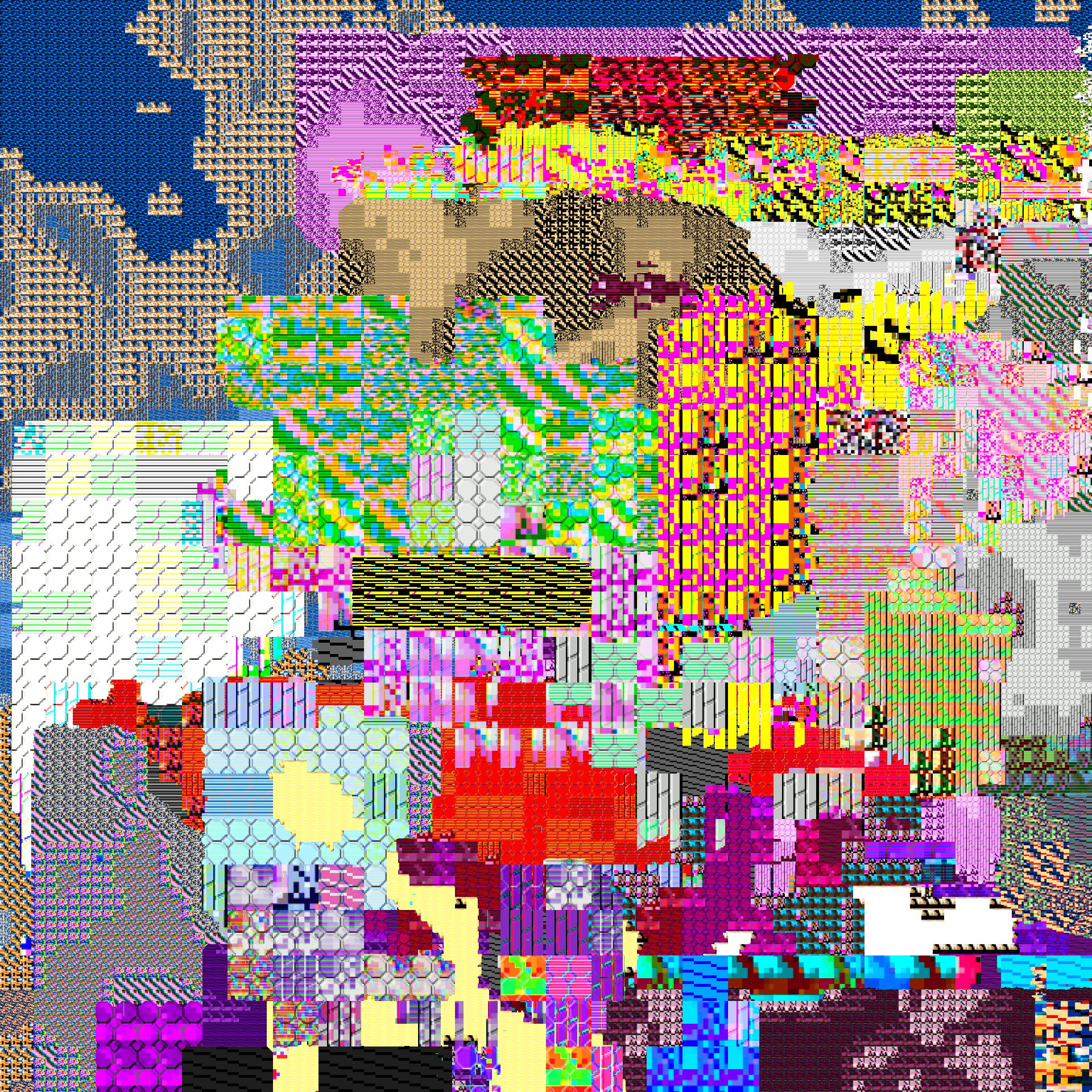
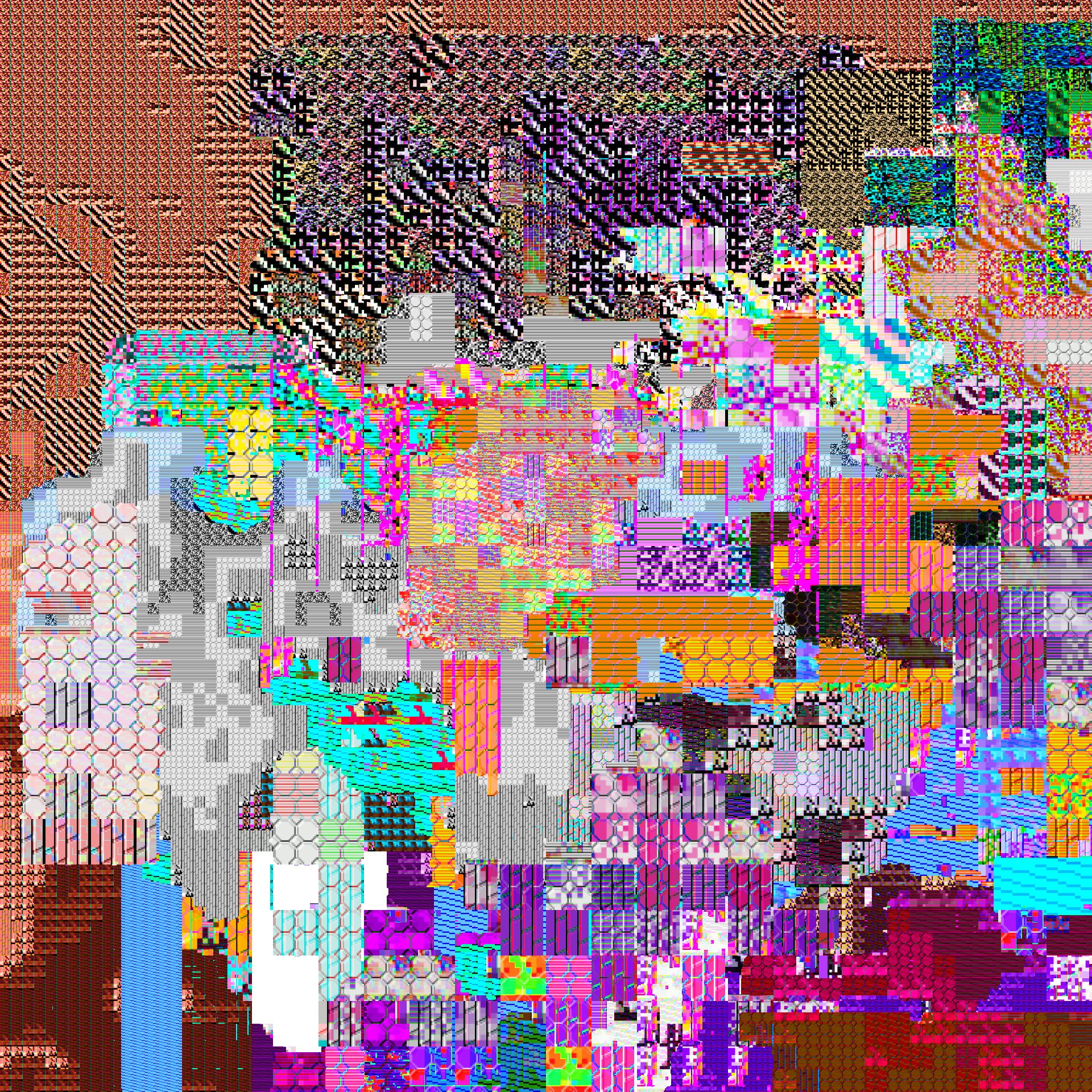
I have been combining this process with some patchwork-like techniques to create these images. They’re really fun and I would like to explore using these with textiles or other printing methods.
Visually Similar
Visually Similar was one of my favourite projects of 2019. The two videos were developed for a one-day event at V&A and I have wanted to revisit the techniques and aesthetics ever since.
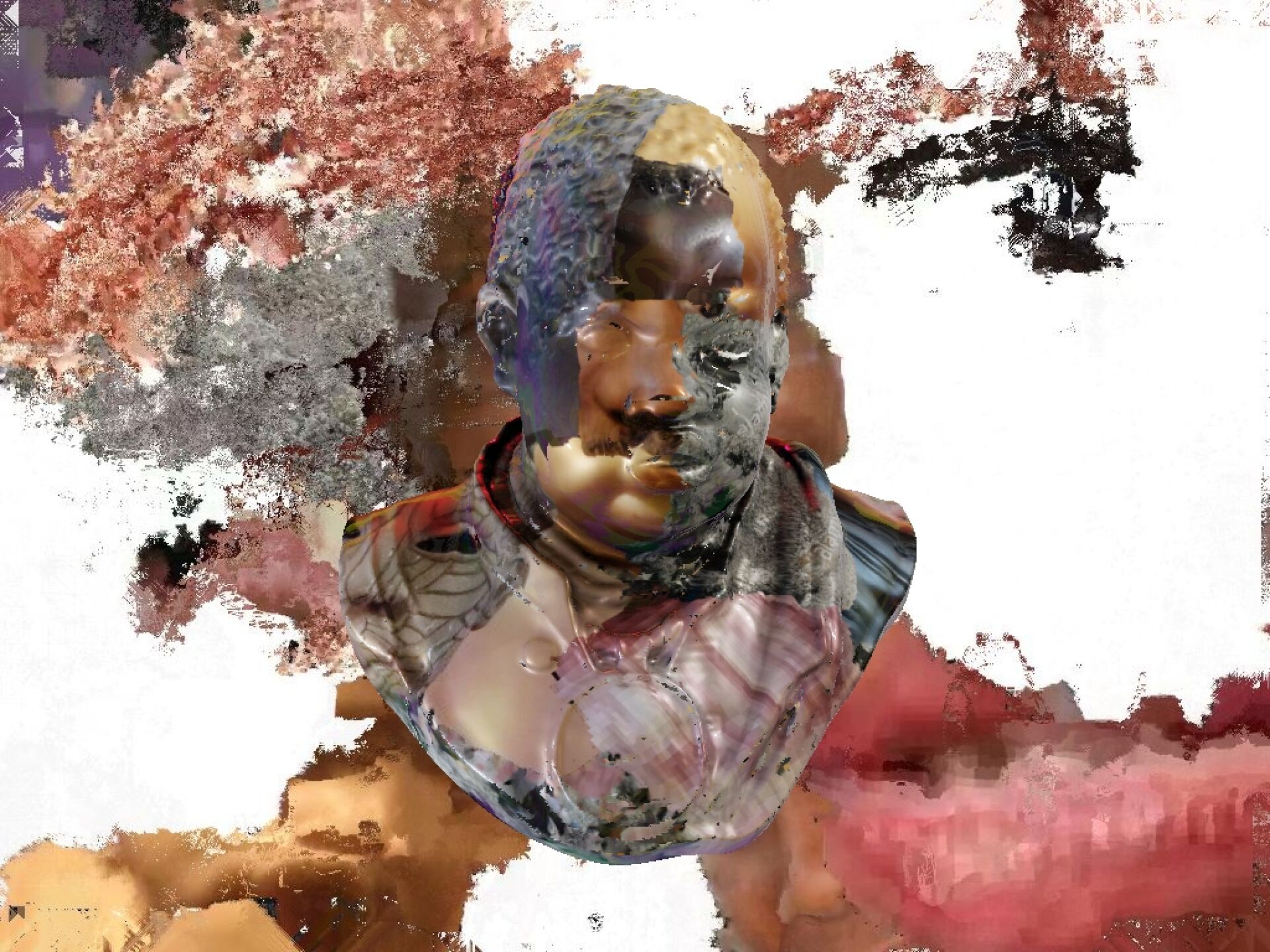

I started create something new for an exhibition in 2020 but the curator really didn’t like what I was creating and said so quite bluntly, and so it didn’t go ahead. It’s really sad and unfortunate that this experience put me off creating anything further in that style. However, enough time has now passed that I think I’m ready to start again.
Copyright Atrophy
Although the Copyright Atrophy project is from 2013 I don’t consider it completely finished. I started making a video combining all of the logos in one display, with the idea to have an accompanying soundtrack that degraded over time. I displayed the silent video at Piksel in 2018 as one of their Pikselsavers and used a still from the video for an episode of Art of Now on BBC Radio 4 in 2019.
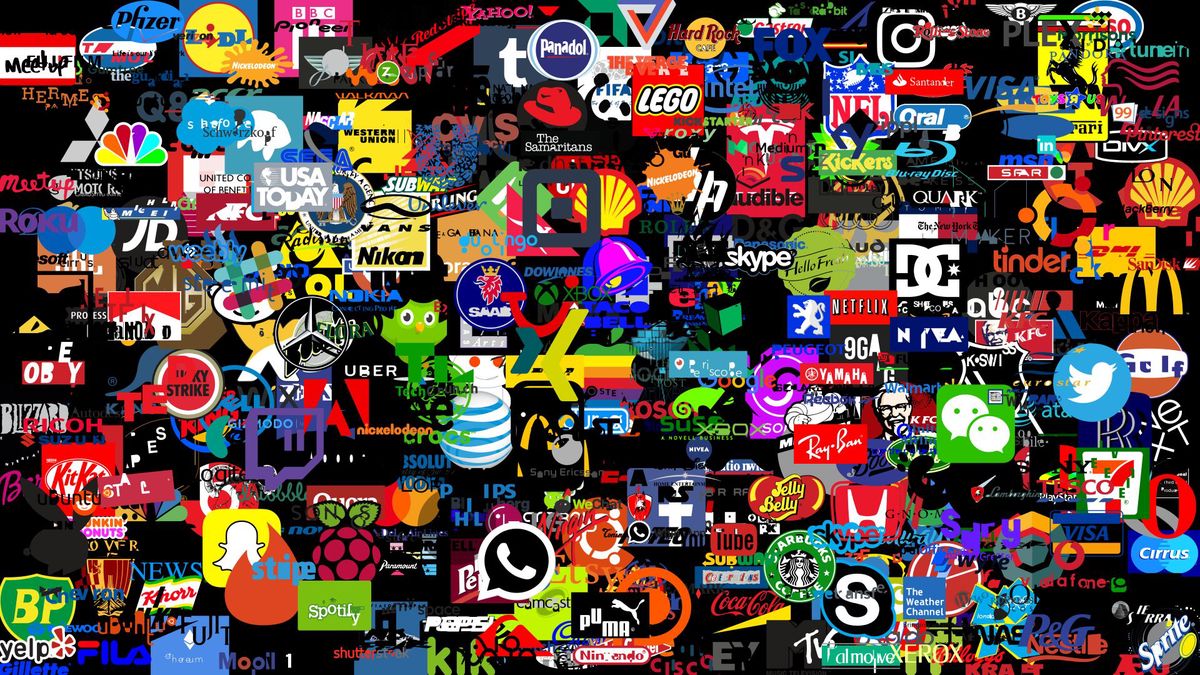
I have been taking small steps to complete the soundtrack and then finally complete the project. I’m aiming to exhibit it somewhere in 2027.
badcirculation
badcirculation has been a collaborative project between myself and Maria Witek since 2019. We don’t perform that often but it’s always so much fun when we do. We have finally recorded an EP but we’re just in the mixing and mastering stage. It’s taking a while but it will be done soon. Here’s a recording from 2025 to give you a taste of what’s to come.
Forward
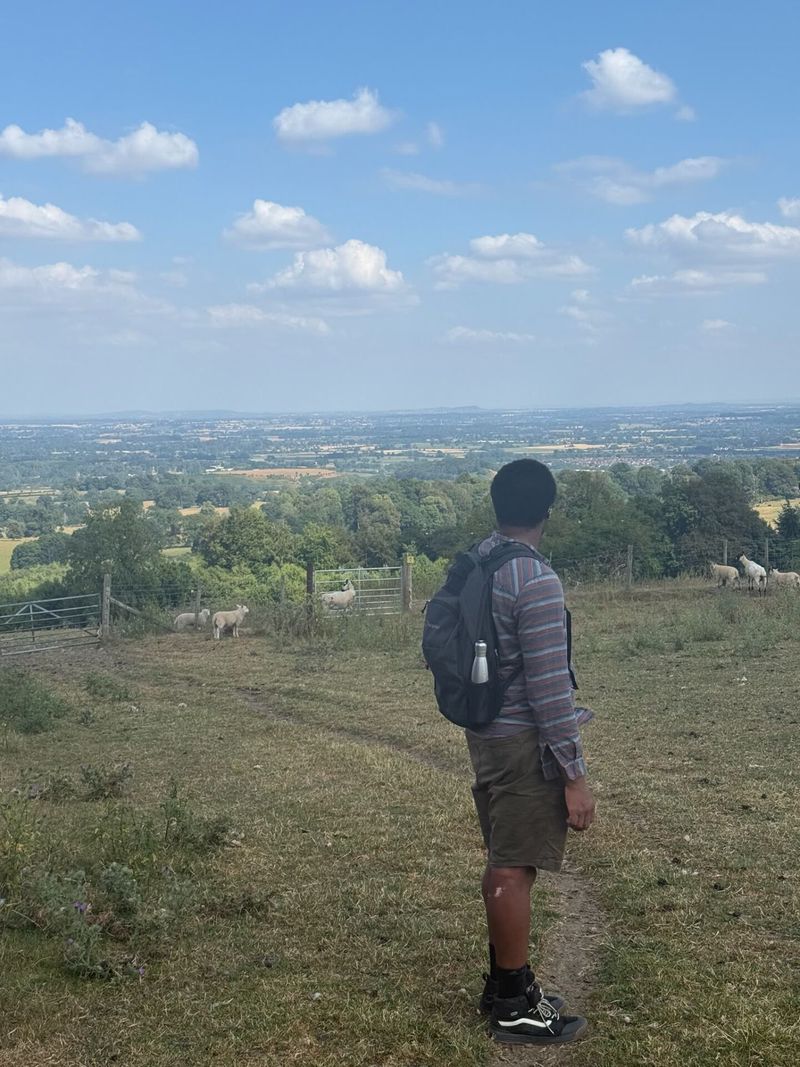
It has been a challenging few years but I am in a much better place now. I am worried about the future for many reasons (climate collapse anyone?!) but I am in a much better place in terms of my health and creativity and so feel ready to take on these challenges.
Thanks for reading!