Updated
August was a particularly quiet month whilst I sorted out many things, including redesigning my website. There are still a few pages to reformat, but if you notice anything wrong please let me know.
Lots of news coming soon!
August was a particularly quiet month whilst I sorted out many things, including redesigning my website. There are still a few pages to reformat, but if you notice anything wrong please let me know.
Lots of news coming soon!
Stenchival 2010 took place in Leicester on the 7th and 8th August. The festival was held at the Fabrika Independent Arts Centre in the heart of Leicester.
The first day saw us all at a workshop where we made our very own Atari Punk Console. At a past fizzPOP event Jimmie Rodgers brought a few of the kits to make these with him but unfortunatley I was spoilt for choice by all of the other kits and didn’t get to build one. The instructor for this workshop was Stu Smith, better known as ASMO (Anti Social Musik Order), who is a well known circuit bender from Leicester.
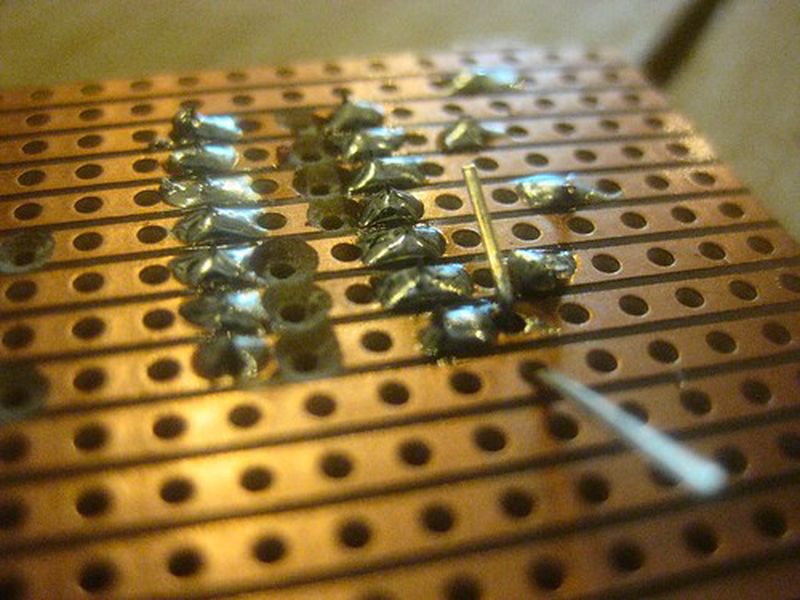
My soldering skills weren’t quite up to scratch and I even managed to work on the wrong side of the veroboard, but luckily a lot of help was at hand. After a few hours I produced this finished Atari Punk Console. Thanks to Circuit Ben for providing the box that I’ll soon fit the device into properly
The evening was filled with VJ performances from some very talented people. I’ll let the video do the talking!
The second day started with a VJ workshop, although it seemed less of a workshop and more of a skills and ideas exchange. Tony from The Lab provided quite a good in depth overview of VJing without using laptops, which seems to be the norm recently.
Sean Clark of Cuttlefish also showed how he VJs using Max/MSP. This really interested me as I’d used Pure Data (the open source equivalent) for a while and was interested in how I could use it in live performances.
Unfortunately I was unable to stay for the final performances of the evening but Sean did suggest that we make a habit of meeting regularly to discuss and share our VJing skills. He recently set up the Leicester AV group on Facebook, which I hope to attend as long as it doesn’t clash with GLI.TC/H
Overall I was really glad to have gone to Stench. Whereas my past work tended to lean towards traditional media my more recent output involves more performance and video and so learning from VJs and other performers will benefit me greatly!
Above all thank you so much to New Generation Space, based in Stoke-On-Trent, for providing a bursary to fund my day at this rather awesome event!
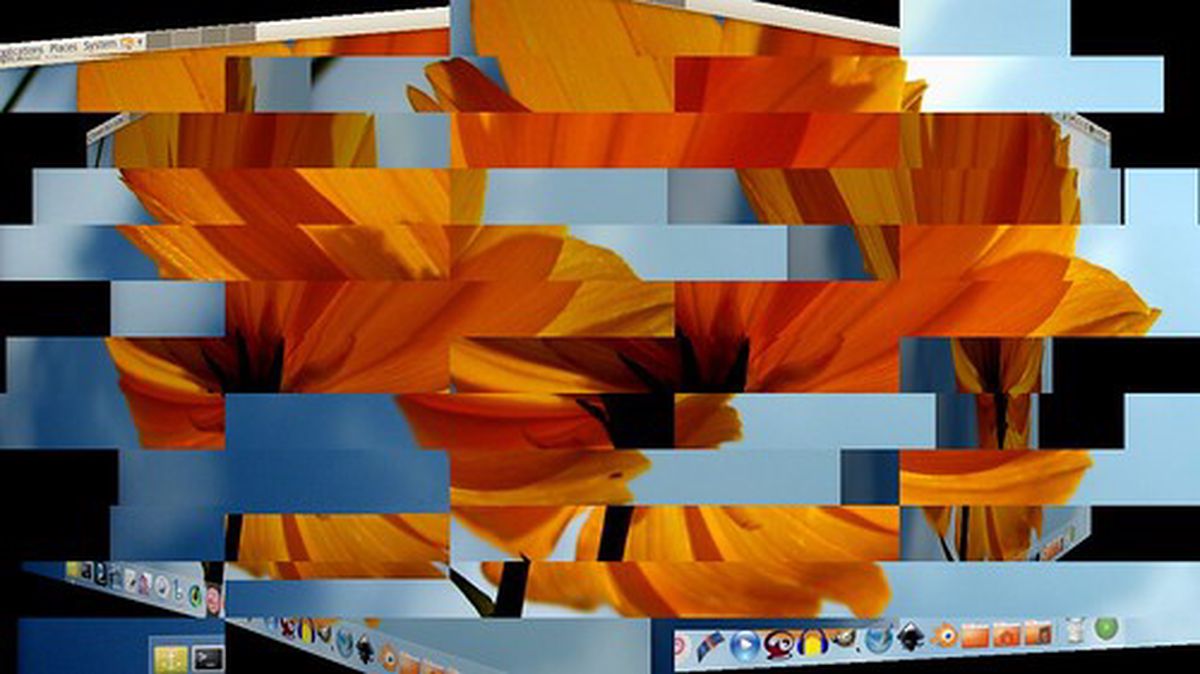
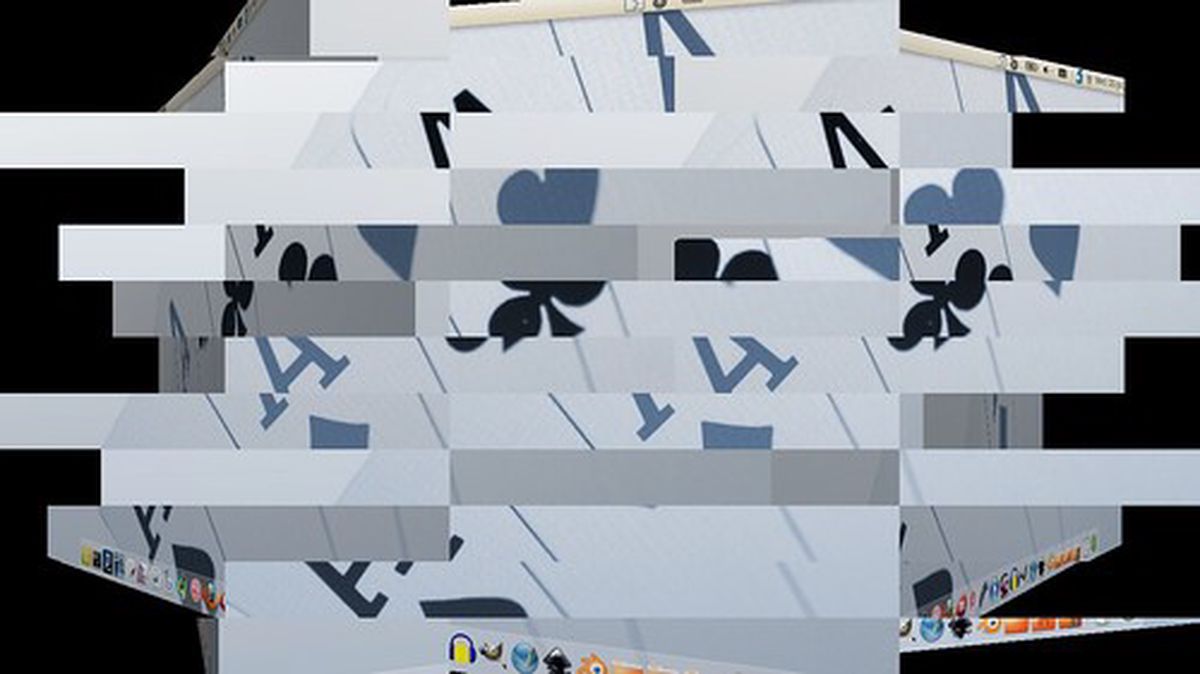
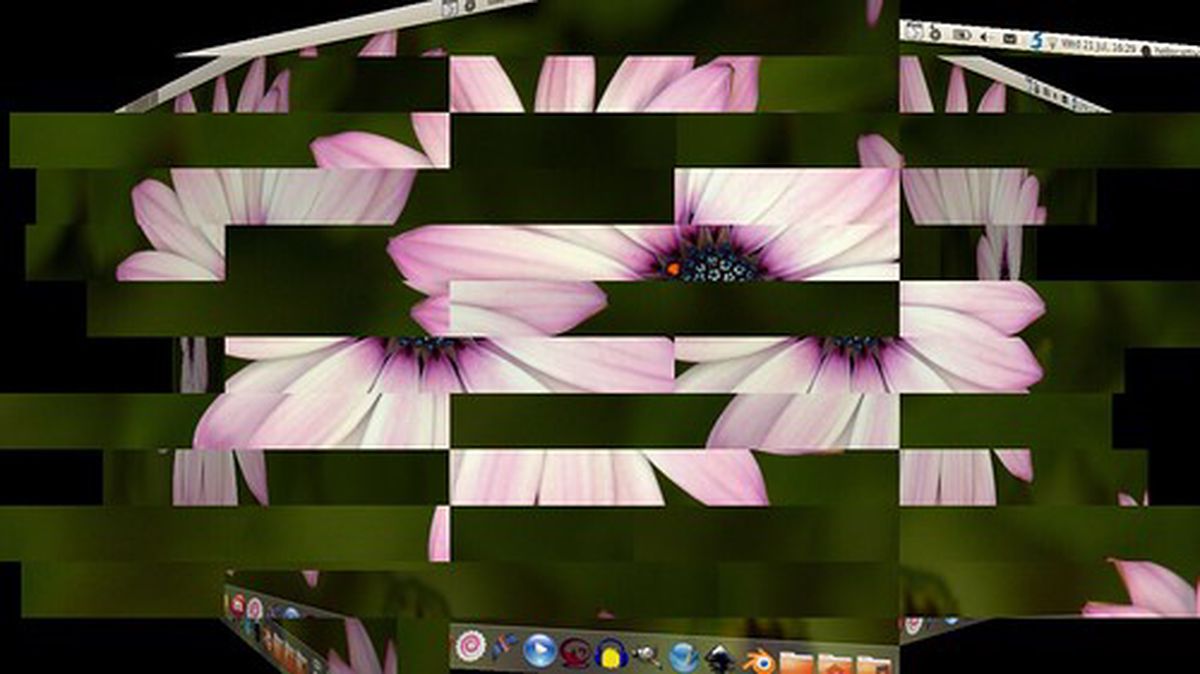
The results of trying to take a screenshot using Shutter whilst spinning the desktop. See more on flickr.
Recently there’s been a trend amongst glitch artists to do more video glitches. I’ve been pretty quiet on that front whilst I work on my techniques. Here’s the first results of my experiments using Chris Cunningham’s short film Rubber Johnny as a test subject
Just from these tests I can see the opportunities that using video presents, especially when using audio. I can definitely see more of my work being like this
Making Dataface was really quite an exciting journey. What started off as an attempt to make a typeface inspired by glitch art turned out to be a story of collaboration, exploration and hours of research. Here, I will go through my process.
As you may have seen from my previous experiments in vector databending it’s totally possible to manipulate vector files. My original method for creating Dataface was to save each glyph in the Liberation font to an SVG file and then go through the process of glitching it for each file. Obviously this would’ve taken me a long time, hence why there was very little activity between my original announcement in January and when I started work on it again a few weeks ago.
At this time I thought about writing a script to do this for me. sed is a great command-line utility for Linux that essentially does the same as using find/replace on a character. As it’s command-line it means I can do a lot of automation with it. So, I wrote this simple script that attempted to solve the problem
#!/bin/bash rand=$(($RANDOM % 9)) sed -i s/[0-9]/$rand/g fontfile.svg
The only problem was that it would replace all numbers in the file with whatever random value was chosen by $rand as the script was executed. Not only is this bad because it would result in a lot of strangely similar glyphs but also because it would modify the header data of the font file, thus rendering it unreadable. I soon remembered that recently the SVG Font specification was finished, which aided my cause by putting all of the glyphs in one big file, but I still couldn’t find a way to efficiently randomise values in the file.
Thankfully fizzPOP came to my rescue. I’m glad that hackerspaces have people with a range of abilities in hardware and software, as I was soon presented with a solution to my problem by GB. After a few revisions he created a script that would replace only specific values in the file and wold even let you specify how much it should be randomised. You can download the finished script and source files and have a go for yourself.
](/blog/create-your-own-glitch-typeface/images/5516579032_d086225f7d_o.gif)
Simplified instructions on compiling the script:
flex -t glitch.l >glitch.cgcc -o glitch glitch.c
in either case, you will get a program called “glitch”.
Please note this has only been tested on Linux, requires Flex (available in the Ubuntu repository) and it is designed to work on SVG font files. I only know FontForge that is able to create these fonts files. To run the script do the following
./glitch 0.50 outputfile.svg
That tells the script to glitch the file by 50%. I have noticed that sometimes you get errors if you put in 1.00 or more.
Once you have generated the file you can import it back into FontForge to save as a .ttf, .otf or whatever font type you choose!

Here’s everyone’s favourite Comic Sans glitched at 50%