Blog

Reading List for 2009

I tend not to make any resolutions as I believe that learning and achievement should be something that’s life-long, not constrained to a time period. Despite this I’ve decided on my reading list for 2009+. It generally consists of books I haven’t read yet but does include some that I want to revisit with a new perspective:

  • 365 Ways To Change The World by Michael Norton. Something I’ve had for a few years now. I’ve never done each task in the book, rather picking a few and concentrating on them.
  • The Lonely Planet guide to Great Britain. I’ve had this for a few years as well. I use it quite regularly when on the road.
  • Hard Boild Wonderland and the End of the World and Norwegian Wood by Haruki Murakami. I’ve read and greatly enjoyed two of his other books so these should be a treat
  • Talk to the Hand by Lynne Truss. I’ve read this once, but since I’m more interested in interactions and communities it’ll be great to revisit her opinions on manners and courtesy.
  • Eats Shots and Leaves by Lynne Truss. I’ve been warned that this book isn’t an instruction book on how to use the English Language, but none-the-less I’m sure I’ll learn something
  • Bad, or the Dumbing of America by Paul Fussell. I bought this back in my day as manager of an Oxfam bookshop and I still know little about it. Now’s the time to find out
  • Me Me Me by David Huggins. An impulse buy from mid-2008. Could be utter trite, could be a shining light.
  • Executioner’s Art by David Fine. A birthday present from 2007. I started reading it but either in the first chapter all of the punctuation was missing or I couldn’t yet read because it just didn’t flow at all. I’ll give it another go.
  • A Clockwork Orange by Anthony Burgess. I really enjoyed reading this book but my attention moved elsewhere - possibly to finishing my degree - so I have yet to finish it.
  • What is a Designer by Norman Potter. I bought this in early 2005 expecting it to be about visual art but instead it’s more about architecture. Regardless of this a lot of the principals still apply. Worth a revisit
  • No Logo by Naomi Klein. This book I accidentally inherited from an old friend (if you’re reading e-mail me if you want it back) back in 2003. I started reading it then but was so uninterested. With my new found interest in issues of freedom I gave it a read in 2007 and think it’d be good to revisit it now and then maybe move onto her next book

So, that’s my list for now, but I’m sure I’ll inherit more books in time.


More Blender Renders

Since my last post about using Blender with vectors I’ve explored taking vectors into it and then exporting jpegs. Below is an image I stated creating awhile back in Inkscape but never finished.

Click for full size
Click for full size

This is what it looks like after I’ve taken it into Blender and messed around with it a little bit

Render from Blender. Click for full size

Pretty snazzy! I’ve still got a bit of composition techniques to figure out, but once I do I think I might take my vectors into Blender more.


Blender renders

For the past month or two I’ve been getting my head around Blender to do some 3D modelling. It’s a tough program to learn, but with the aid of some very useful tutorials and strong community support I feel I’m getting somewhere!

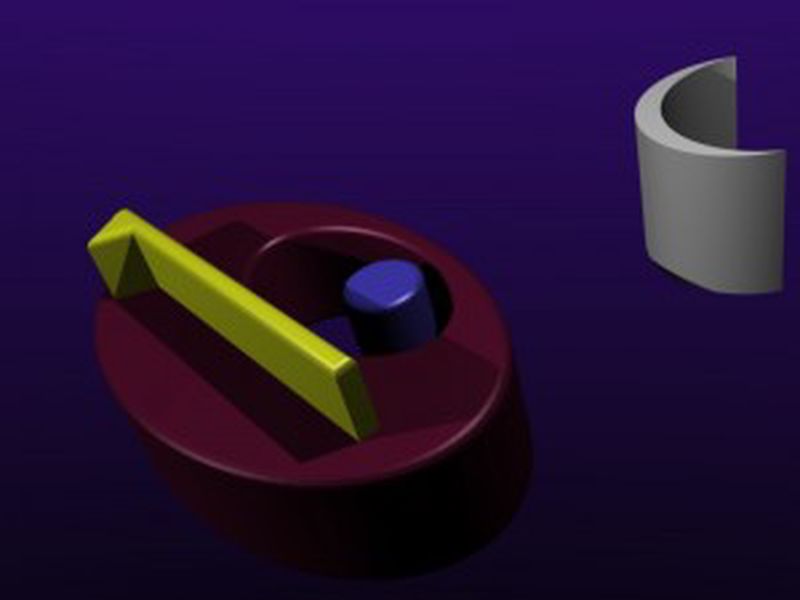
As well as using Inkscape to make vectors I want to explore the possibilities of using Blender to render 3D models as vectors. There’s so many benefits of this approach as long as it works. To do this I’ve tried out to vector rendering scripts written in the python programming language, VRM and Pantograph. VRM was easy to install - just dropped the file in the scripts folder - but Pantograph was a bit more problematic. If you’re going to install it make sure you have the right Python libraries installed! Here’s the original Blender output:

Original file rendered in Blender

I’m getting some reflection off of my surface, but I’ll work on that another time.

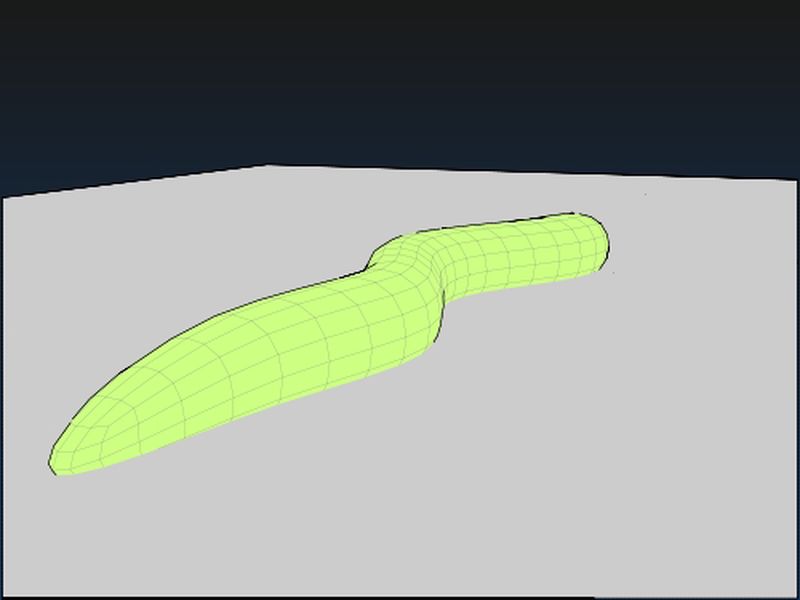
Here’s the results of rendering a simple 3D snake model in Pantograph:

Pantograph render of a snake

The Pantograph render produced the smoothest results by far. When taking it into Inkscape the final drawing is separated into several groups. For the snake you had a group for the outline, the silhouette and the wireframe. Depending on the complexity of your model you may want to delete the mesh. The only problem I’ve encountered is separating objects. Pantograph likes to merge to objects together, thus limiting editing capability. Still, you could always do most of the editing in Blender itself

Render from VRM
Render from VRM

This render using VRM reminds me a lot of the old Playstation/Sega Saturn graphics. You could subdivide all of the faces to get it smoother (set smooth has no effect on it), but it’d take forever to render and you’d end up with an unnecessarily large vector (.svg) file. Still, using VRM is useful for relatively simple objects. You could even combine the two renders!


Make and Do at The Edge

On Friday 29th November I was invited to the first Make and Do Party over at The Edge, which was hosted by Friction Arts.

There were about 20 artists present and there was a strong emphasis on just having fun creating art! I think there’s definite potential to increase collaboration amongst artists, possibly through the use of games.

Here’s some of the pictures from the night:

This is one of my works. It’s looking up onto a baby that’s about to jump off its chair. Jumping Baby

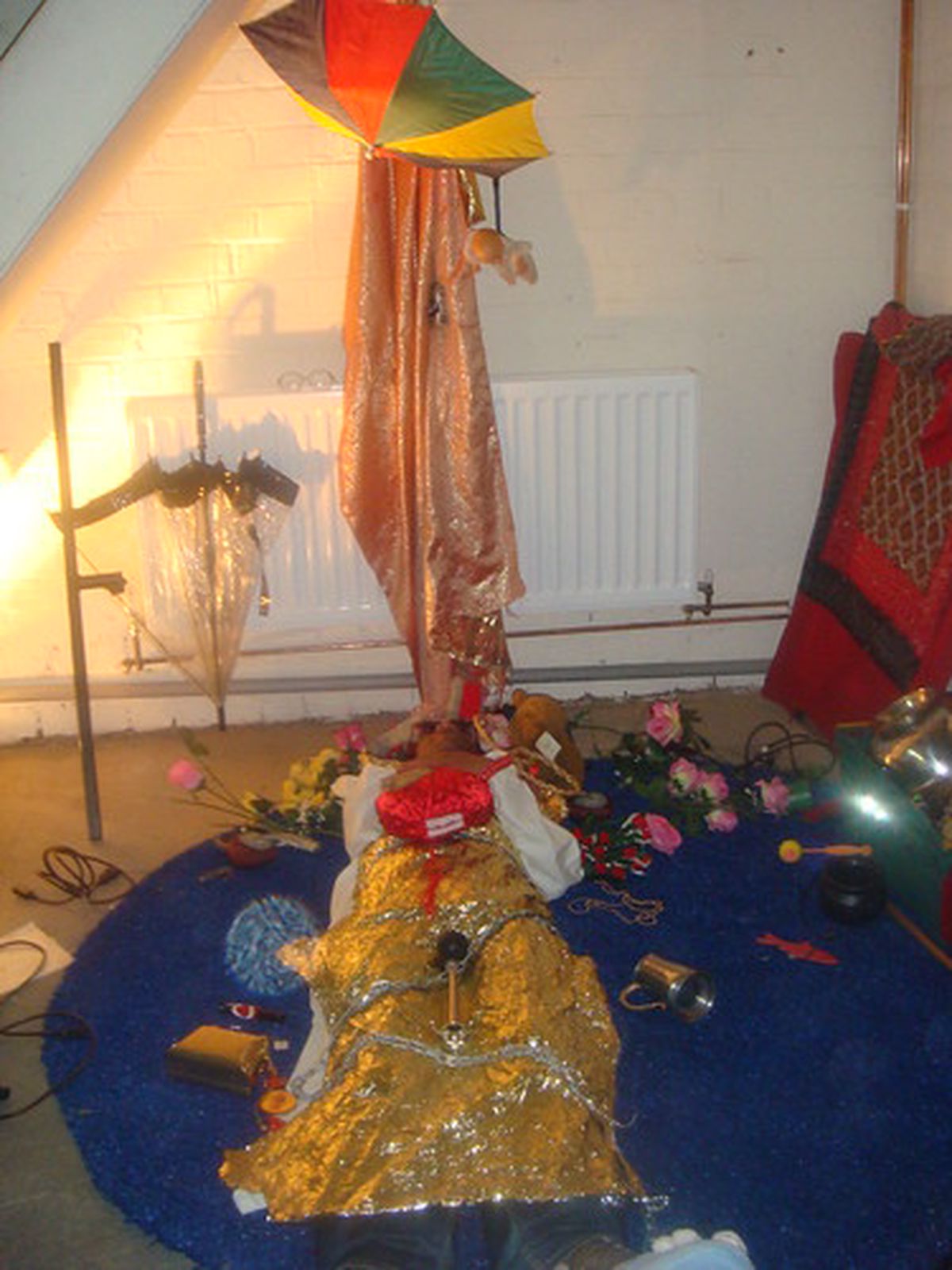
This is the collaborative sculpture most of the artists on made on the night Improvised collaborative sculpture


Open Source Art Zine on The Pool

I mentioned previously how I wanted to start an Open Source Art Zine (or something similar) and I’m still looking for any input! My idea is also up on The Pool. In case you didn’t know the pool is:

…an experiment in sharing art, text, and code–not just sharing digital files themselves, but sharing the process of making them. In place of the single-artist, single-artwork paradigm favored by the overwhelming majority of studio art programs and collection management systems, The Pool stimulates and documents collaboration in a variety of forms, including multi-author, asynchronous, and cross-medium projects.

Once you work your way around the interface why not add your thoughts to it!