I’m happy to announce that I recently joined the Board of Directors over at Fierce Festival
I’ve been attending their festival for much of the time that I’ve been in Birmingham and have worked with them on a couple of occasions, most recently presenting a lecture on internet culture at Fierce Festival 2013.
I’m happy to be joining the board to help them continue to exhibit challenging, exciting and, quite often, weird art!
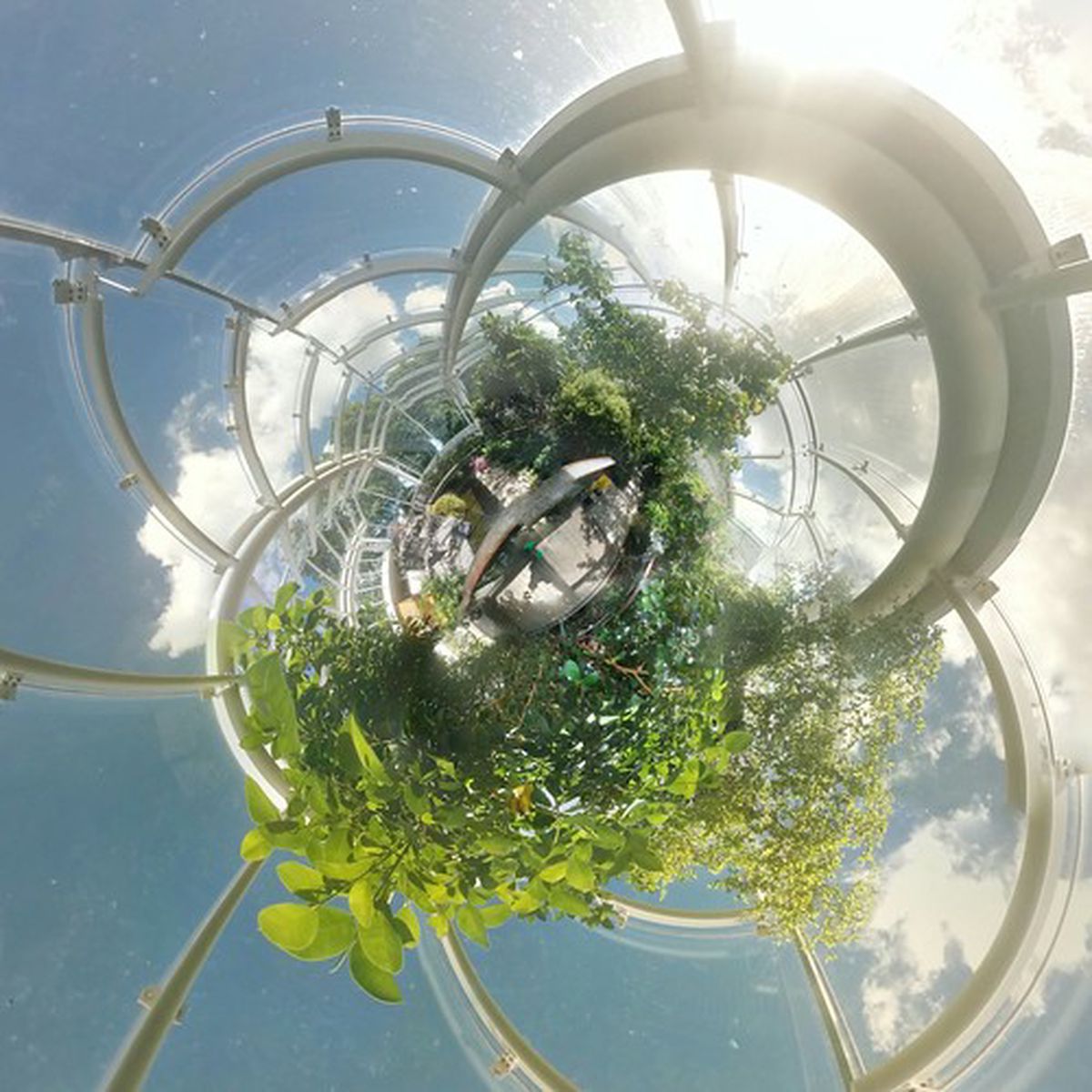
From 9th-15th June I was one of the participating artists in residence at Jesphone Gardens in Leamington Spa for Post-Modern Plant Life: An [RHP] CDRs Artist Laboratory. This was a really great opportunity to do a lot of focussed work on some unfinished projects and also try out new things both on and off the screen. I also probably lost some weight due to how frikkin hot it was!
I started off the week exploring the space and exactly what was available to me. It turns out this wasn’t much. Not even wifi was available! Initially this was a negative thing but it allowed me to *checks Facebook* do work without *checks Twitter* the constant interruptions *checks Tumblr* of social *checks e-mail* media and other distractions.
Feedback Plants
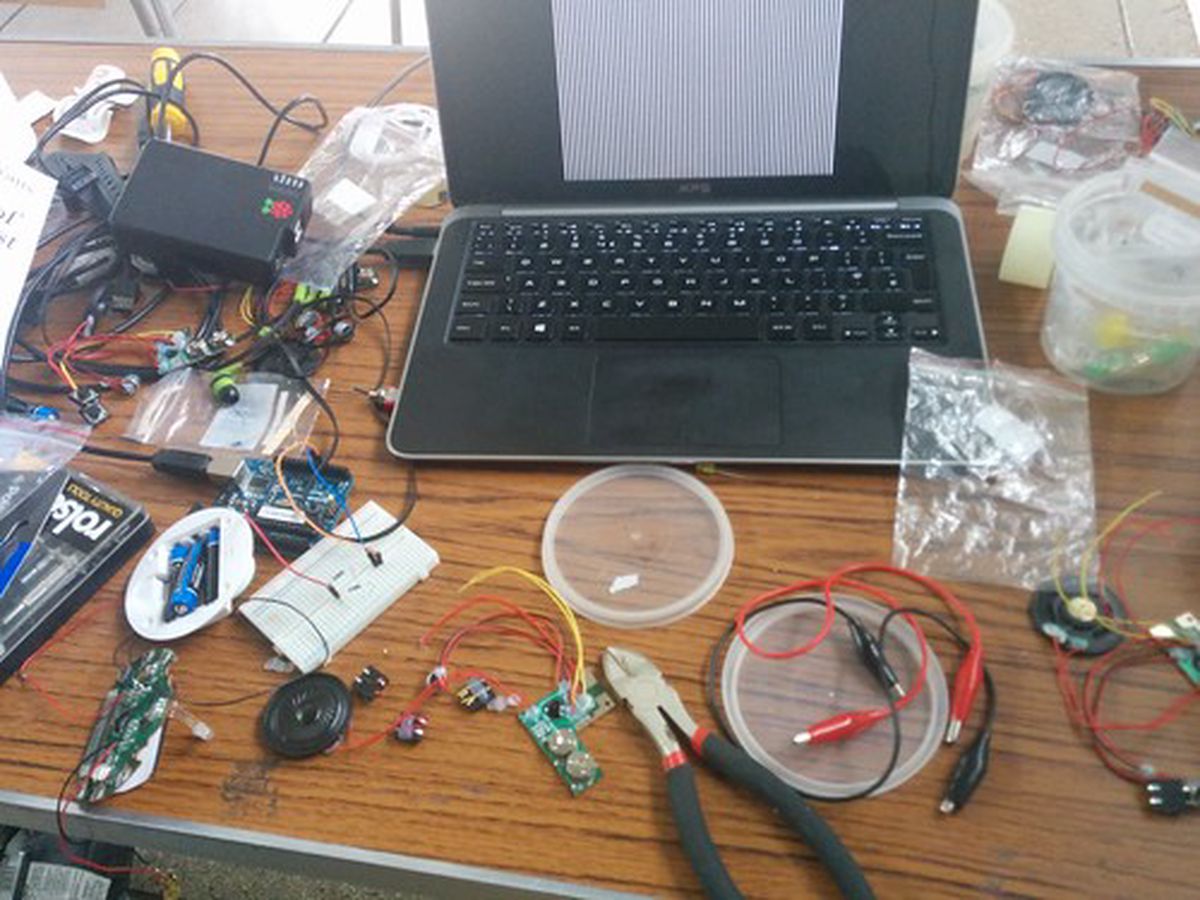
Continuing my theme of feedback loops that has been present in my latest works - especially in my VOID performance - I wanted to somehow feed the either the audio of visual aspect of the space back on itself. Some time ago I had bought these rather inexpensive sound recording modules from the internets. My idea was to use an array of these, connected to Pure Data by way of a Raspberry Pi, an Arduino and Pduino, to record and play back sounds within the space and random intervals.
As with a lot of things in technology, this was easier said than done. I was able to successfully trigger the recording process on the module, but triggering the playback would work intermittently. I may have even destroyed a few of these modules in the process! After this frustration, which came after a few days of trying, I decided to move on. Maybe one day I’ll revisit it.
Digital Maps
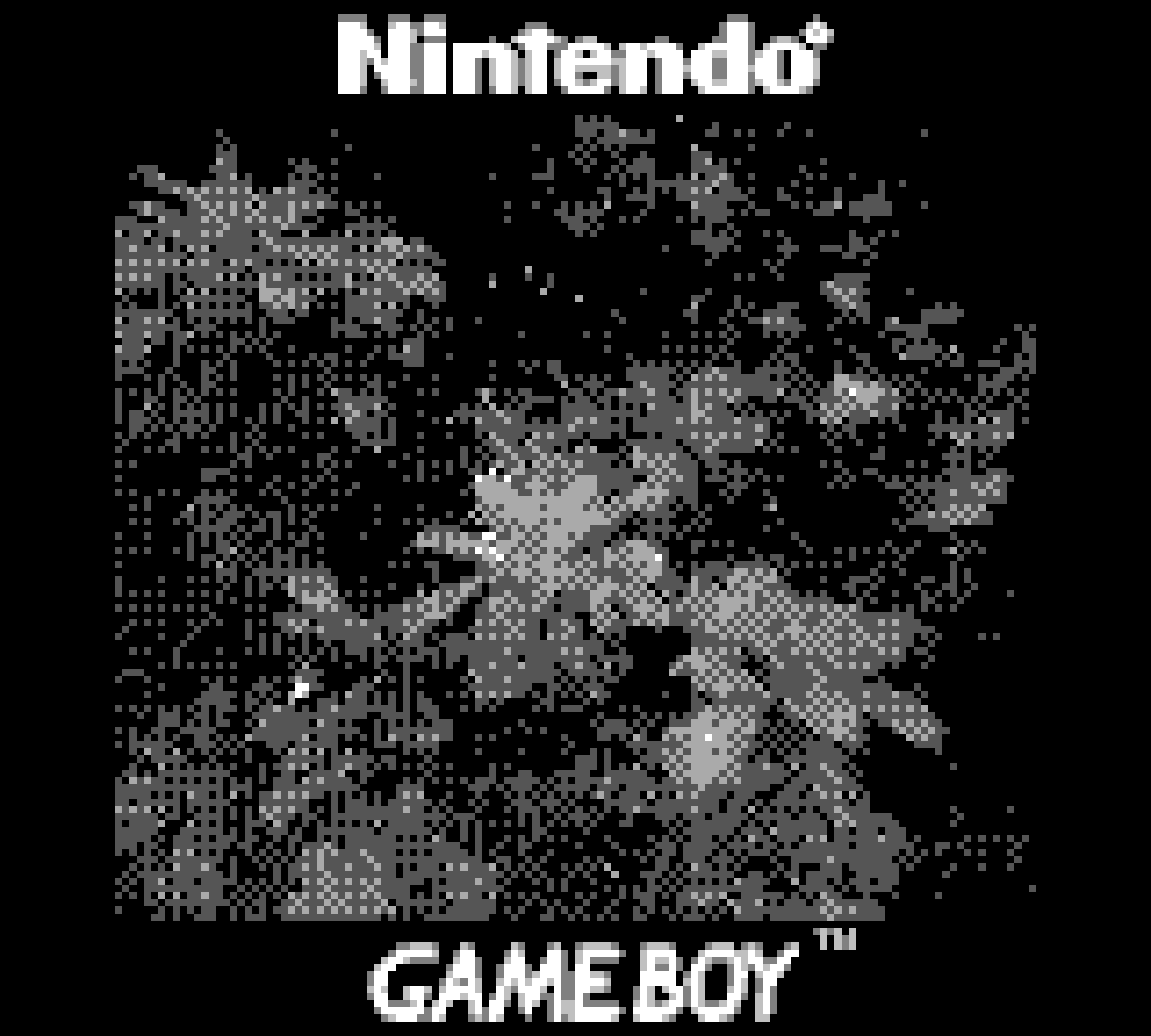
Without provocation or any initial plans for using it, I brought with me on the first day my Game Boy Camera. I find there to be a certain charm to the way it produces incredibly low quality pictures in only eight shades of grey. Even its bulkyness and effort involved in transferring photos appeals to me. I started my research by taking a bunch of photos of things in the space:
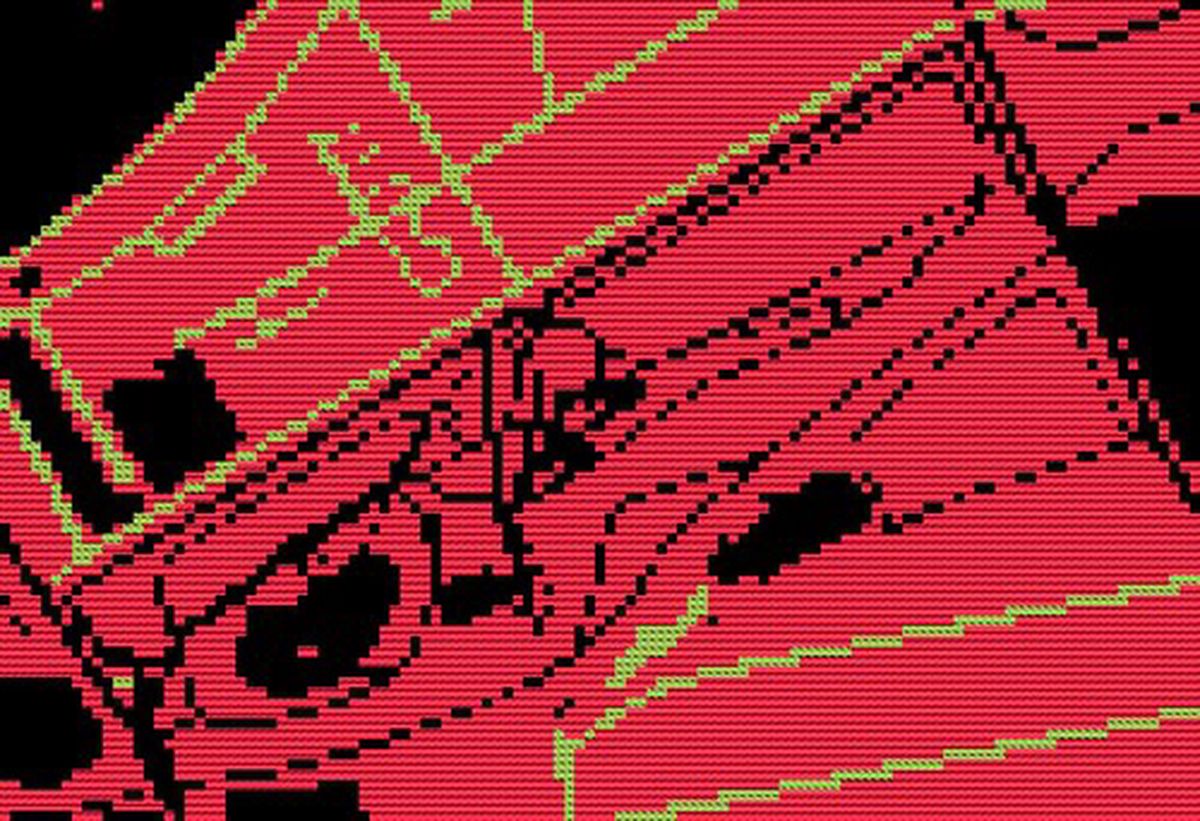
I then began to wonder how else I could pixelate/8-bit-ise not only Temperate House but the whole of Jephson Gardens. A friend pointed out to me that Codemasters have a base in Southam, just outside of Leamington Spa, and also that they made the awesome Micro Machines game. Rad!
Not sure where this is going yet? At the time neither did I.
And one using the Game Boy Camera picture pixels as an input source:
Playing Pixels
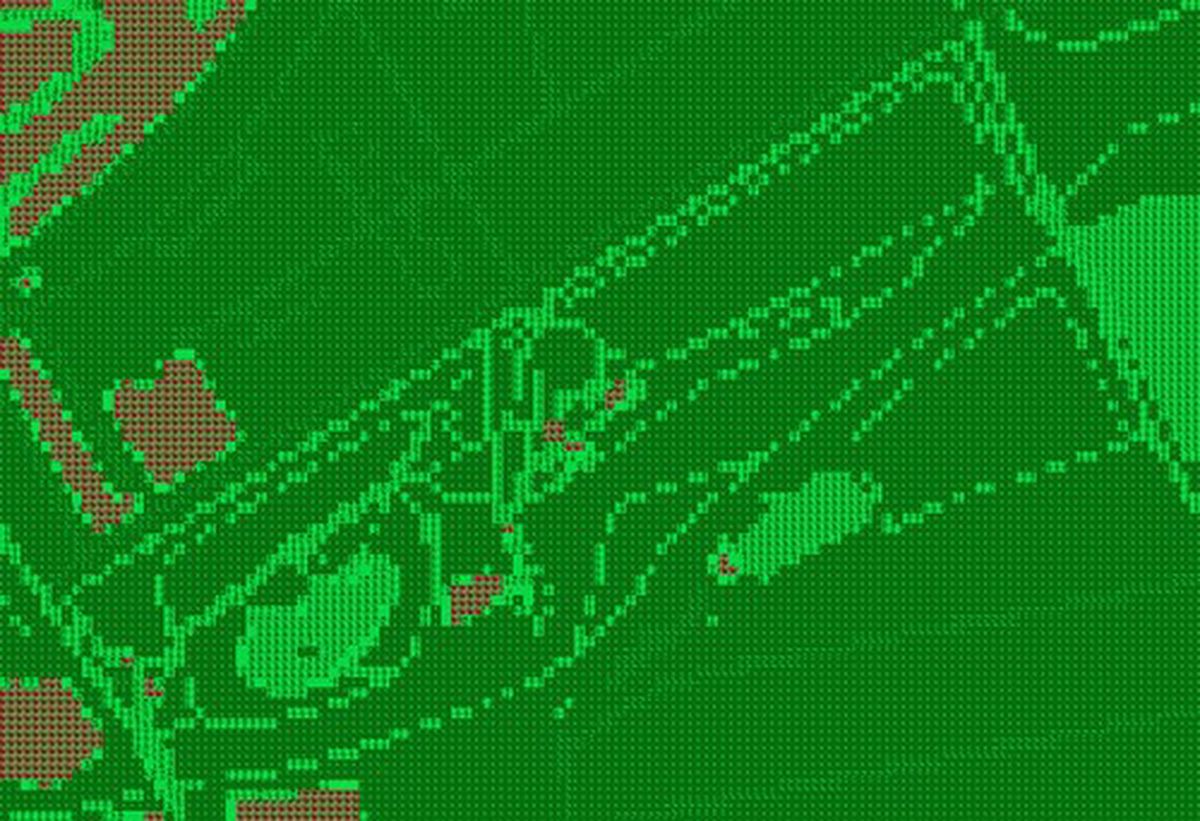
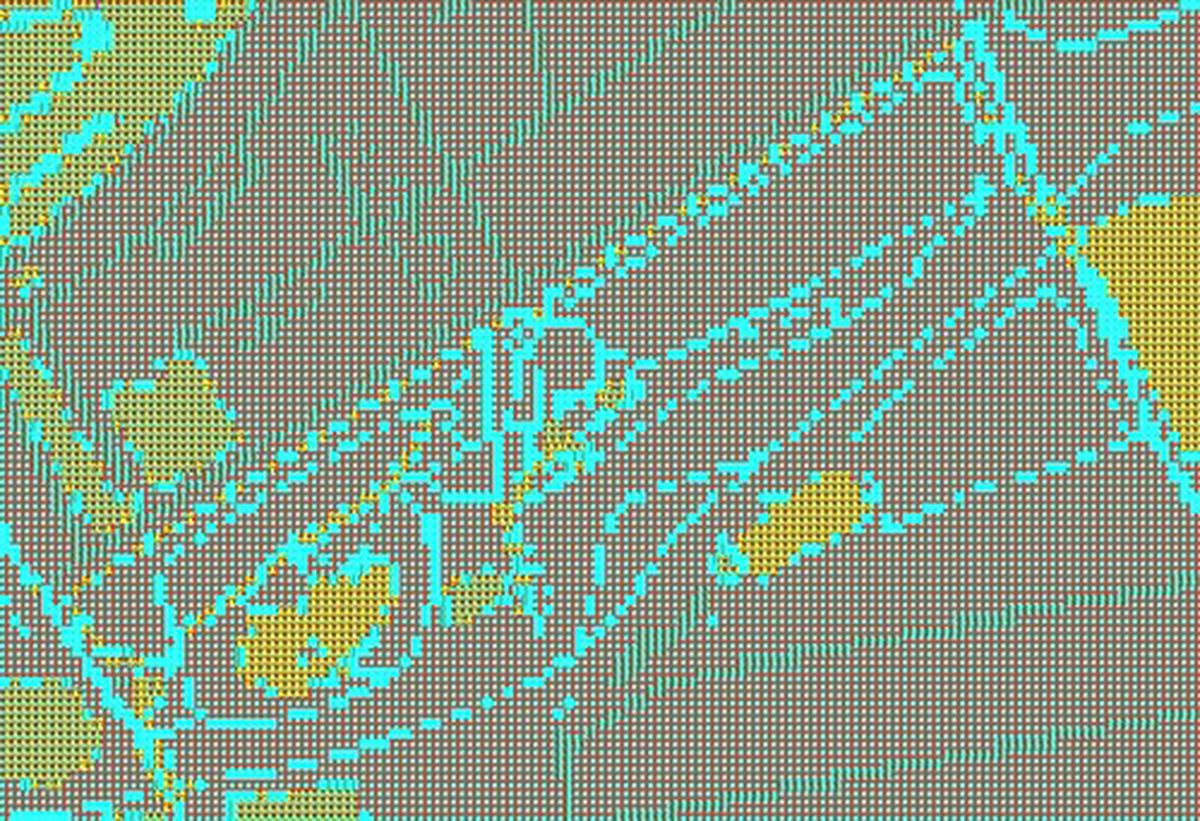
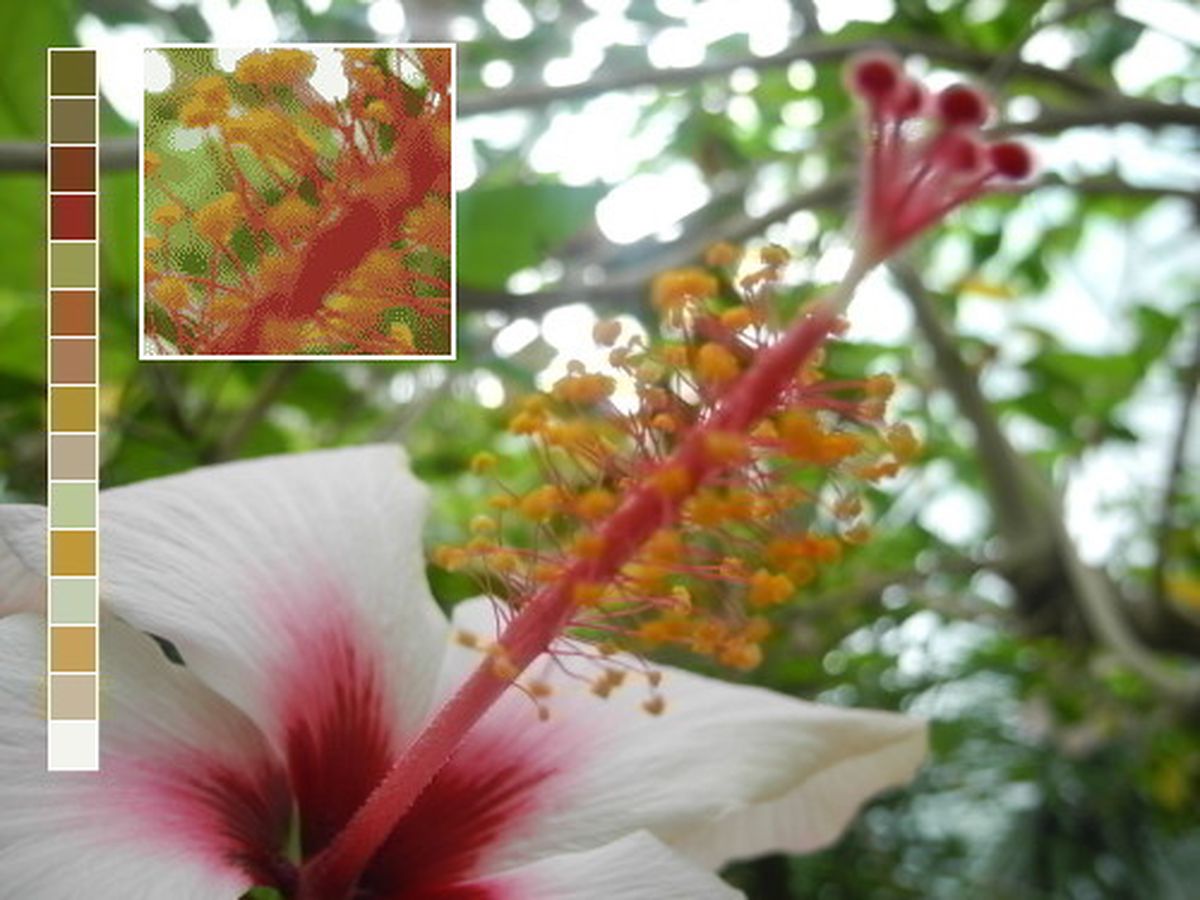
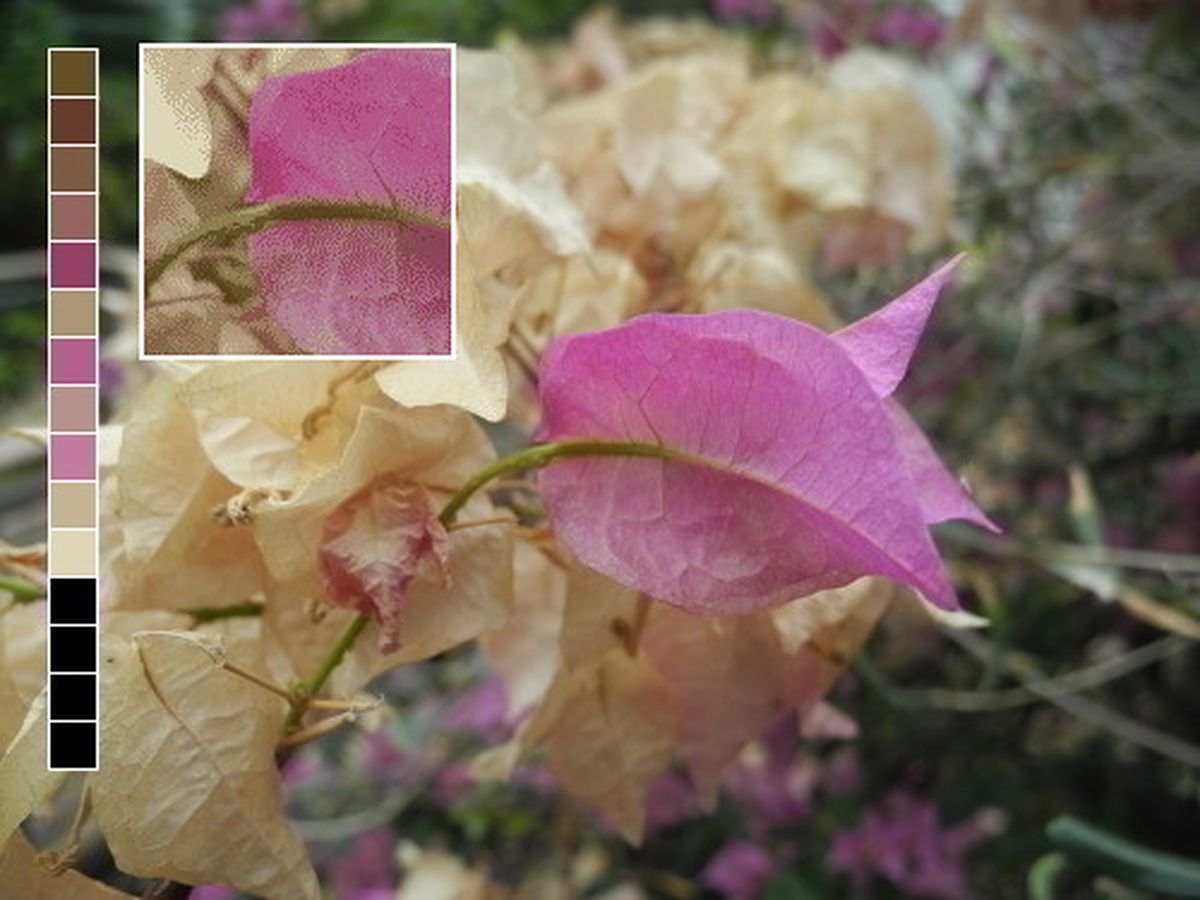
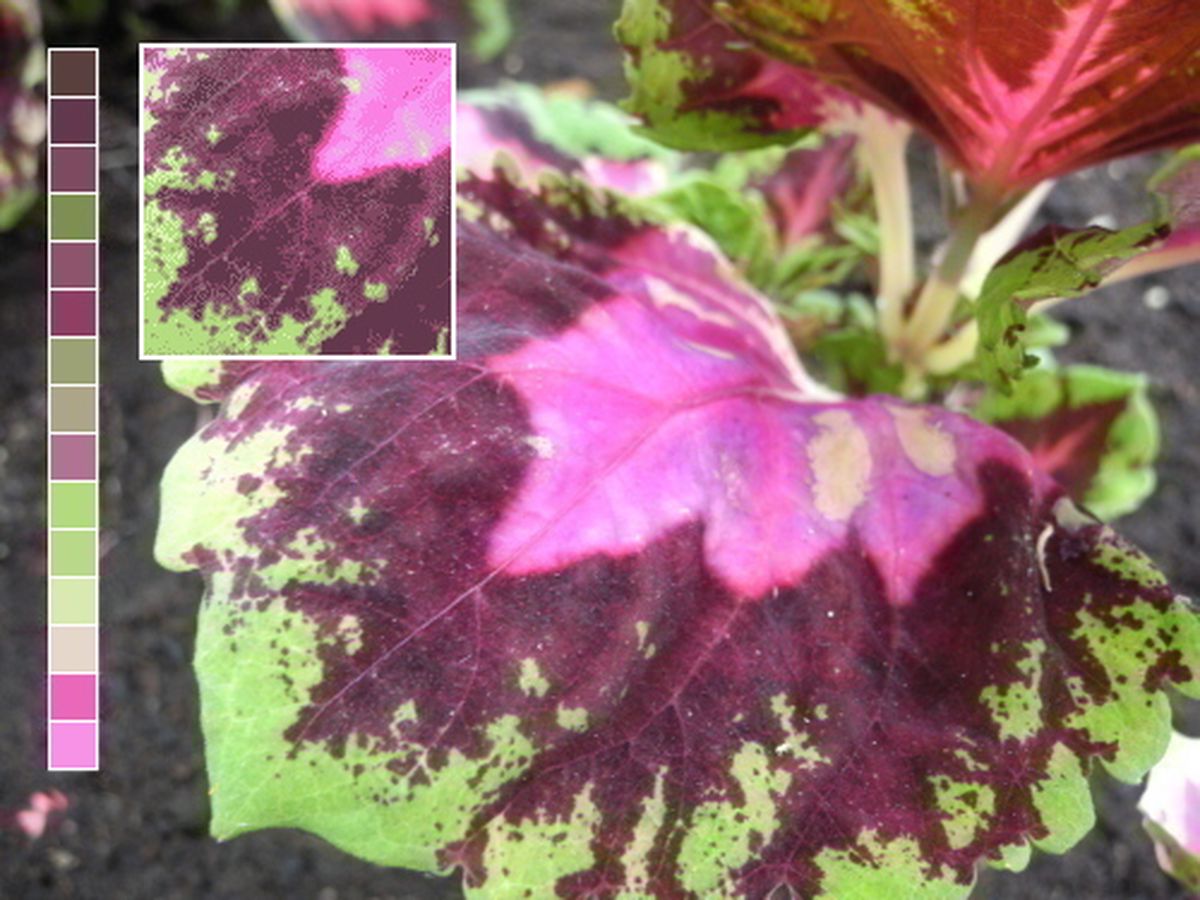
To end my experiments, and the residency, I returned to my very recent studies of sonification of pixels. Using pictures of stuff within Temperate House as a source, I cropped a sqaure area from these photographs, reduced them down to 128x128px and then reduced them to 15 colours (or less, depending on how many unique colours there were in the cropped image). Here are a few examples, with the original, crop, and colours all composed into one image:
#!/bin/bash
#Reduces the colour count of an image and then overlays those colours as cubes onto the image#Developed for Post-Modern Plant Life: An [RHP] CDRs Artist Laboratory https://www.facebook.com/events/1452413868331145/for file in *.JPG
do colors=$1
#line number in colours.txt lineno=1 rm colors.txt
ypos=20#get path of file path=$( readlink -f "$( dirname "$file")")#get filename minus extension file=$(basename "$file") filename="${file%.*}"#get extension extension="${file##*.}"#convert image to a smallerr scale convert "$file" -scale 500x "$path"/"$filename"_small."$extension"#get histogram featuring n colours and save it to colours.txt convert "$path"/"$filename"_small."$extension" -colors "$colors" -depth 8 -format "%c" histogram:info: | head -n 18 | cut -d# -f2 | cut -ds -f-1 > colors.txt
while[ $lineno -le $colors ]do convert "$path"/"$filename"_small."$extension" -fill "#""$(sed -n "$lineno{p}" colors.txt);" -stroke "#FFFFFF" -draw "rectangle 20,$ypos 40,$(($ypos +20))""$path"/"$filename"_small."$extension" lineno=$(($lineno +1)) ypos=$(($ypos +20))donedone
Using a modified version of the Pixel Waves software I opened up to four of these images at a time and let them make lots of noise for around ten minutes. An excerpt from my performance:
The new software, called Pixel Player, is available on my Github account but is still being developed. Patches welcome!
Stuff grows
I learnt many things in this week. Among them rapid development was probably the most important skill that I developed. Having very limited internet access meant that time at home was spent downloadling libraries and software so that I could have a productive time the following days. Also, a week really isn’t a long time to develop anything substantial, and so I opted for projects that could be completed in hours and not days.
Thanks to Ryan Hughes/[RHP] CDRs for inviting me to participate!
From 9th - 15th June I’ll be taking part in Post-Modern Plant Life: An [RHP] CDRs Artist Laboratory in at Jephson’s Gardens in Leamington Spa:
Post-Modern Plant Life: An [RHP] CDRs Artist Laboratory will provide an opportunity for a group of practitioners from fields including contemporary art, experimental music and academia to spend time together in the unique setting of The Temperate House in Leamington Spa’s Jephson’s Gardens to see how their respective practices can interact with each other and with the visually exciting and complex space.
The practitioners will be encouraged to make new work or to further develop existing projects within this new context with the intention of presenting the results to the public over the Leamington Spa Peace Festival weekend.
9th - 13th: Development Period. (This will not be specifically public facing but will be taking place with the public around).
11th: Open Studio. (This is an opportunity for the public to speak to the participants and to see works in progress). 10:00am - 5:00pm.
14th - 15th: Presentations. (This may be an exhibition, performances, talks or something else. This is public facing and will be existing alongside Leamington Spa’s Peace Festival). 10:00am till 5:00pm both days.
I’ll be one of seven artists taking part, the others being Ryan Hughes (duh), Jake Watts, Verity Jackson, Richard Scott, Ypsmael, Tapiwa Svosve, Cormac Faulkner and Ana Rutter.
I intend to be there most days during the development period but do prod me on TTwwiitteerr to be sure. I’ll be tweeting my progress over at the #PoMoPLLab hashtag.
Throughout the evening we began to see some similarities in how we interpret things we see and hear, as well as how we handle data. For example, in Waiting for Earthquakes, Moon Ribas uses a device attached to her wrists to receive live data of earthquakes around the world. This data is then interpreted in a live dance performance. Neil Harbisson was born with Achromatopsia, a condition that only allowed him to see in greyscale. In order to see, or at least perceive colour, he had an “Eyeborg” implanted, which translates colour frequencies into sound frequencies.
Similarly, some of the work by myself and other digital and new media artists looks at different ways of interpreting data, beyond simple charts and data visualisations. For example, my piece(s) Some of My Favourite Songs from 2012 took the data of an mp3 file and interpreted it as jpg image data.
So, whilst their work is more advanced and in some cases takes a more performative approach, there are no doubt some similarities.
Later in the evening Neil very kindly did an audio portrait of my face. It’s really intriguing to hear what he sees (there was once a time when that sentence would’ve made no sense). Have a listen:
Kinda murky. Must be the hair.
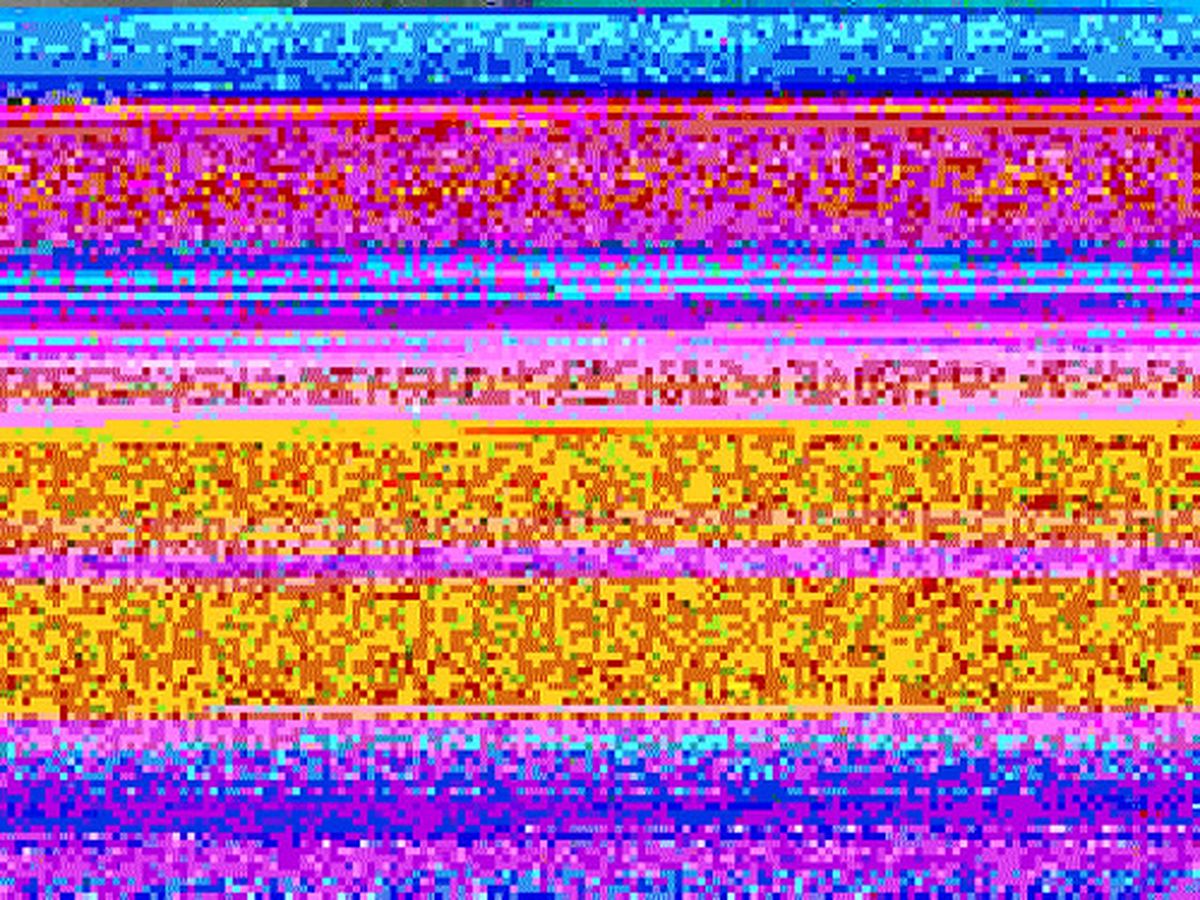
Being the unique person that I am it was not enough for me to simply hear what I look like. I needed to see what he hears that I look like. Using a modified version of the software that I used to make Some of My Favourite Songs (update available soon) I converted this audio portrait back into an image:
Yo Dawg!
Once again not being completely content on just seeing what he hears of what he sees (this is getting confusing) I started to explore methods to again reinterpret this as audio. Much has already been written about sonification, especially in the Sonification Handbook, which I highly recommend you read (I haven’t read all of it yet). For my experiment I wanted to use the red, green and blue (RGB) values of each pixel as a source for the audio. I assume that Neil Harbisson’s Eyeborg does not use the same method as, depending on the resolution of the image, it would take a totes cray cray amount of time to read each pixel, and then it would have to do this 24 times a second (or whatever frame rate he uses). However, my intention is not to reproduce, just reinterpret.
Using Pure Data, my weapon program of choice, I created a simple program, available from my Github account, that would read the RGB values of a pixel from an image from left to right, bottom to top (order define by how [pix_data] works) at a user-defined rate. These values are then used to power three oscillators/[osc~] objects - one for each colour. The RGB values are output from 0-1, so scaling is necessary to get something audible. This scaling can also be set by a user globally or per oscillator. Enough yapping, here’s the software:
Red/Green/Blue denotes the value (0-1) of the current pixel. Current column/line relates to the X/Y position of the pixel currently being read. Scale is how much the pixel value is being scaled by before it reaches the oscillator. For Speed it is reading one pixel every n milliseconds. This speed, however, may become irrelevant once you get to 0.1 milliseconds. By that point it’s going as fast as the computer and program will allow it to go.
With the software in place I began to look at which images produced the “best” sounds when sonified. Of course this is all subjective, but I was after sounds that didn’t sound completely unlistenable and perhaps had some kind of pattern or rhythm. Sonifying the reinterpreted image of my audio portrait produced these results. I added some text information for illustration purposes:
The results are somewhat noisy and unlistenable. Other images from the Some of My Favourite Songs series produced very similar audio results. I soon learnt that the garbage in garbage out rule applied to this process as well. If the image being read is too noisy i.e. if there is a lot of colour variation in closely located pixels, when sonified the resultant audio will be noisy. If I wanted audio with patterns I’d have to use images with visual patterns.
For the next stage in this experiment I turned to images by Joe Newlin. He remixed the original software that I used to make the Some of My Favourite songs into a JPG Synth images. His modification allowed him to send oscillators into the image generator, resulting in some awesome patterns! Go download it now now now! Using one of his example images I was given these results:
Much “better”, amirite? Here’s another experiment using one of the CóRM images:
So far, however, I had only dealt with digitally composed images. What do regular digital photographs sound like? Durnig the merriment of the evening at the Cyborg Foundation they invited me to have my “regular” portrait taken in the self-proclaimed worlds smallest photography studio! Although only greyscale it produces some quite pleasing results.
For the final stage of this experiment I used colour photographs:
Although these images are visually complex, they produced “successful” results because the colours do not vary greatly.
It’s Just Noise!
Long-time readers will recall that I experimented with sonification back in 2010. In that experiment I tried composing images with the intention of them sonified, with some success:
Now that I have developed a more robust approach and have better understanding of programming in general you can expect me to take this much farther. I predict the development of an image to audio sequencer in the near future.