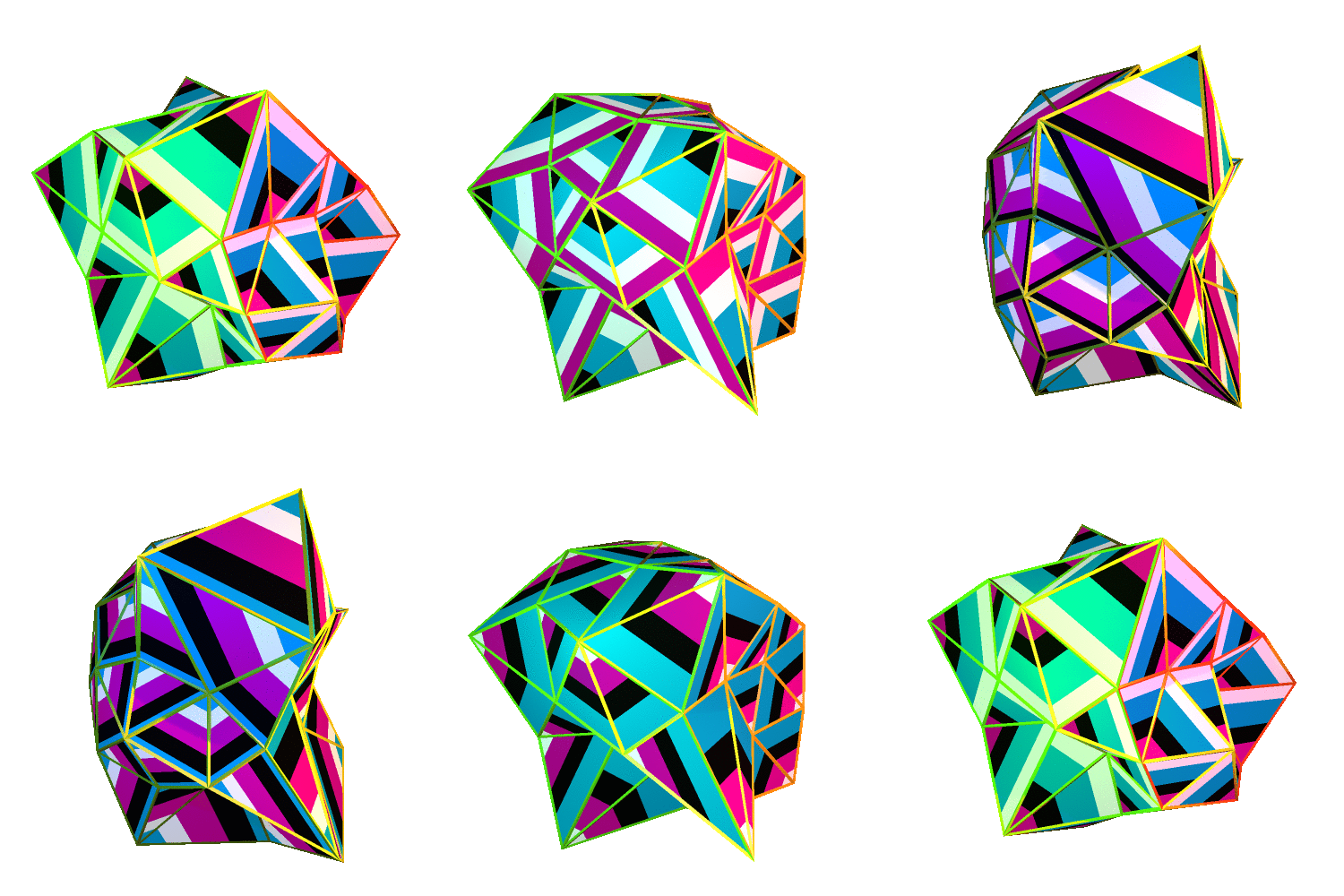
On Saturday July 25th I’ll be delivering an online a Blender workshop for Access Space!
The three-hour workshop (13:00 - 16:00) will go through a few basics of using Blender but will mainly focus on making abstract glitchy looping gifs, like the ones that I made for Improviz.
As you may have seen in this blog post I made use of FFmpeg’s minterpolate motion interpolation options to make all of the faces morph. There’s quite a few options for minterpolate and many different combinations of options that can be used. i had to consult Wikipedia to figure out exactly what the different motion estimation algorithms were but even with that information I couldn’t visualise how it would change the output. To add to this how I’m using minterpolate isn’t a typical use case.
For the Improvizgifs one of the requirements that Rumblesan set is that the gifs loop seamlessly. That is, one would not be able to tell where the gifs beings and ends. In Blender making an animation seamless is pretty easy. There’s lots of examples out there but for completion here’s my simple take on it.
With the default cube selected press I and then press on Location. This inserts a keyframe for the location (this menu can also be accessed in Object > Animation > Insert Keyframe). On the Timeline at the bottom move the animation 20 frames. Then, move the cube to somewhere else.
If you weren’t able to make it out to the streets of London in February to catch the [Bus Tops](http://www.hellocatfood.com/2012/02/27/bus-tops/2>Glitch Art exhibition as part of <a href=) here’s a video featuring a selection of the works:
You can see one of my pieces show up at 2:08. There’s some more videos from the project on al4ie’s YouTube channel
Using the same svg glitching techniques that I’ve come to love, today, with the help of Twitter folk, I created this rather short animation that compliments my new deviantART ID
My initial aim was glitch the video file itself but then I figured it’d be quite different to glitch each frame individually. To do this I created the original text in Inkscape and then created 52 copies of it. I then opened up the file in a text editor and began messing around with the numbers!