tag: Live Coding


QUOB 2026

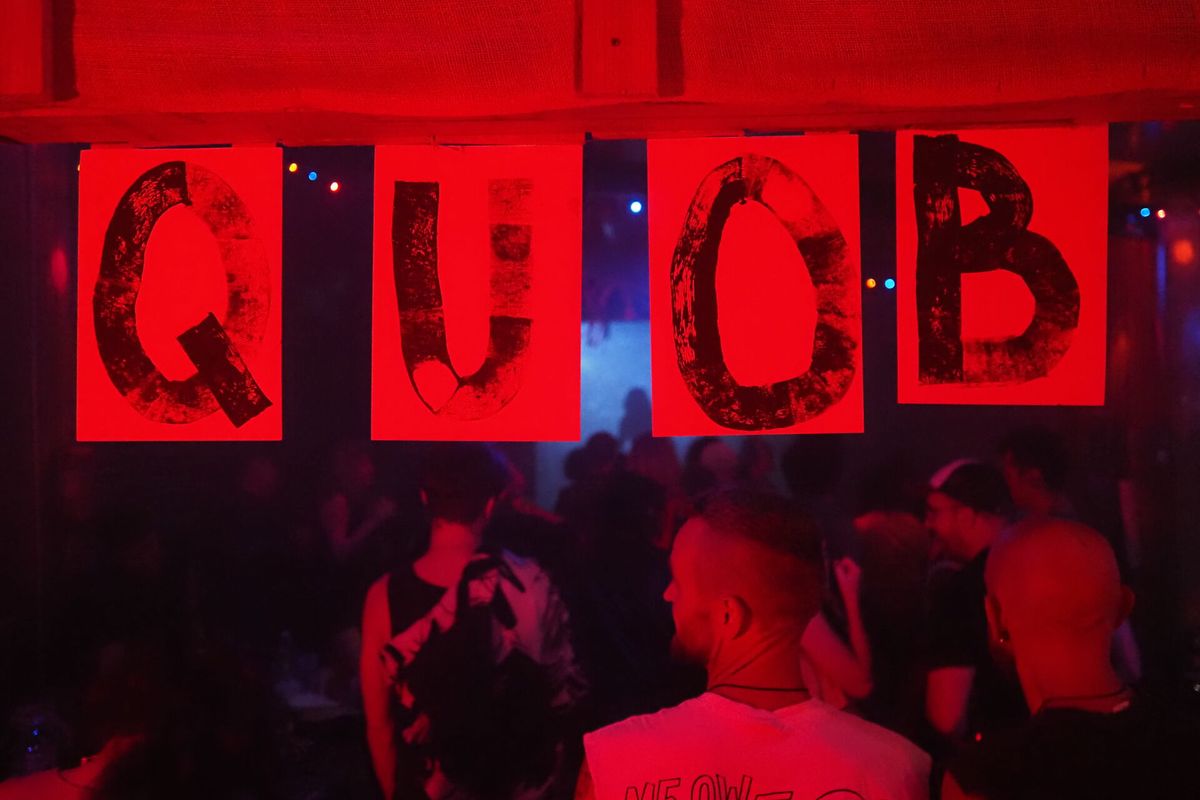
On 17th and 18th July I was in Lake District to perform at QUOB. It’s a relatively new festival, with the first edition only taking place in October 2025. It takes place in Fell Foot Woods in a barn/shed-type structure that can probably hold no more than 200 people.

QUOB 2026

In many ways it reminds me of a much smaller version of SUPERNORMAL Festival, in that I went there not knowing many of the artists but knew I was in for a well-curated series of weird and wonderful performances.


Errorcamp 2026

From 23rd - 26th July I was somewhere in rural Exeter for Errorcamp, which is a semi-annual gathering of live coders. It’s not really an official event, festival, or conference, so the best way to learn more about it is to become part of a local live coding community.

I had gone to previous Errorcamps and one thing I really valued about it was having the opportunity to spend time with live coders in an informal environment. My understanding is that it was started as a way to reconnect after being locked away indoors for much of 2020-2021. As a global community of live coders we had been regularly organising week-long live streams and attending conferences like ICLC, and I think we were missing having that semi-occasional meeting of international live coders. This story might not be accurate, but it’s how I think of it. In any case, one thing I like about Errorcamp is being able to be in a space with people you may only know by a username or code contributions.
Secret Weapon

Secret Weapon is a work in progress performance that combines live coding and DJing.

In developing this performance I took inspiration from pioneers such as The Belleville Three (Juan Atkins, Derrick May, and Kevin Saunderson) who essentially created techno in the 1980s and were important figures in the development of similar genres such as House and Techno. I learnt a lot about this history in the book Assembling a Black Counter Culture by DeForrest Brown Jr in which I was particularly drawn to an excerpt from an interview with Atkins in 1988 where he describes his mixing techniques:


Hyperobject

Hyperobject is a video collaboration between Antonio Roberts and Samiir Saunders which combines live coding and spoken word poetry. The piece takes the form of a four-part narrative epic which chronicles the grieving process of reckoning with the enormity of the climate crisis, from denial and despair into acceptance and finally a place of defiant hope.

Hyperobject was commissioned by MAIA for the We Make Tomorrow event in October 2022.


Controlling Improviz Using Midi via OSC

In 2020 I did quite a number of workshops in using the Improviz visuals live coding environment. Improviz can be thought of as a fork of Livecodelab, especially as its developer, Guy John, is one the developers of Livecodelab. However, it has some key differences that make it stand out as its own unique software:

  • It works on the desktop, and I think it is faster because of it
  • The language is more fully documented
  • You can load your own textures, gifs, 3D models, and shaders

Being able to load your own textures might in itself be a reason for many people to switch from Livecodelab to Improviz. Things can be that just a bit more personalised when you’re using your own images and objects rather than only colours, gradients and basic geometrical shapes. Another potentially useful difference is that in Improviz you can interface with the software using Open Sound Control (OSC). This opens up the possibility of using software or external hardware devices. In this blog post I’ll take you through how you can connect a midi controller to Improviz via OSC and Pure Data.


(Algo|Afro) Futures

I’m happy to launch (Algo|Afro) Futures, a mentoring programme for early career Black artists in the West Midlands who want to explore the creative potential of live coding.

(Algo|Afro) Futures

Live coding is a performative practice where artists and musicians use code to create live music and live visuals. This is often done at electronic dance music events called Algoraves, but live coding is a technique rather than a genre, and has also been applied to noise music, choreography, live cinema, and many other time-based artforms.


(Algo|Afro) Futures

(Algo|Afro) Futures was a mentoring programme for early career UK-based Black artists interested in exploring creative coding and live coding. The programme ran over four editions between 2021 - 2025.

Live coding is a performative practice where artists and musicians use code to create live music and live visuals. This is often done at electronic dance music events called Algoraves, but live coding is a technique rather than a genre, and has also been applied to noise music, choreography, live cinema, and many other time-based artforms.


Making Pulse

On November 6th the Compassion Through Algorithms Vol. II compilation was released, raising money for Young Minds Together . The compilation is still available, and of course you can donate directly to Young Minds Together if you prefer.

In this blog post I’ll be going over how I made my track, Pulse.

I’m two years into making music and I’ve recently become more comfortable and confident in my processes. I’ve gotten over the technological hurdles and, having experimented in making music/sounds of different styles both in private and at Algoraves, I feel I’ve found a range of styles that I like making music in. In the live coding music world some of my biggest influences have been eye measure, Miri Kat, Yaxu, and Heavy Lifting. Their work spans many genres but what I’m drawn to in their music is the more sparse, ambient and even sometimes aggressive sounds. I tried to keep this in mind when making Pulse.


Peer to Peer: UK/HK - 11th - 14th November 2020

From 11th - 1th Novemebr I’ll be presenting new commissioned work as part of the Peer to Peer UK/HK programme.

Peer to Peer: UK/HK - 11th - 14th November 2020

Peer to Peer: UK/HK is a digital programme and platform encouraging meaningful cultural exchange and forging enduring partnerships between the UK and Hong Kong’s visual arts sectors.

The programme launches with an online festival of international exchange and collaboration taking place 11-14 November.


The Stay at Home Residency - part 3

From 1st - 29th July I was happy to be selected as an artist in residence for The New Art Gallery Walsall’s Stay at Home Residencies.

The Stay at Home Residency - part 3

In the second blog post I looked at how I approached filming. In this third and final blog post I’ll be detailing my sound making process and sharing the finished film.

The next stage in making this film was working on the sound. As you can hear in a couple of the clips in the previous blog post the area that I live in is really really quiet! Everyone in the local area was using the Summer time to sit outside bathing in the sunlight. Was very relaxing for sure but recordings of the ambient background noise didn’t make for an interesting soundtrack. There was once the sound of a wood chipper but otherwise it was mostly silent. At times me playing music was the loudest sound!


Improviz gifs

Earlier this year fellow visualist and live coder Rumblesan commissioned me to make some gifs for his new live coding software, Improviz. In July he unleashed it into the world!

Looking at the above videos you could easily be forgiven for thinking that it looks a bit like LiveCodeLab. He is, after all, one of the developers of LiveCodeLab. However, Improviz differs in a few ways. As Rumblesan himself explains in the Toplap chat:


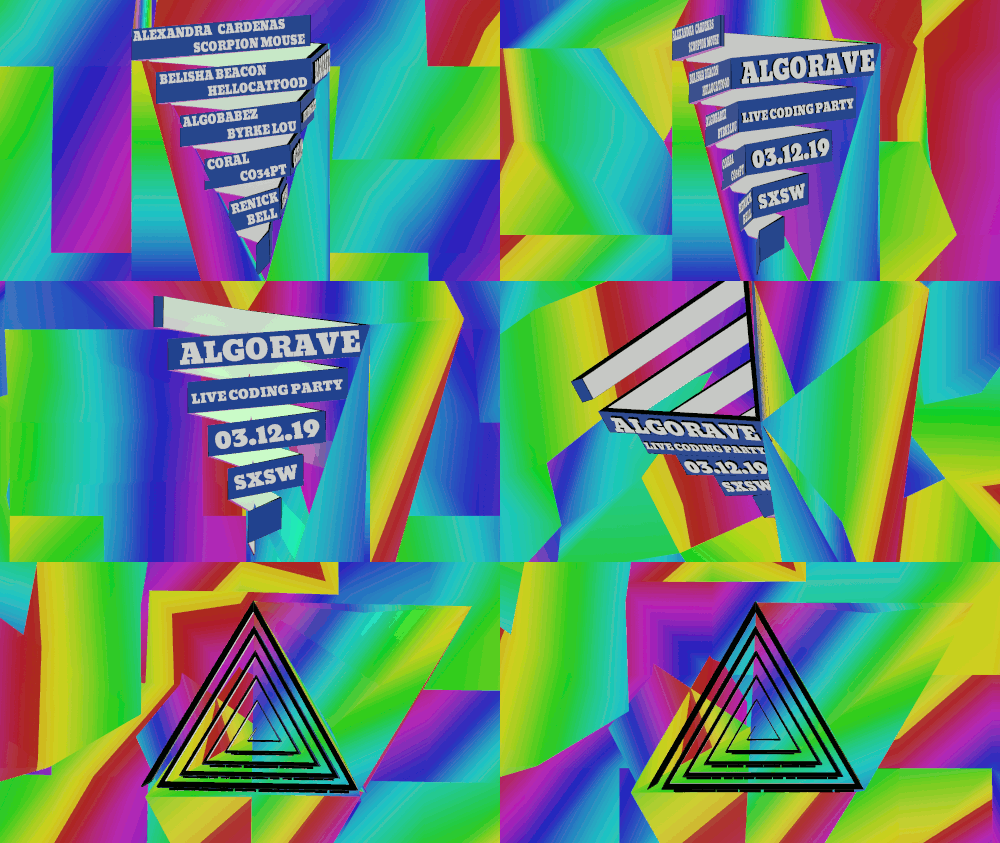
Algorave at SXSW - 10th - 12th March 2019

Algorave is heading to South By Southwest! From 10th - 12th we’ll be doing two showcases at the festival:

Dancing to Algorithms: How to Algorave

Algorave at SXSW - 10th - 12th March 2019

This session will discuss Algorave: a global movement focussed on creating dance music through the writing and editing of algorithms. At an Algorave, performers live code and project their screens for the audience to see the creative process unfolding. Since it emerged in the UK in 2012, Algoraves have taken place around the world, with large communities developing in North America, Japan, Europe and Latin America. To understand how the scene has expanded, we will bring together leading performers from the community to discuss the systems they use and the sounds that they make. In a world where algorithmic processes are becoming so embedded in our daily lives and increasingly opaque, we hope to uncover why live coding is so exciting!


badcirculation

badcirculation is a collaboration between Antonio Roberts (hellocatfood) and Maria Witek (mxwx). Working primarily with the open source TidalCycles software, they create electronic dance music with the randomness of algorithmically generated beats. They each bring their diverse musical backgrounds to explore genres including Grime, Footwork, House and UK Garage.


Livecode Festival #2 - Visualists Meetup - 1st September 2018

On Saturday 1st September I’m organising a meetup for visualists as part of Livecode Festival #2 at Access Space in Sheffield:

Livecode Festival #2 - Visualists Meetup - 1st September 2018

A session for live coding visualists (at any level) lead by Antonio Roberts (aka hellocatfood), to talk about their tools and how they perform, with focus on Algorave visuals.

A core part of the session will be discussion around key questions for live code visualists; how do you pace yourself in a performance? Should we aim to build up slowly or go straight in with loud visuals? How much can you truly respond to the music? Is it important to show the code, and how does it fit with the musician’s projection?


Thoughts on live coding visuals in Pure Data

I took part in Algorave in Gateshead on 26th April. Apart from being incredibly awesome it was my first time live coding - or rather live patching - visuals in Pure Data from scratch. I emphasise from scratch because nearly all of my performances involve me modifying patches, but never starting with a completely blank canvas. I also occasionally used the HSS3jb as a texture for objects, but never on its own. It’s also great for when crashes occur, which is/was often ;-). Here’s a few sampels of my visuals. Videos by Mariam Rezaei:


The People VS The Machine

Thanks to everyone that came to The People VS The Machine on Saturday 3rd November. It was a really great way to end Flip Festival for another year. Over three hours all five artists created some brilliant computer generated and live illustration art. Here’s a video, featuring music from Silhouettes who also played on the night:

And some photos of each artists’ work


The People VS The Machine, 3rd November 2012

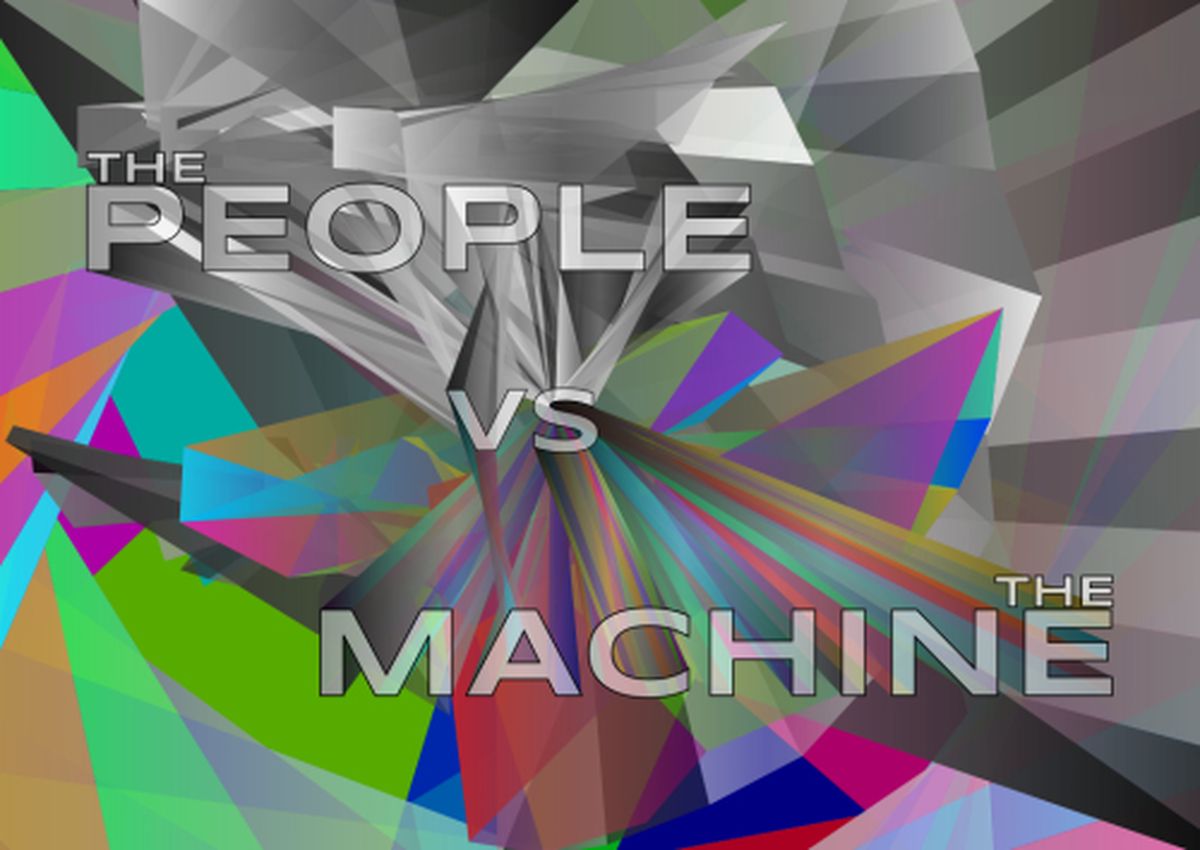
On Saturday 3rd November 2012 I’ll be curating an event for Flip Festival 2012 called The People VS The Machine

The People VS The Machine

Join us for the closing party for Flip 2012 which will see digital artists and illustration artists battle at Fixxion Warehouse Project in Wolverhampton from 9:30pm for an eclectic night of digitally-inspired visual art, set to a backdrop of electronic music. Artwork will be created as a response to the future of the relationship between humans and computers. Will human and machine fuse to form a race of superhuman cyborgs or will we be crushed under the weight of a robot uprising, whilst having a dance? The night will feature artwork from a range of local and nationally known artists, and music influenced by the interchange of visual elements from Silhouettes and a special guest DJ. Tickets are £6 plus booking fee and can be purchased online. Here’s the event details on Facebook.


Live coding at fizzPOP

Ever since I went down to an Openlab workshop last year I’ve been fascinated by live coding. From Wikipedia:

Live coding (sometimes known as ‘interactive programming’, ‘on-the-fly programming’, ‘just in time programming’) is the name given to the process of writing software in realtime as part of a performance.

I thought about doing live coding for myself ever since, so at fizzPOP’s latest hack session I thought I’d make use of massive screen and try a bit out for myself using a purpose-built program called Fluxus, which uses the Scheme programming language.


OpenLab Goodness

Last Saturday I went down to London to attend OpenLab 5:

Openlab are providing a day of workshops & presentations about opensource software, and performances in the evening at Cafe OTO, Dalston. There is a venerable lineup of OpenLab members providing some in depth knowledge during the day and some great performances at night.

The workshops I were looking forward to most were the ones that involved Pure:Data and Processing. I’ve messed around with both of those programs before but I’ve only ever just edited the example files. That is until after some of the workshops: That was a snippet of work by Daniel Jones. It combined Supercollider and Processing and a camera to convert images into sound, which is something I’ve wanted to accomplish for a long time.