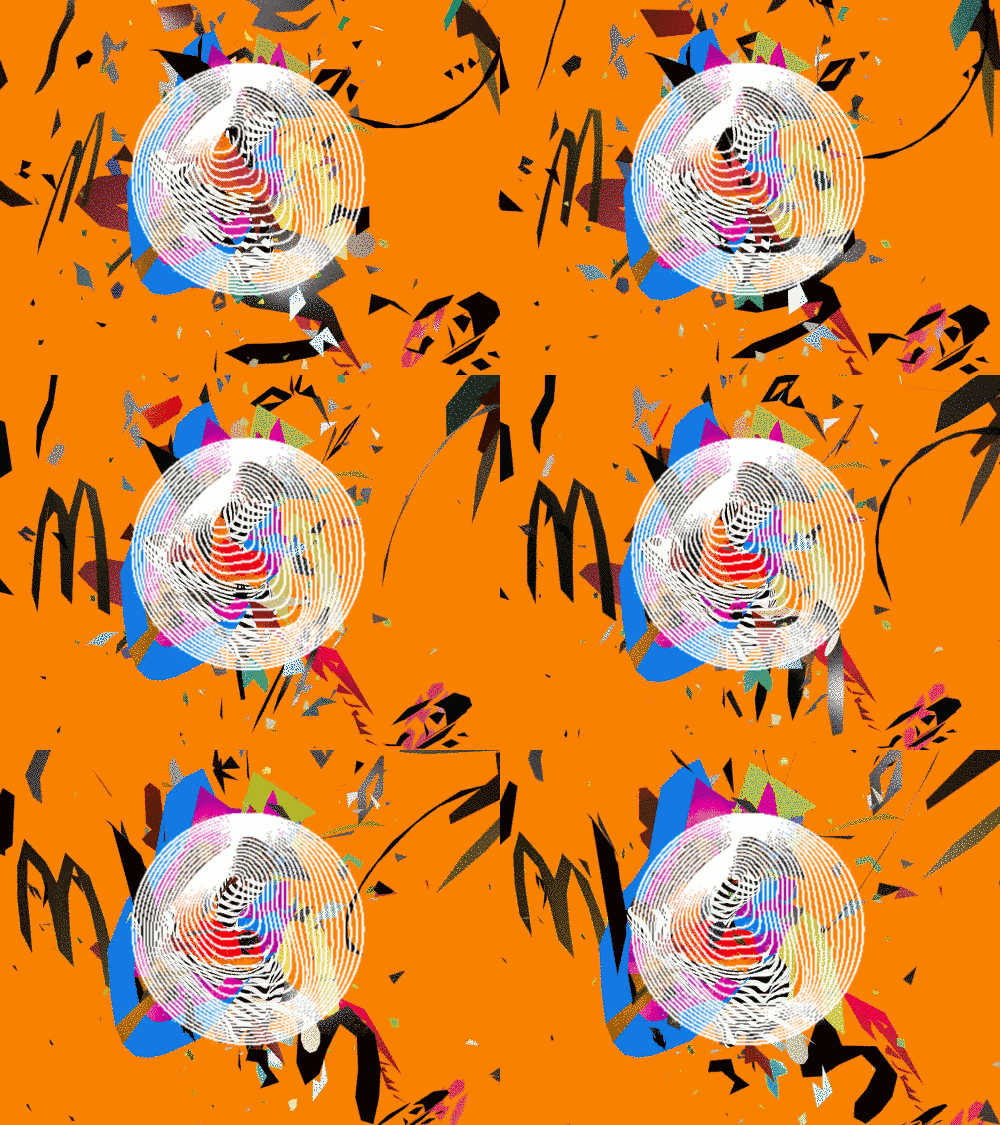
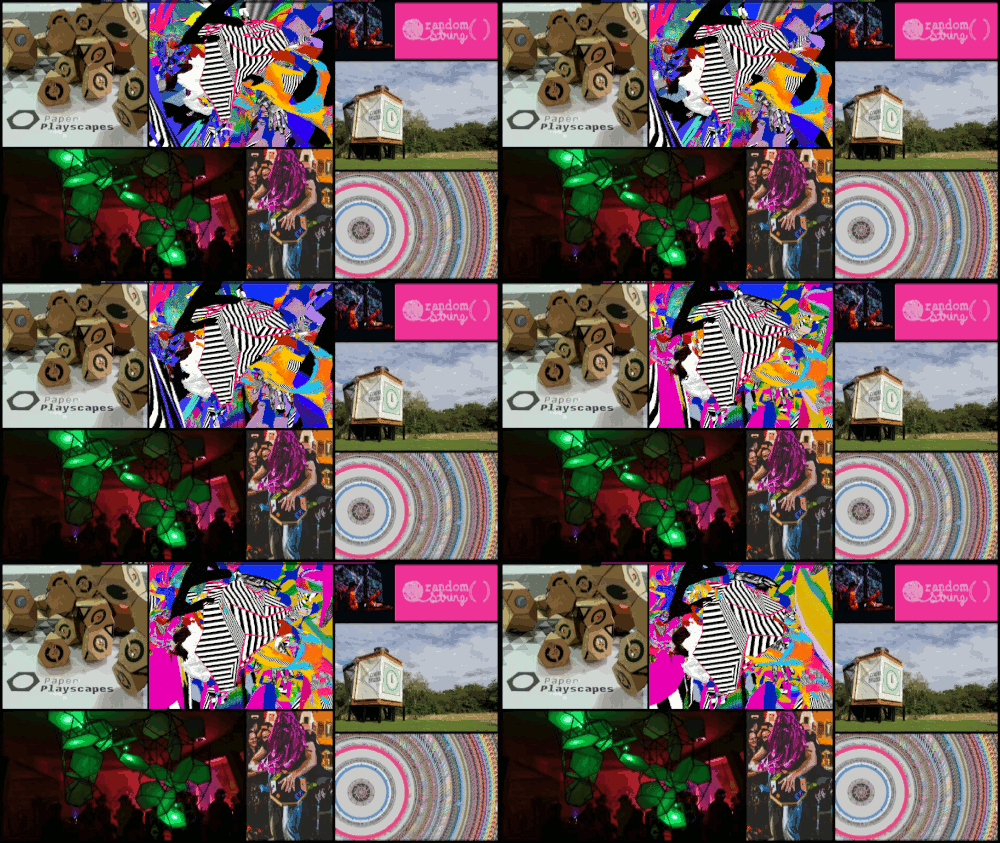
On 8th June a video recording of Sonification Studies and the Archive Remix videos will be on display at BYOB Porto/OpenField.
BYOB (Bring Your Own Beamer)" é o nome dado a uma serie de “one-night-exhibitions” organizadas um pouco por todo o mundo. Consiste em juntar num espaço varios artistas visuais, cada um traz o seu projector e enche o espaço e as paredes de luz e imagens.
Esta quarta-feira (8 Junho / 18.30) vai-se efectuar um BYOB no Openfield CreativeLab.
The Random String microFestival is an exciting day exploring technology and art.
Digital artworks, interactive installations, hands-on arts activities and workshops will fill the City Arcade, including the Shop Front Theatre, Artspace’s City Arcadia and in the recently opened FabLab Coventry.
Last Day
For the microFetsival I will produce a new vinyl installation work called Last Day.
Last Day is a piece that highlights the fragility of financial markets and the unpredictable nature of consumer habits, market forces and trends. The effects of these have been far reaching, seeing once thriving retail parks home to small businesses and former retail giants rendered as ghost towns of empty units. The choice of imagery shows that nothing is too big to fail.
The piece will be installed in the window of Unit 22 at the City Arcade.
Last Day workshop
To accompany the installation, during the mircoFestival you will be invited to create your own shop window honouring our favourite defunct brands!
The microFestival takes place 11th June 11:00 - 16:00 at the City Arcade in Coventry and is completely free
On 10th June I’ll be taking part in the Random String Symposium at Warwick Arts Centre.
A one-day event for artists and artists and arts professionals, exploring the use of interactive and networked technologies in the creative process.
The Random String Symposium gives space for inspiration, discussion and sharing. Hear from cutting-edge artists and technologists from across the UK and overseas, have frank conversations about the practicalities of using technology in your work and explore works-in-progress projects from the Random String fellows.
OpenGLAM published a feature on my Permission Taken exhibition on their site on 9th May. It talks not only about the exhibition but also on the need to communicate issues surrounding copyright in a variety of ways:
Remix of Cathode Ray Oscilloscope by Carla Gannis
Copyright is an incredibly important law that can have massive implications on individual artists and the cultural sector as a whole. Unfortunately, it isn’t until it affects us negatively that we begin to seriously consider it. Legal cases such as the estate of Marvin Gaye versus Robin Thicke , Katrijn van Giel versus Luc Tuymans, and earlier examples such as Art Rogers versus Jeff Koons, and TufAmerica versus Beastie Boys show that the law can negatively affect creativity. If we allow this behaviour to continue we risk entering into a permission culture where even being inspired by an artist can have dangerous consequences.
Click through to read the whole of the article. The Permission Taken exhibition ends on 30th May
At the beginning of January I was approached by MTV to make a new visual ident for them. If you haven’t seen, since 2015 they have been approaching a wide range of artists to make these idents. They even received two D&AD awards for them. Previous ones that I’d seen included ones by Eva Papamargariti and Johnny Woods. It was a really big surprise to me and I was more than flattered to be included amongst the ranks of these great artists. Regarding the ident, they were really open to how I approached this. The usual caveats of having no nudity or violence applied, but otherwise they just wanted their logo at the end of a 15 second animation.
The finished piece, shown above, is essentially a glitchy world of shape and colour. This video was shown internationally on MTV except in the UK and the US.
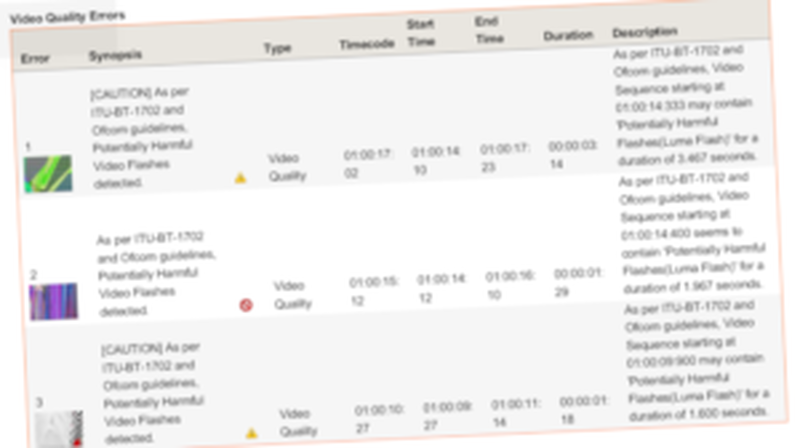
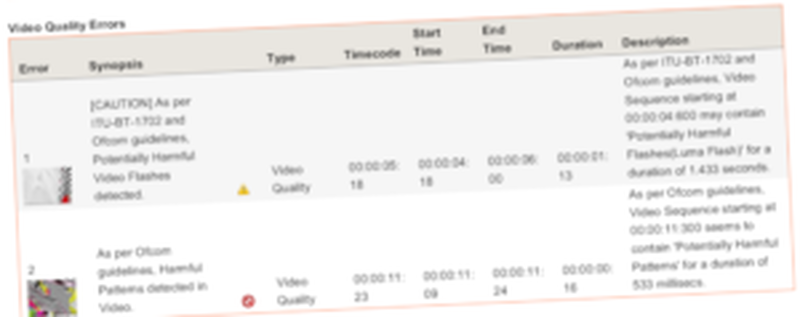
Originally I had finished the ident at the beginning of February, with an air date set for beginning of March. However, on the 1st March we all received some surprising and bad news. Ofcom, who regulates TV and radio in the UK, had some issues with the video. Using their automated software they detected that at a few points in the animation it contained potentially harmful flashes. The full text of the error:
Click for full error description
As per ITU-BT-1702 and Ofcom guidelines, Video Sequence starting at 01:00:14:333 may contain ‘Potentially Harmful Flashes(Luma Flash)’ for a duration of 3.467 seconds
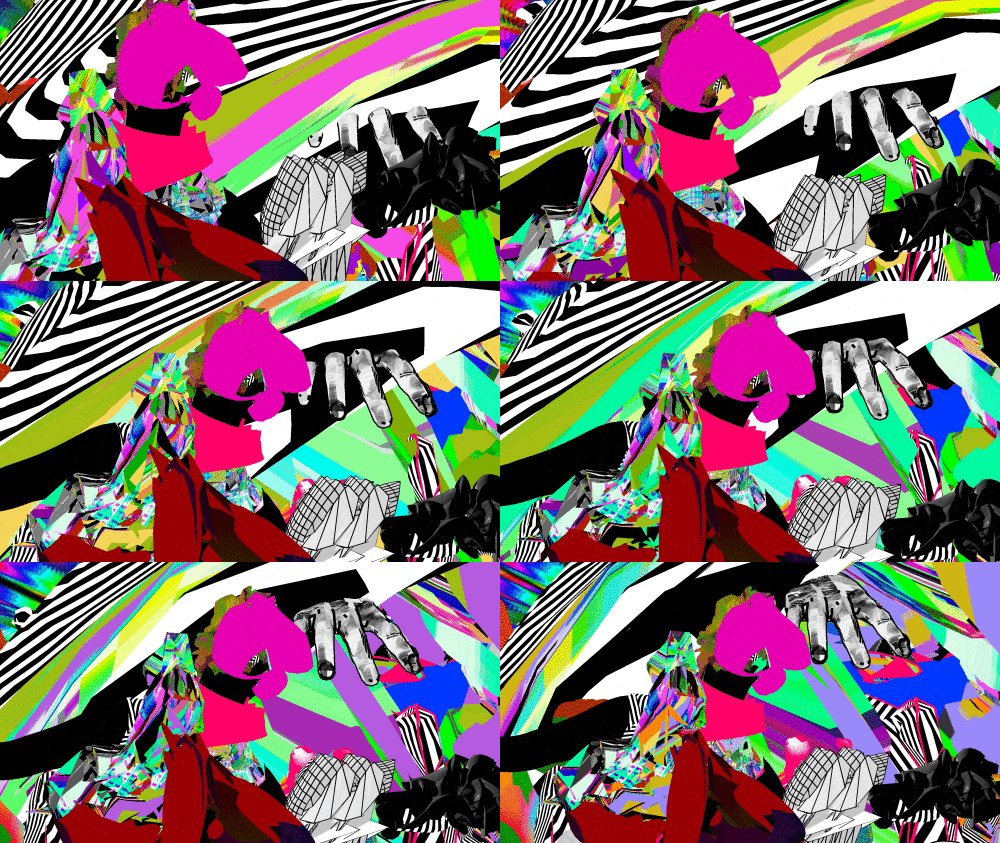
I had no idea what this meant, but looking back on the video I could see that there was a lot of flashing. A clip from the animation illustrates this:
To further indulge my curiosity I decided to look up exactly what ITU-BT-1702 is. The resulting PDF, Guidance for the reduction of photosensitive epileptic seizures caused by television, gives a very detailed breakdown of research into photosensitive epilepsy and how images being broadcast can affect this:
Extensive studies on the subject of photosensitive epilepsy, which have taken place around the world, have led to formulation of this Recommendation. The guidance proposed in this Recommendation is for the protection of the vulnerable section of the viewing population who have photosensitive epilepsy, and who are therefore prone to seizures triggered by flashing lights, including certain types of flashing television images. Broadcasting organizations are encouraged to raise awareness among programme producers of the risks of creating television image content which may induce photosensitive epileptic seizures in susceptible viewers. Appendices 1 to 5 provide additional information on this subject.
Having been a teenager at the time that episode of Pokemon was causing troubles, I was aware of the need to reduce flashing images on TV but I definitely wasn’t aware the extent to which there are guidelines and studies supporting this. Even if you have no intention of having your work being broadcast on (UK) television it is definitely worth reading the document and checking out some statistics and pretty graphs!:
With this new knowledge I edited the video, submitted it for approval and then sat glued to my TV in anticipation. However, the edited video had the same errors at different locations and was subsequently rejected again. And so I edited. And it was rejected. And so I edited. And it was rejected. And so I edited. And it was rejected. And so I edited. And it was rejected. After four edits I finally had dealt with issue ITU-BT-1702 but then on the fifth edit it was rejected yet again but with a new error:
Click for full error message
As per Ofcom guidelines, Video Sequence starting at 00:00:11:300 seems to contain ‘Potentially Harmful Patterns’ for a duration of 533 millisecs.
I consulted the great Google again for information on these guidelines and found this document Annex 1 of the document specifies:
Ofcom Guidance Note on Flashing Images and Regular Patterns in Television
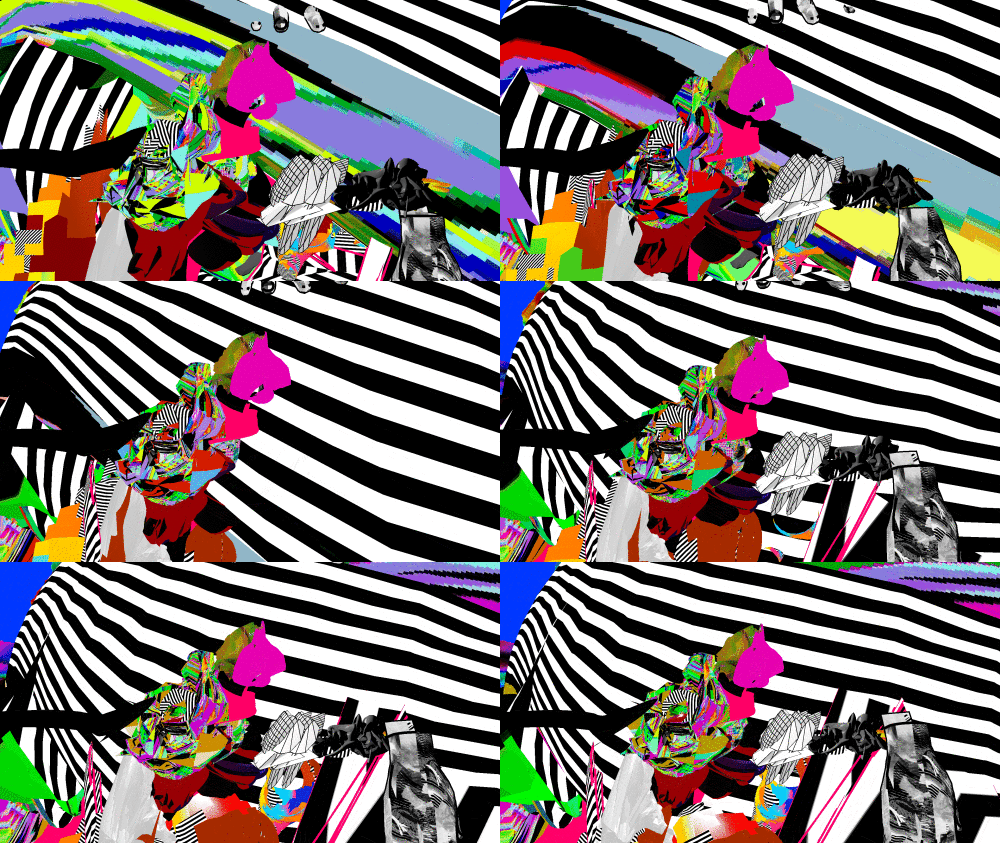
5. A potentially harmful regular pattern contains clearly discernible stripes when there are more than five light-dark pairs of stripes in any orientation. The stripes may be parallel or radial, curved or straight, and may be formed by rows of repetitive elements such as polka dots. If the stripes change direction, oscillate, flash or reverse in contrast they are more likely to be harmful than if they are stationary. If the patterns obviously flow smoothly across, into, or out of the screen in one direction they are exempt from restriction.
5.1. Potentially harmful patterns are not permitted when either of the following two conditions apply:
i. the stripes are stationary and the pattern occupies more than 40% of the displayed screen area; or
ii. the stripes change direction, oscillate, flash, or reverse in contrast and the pattern occupies more than twenty five per cent of screen area; and in addition to either of the above two conditions applying, when
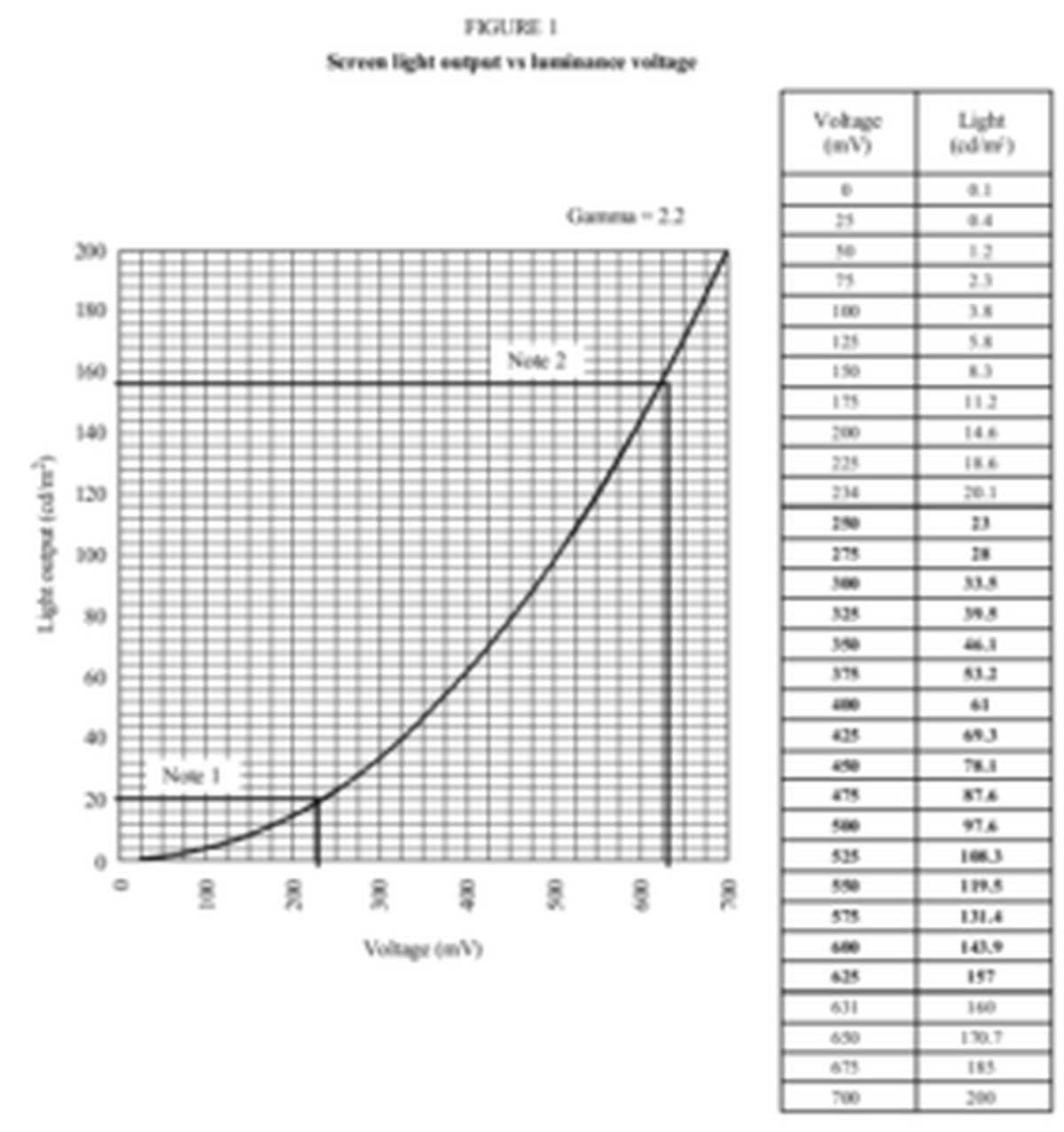
iii. the screen luminance of the darker bars in the pattern is below 160 cd.m-2 and differs from the lighter bars by 20 cd.m-2 or more (see notes 1 and 2).
The section of the animation specified was towards the beginning, but in general the animation makes heavy use of striped patterns. This left me with a really tough decision. Removing the stripes completely could seriously and negatively affect the piece. It was at this stage that I began to investigate. Although the rejection of the edits was annoying, what was more frustrating was the waiting period between submitting an edit and it being assessed and eventually rejected. If I could have done the verification myself at home this would have been solved! So, I looked into software.
Ofcom appears to be using Baton for its quality control. No information on price is immediately available on the website but you bet it’s proprietary! Similar quality control software from the likes of Vidcheck are similarly proprietary. So, is there open source other software available for quality control, or at least checking for flashes or potentially harmful patterns?
No.
The closest open source software that does quality control is QCTools by Bay Area Video Coalition but, as far as I can tell, it cannot check for flashes or harmful patterns. Any developers writing open source software tackle this task would I’m sure be greatly welcomed!
In the end MTV made the very difficult decision to air the ident everywhere except for the UK. Although unfortunate it is understandable as causing injury isn’t something either of us wants to do! It was still an incredibly interesting learning experience for me and got me thinking about how my work, glitch aesthetics, and artwork by others with a similar aesthetic can actually be broadcast on television.
Although I have moved on from utilising only glitched visuals my work still retains many of its influences and aesthetics. By its nature these visuals often appear bright, colourful, glitchy and will probably have lots of flashing imagery. To me this raises the question: In order for glitch art to be broadcast on TV and in film do the glitches have to be removed, or at least tamed in some way? Exactly where is the line drawn between noisy and potentially harmful. Of course, having easy access to software would help make drawing these lines easier and, should I ever have acceses to it, I’d be very interested in throwing various glitches at it to analyse the results. How much of my existing artwork would pass or fail these tests?
Until these questions can be address I’m just grateful for the chance to challenge myself and MTV and push the boundaries, if only a little bit, on what glitches are acceptable and which are potentially harmful.