Interview with Neon Vice
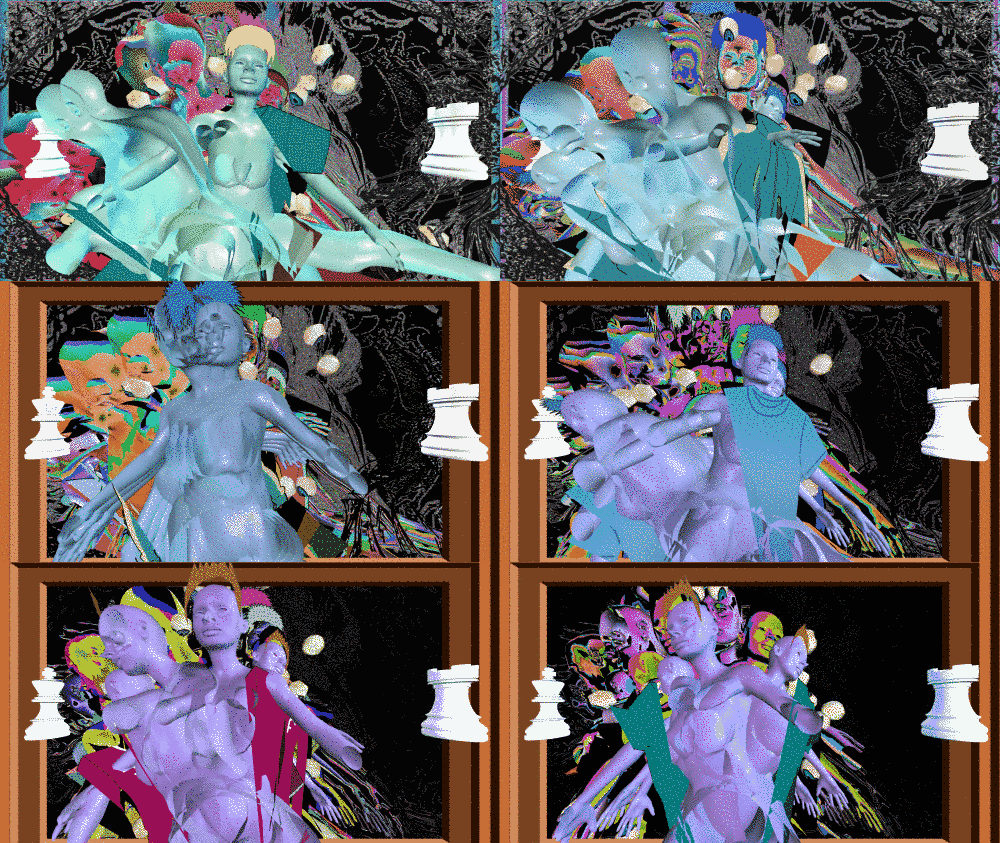
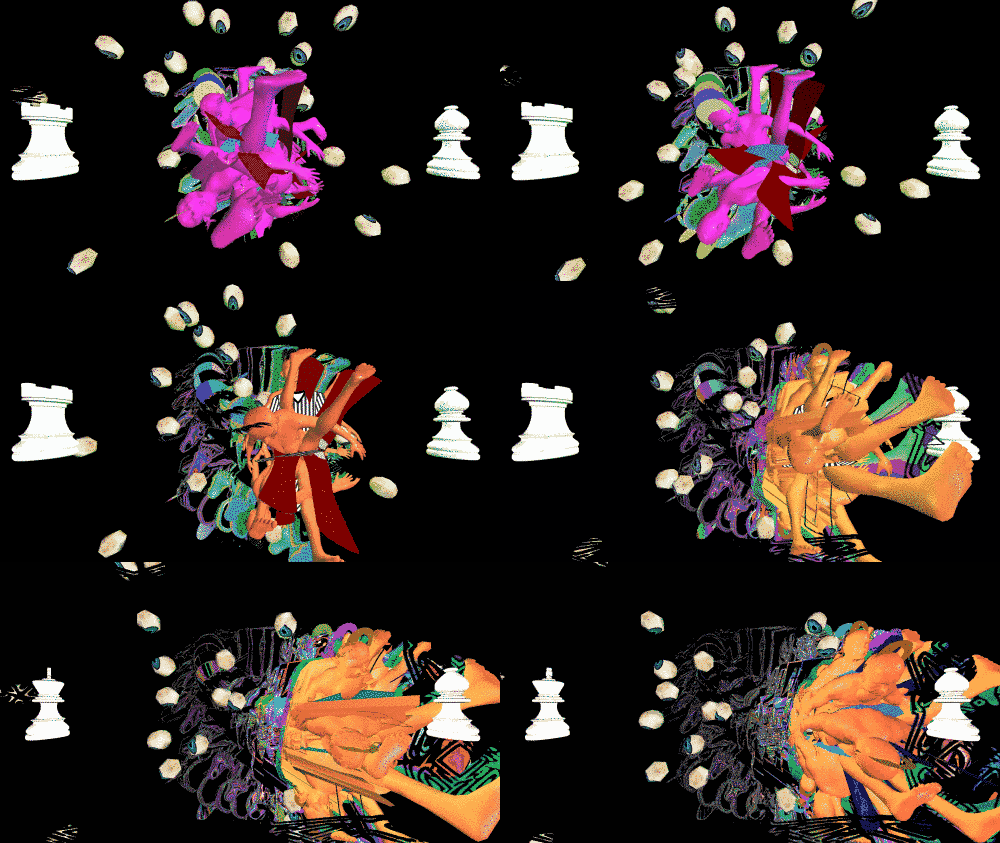
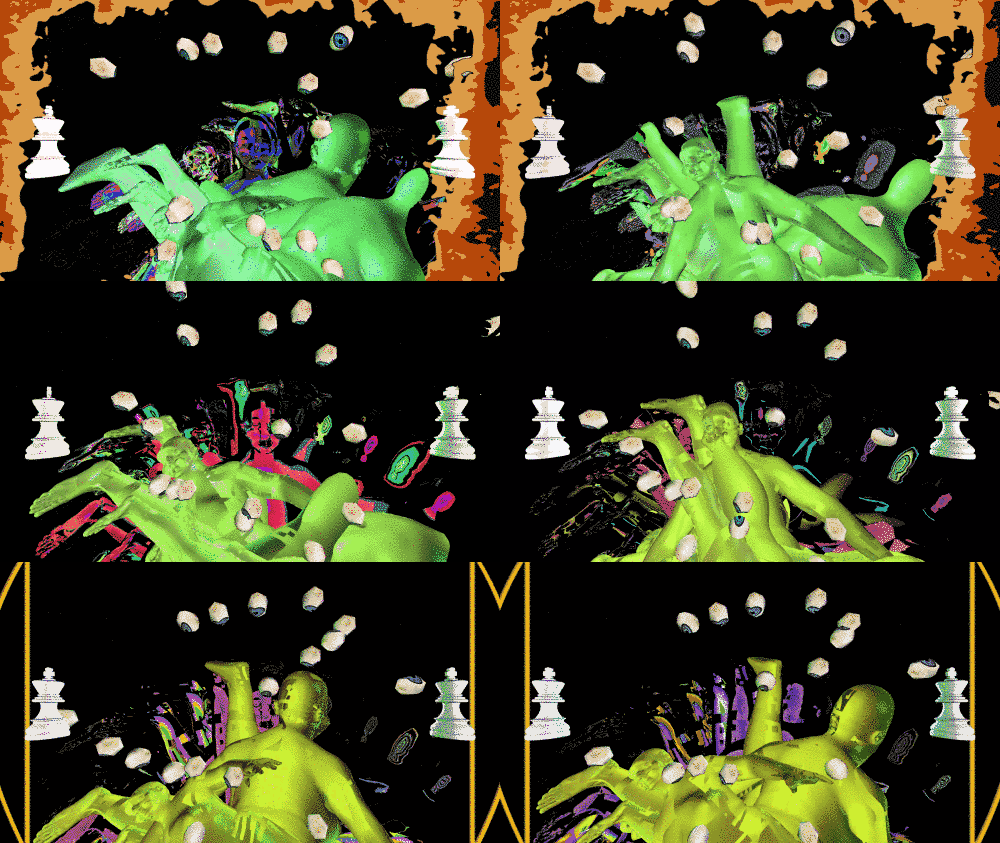
I recently did an interview with Neon Vice about my work and motivations behind some of my recent pieces.

Have a read ‘cause, y’know, it’s interesting… or read it below.
How do you explain what you do to people who are unfamiliar with glitch art and how would you define it on a personal level?
I first tell the uninitiated that my art practice is about breaking stuff! There is obviously more to it, but drawing comparisons to broken TVs and corrupt jpgs usually gives people an idea of how this art manifests itself visually.
On a personal level my practice is an exploration into how things work, which has always been a prevalent theme. For example, my decision to exclusively use open source software and to also write my own software wasn’t originally born out of ideology; I wanted to know how software worked, and open source software let me do this easily. To that end, by breaking things apart I really just want to know how they work. I know there’s probably a manual somewhere, but I like this somewhat chaotic approach as it can yield unexpected results.
What are some of the programs and techniques you use to actually produce glitches and make it something that is visually and intellectually simulating?
I often make use of batch processing and generative practices in my work. Many of my illustration and graphic design pieces are just one iteration of a generative artwork. For example, Dataface is iteration 74 out of around 1000 files.
When it comes to writing software I often write bash scripts. This allows me to make use of many command-line programs including ImageMagick and sed which I often use. Bash is quite heavily tied to (L)unix, so I’m slowly learning Python which will allow more people to use my software.
For any live and interactive works I use Pure Data.
Making something that is visually and intellectually stimulating most of all requires having a good concept. For me the tools and techniques come second. With that said, for each major new piece I try and develop a new technique. And then, there are times where I develop a technique and sit on it until I find a concept that requires it. For example, the techniques and software for Variations on a Theme by Casey & Finch were written many years ago, probably 2010. It was only when Gabriel Shalom showed me Variations on a Theme by Casey & Finch by Erik Bünger - which is where my piece got its name from - that the software found a use. There’s several other bits of software that I haven’t released yet. I really don’t want to release stuff that is just pretty with little or no concept behind it.
Share with us how throughout your experimentation must have created uninteresting static, blank or broken images, and how you were able to correct it.
In generative artwork there is bound to be uninteresting output. For example, in Dataface, the first set of iterations are uninteresting because they resemble the original too much, and those towards the end are uninteresting because they are too noisy. My role in all of this is to decide which of those becomes the finished piece. So, there is no process of me fixing or correcting anything, just discarding those which don’t suit their purpose.
When I provided visuals for Come Heavy Sleep KILN actually requested that I generate white noise, so really having knowledge of how to create that is always useful.
Can you give our audience some background on Pure Data and how it helps facilitates many of your projects?
Pure Data is a visual programming language. That is, instead of typing out lines of code you create maps that describe the flow and manipulation of data. I’ve been using Pure Data for my a lot of my performance work since 2011, where I first used it for live visuals for BiLE.
Although I have experience in typed programming languages such as HTML5, Processing and a bit of C++, I like how I can visualise programming when using Pure Data. The ability to literally see how data flows from one function to another may better suit some people. It’s also great for building interfaces as you do this whilst writing programs.
What inspired the 3D and musical experience dubbed ‘Neon Plastic’? Who contributed to each aspect of the concept, design, coding, and execution of the project?
I believe it all started when Joe Newlin contacted me regarding my Pure Data JPG Creator some time around September 2013. We discussed some of the modifications he had made to the software, and from that we decided to collaborate on something. It was a bit of a slow process as we had a lot of our own commitments around the Christmas holidays but we picked it back up in early 2014.
We both liked the visual aesthetic of the video for Gantz-Graf by Autechre and so wanted to do something visually similar. We didn’t have a theme for the audio. The only rules we set ourselves was that it had to be generative and run automatically with no input from a user.
We both worked on our separate parts - myself on visuals and Joe on audio -, checking in occasionally to share our progress and steer each other in different directions. The collaboration definitely strengthened towards the end of the project where we were seeing how data we were creating individually could be shared and manipulated.
I’ve seen that he’s used the visuals patch in a few of his own live performances and I’ve definitely reworked his audio patches in some of my as yet unreleased work.

Your new Tumblr project ‘Copyright Atrophy’ takes well known logos, puts them in gif format, and breaks them down into fewer and fewer sided polygons. Is this project a statement, a study, or purely for aesthetics?
This project is a statement on the heated topic of copyright and remixing. At what point of remixing or reworking an artwork does it detach itself from its original author and copyright status? There have been many before me that have explored this concept in many creative ways (just look at Warhol), and so this is my gif-driven voice being added to the conversation.