Blog

Interview with Pioneer Toolkit

An interview with me on Pioneer Toolkit has appeared online. In it I talk about open source software, glitch art and a bit about organising events.
Interview with Pioneer Toolkit

The full interview is available on the website. The website has since been taken down, so the full interview is below:

In this, the first interview for the PioneerToolkit I ask Antonio Roberts about the tools he’s used to create, collaborate and organise his work as a digital artist.

Tell us a little about yourself?

I’m a digital artist currently based in Birmingham. My artwork focuses on the errors and glitches generated by digital technology. I recently finished my MA in Digital Arts in Performance at Birmingham City University and now I’m continuing my practice as a digital artist. My solo and collaborative work has been shown locally at events including Leeds International Film Festival, BitJam and ArtsFest and internationally at events including GLI.TC/H in Chicago and the Laptop Meets Musicians Festival in Venice, Italy

The GLI.TC/H festival was quite some achievement, what tools helped you organise such a complicated event?

We mostly have Google and Skype to thank for that! The GLI.TC/H team consisted of Nick Briz, Jon Satrom, Evan Meaney and Rosa Menkman, with myself and Theodore Darst as additional curators/event organisers. Myself and Rosa aren’t based in Chicago like the rest of them so there was a lot of e-mailing. We used Google Docs to plan things like accommodation for artists, equipment, video screening lists and so on. Occasionally we’d have Skype conversations which helped conversations flow more fluidly.

Reading your twitter timeline and hellocatfood website its apparent that you rely heavily on Linux and open source applications. How do you find this influences what you do and how you do it?

It’s the driving force behind everything that I do. I made the decision some years ago to ditch proprietary software and I’ve never looked back. It started out with curiosityat the alternatives but now it’s become quite a politically charged act. I don’t like how nowadays creativity and design skills are so tightly linked to proprietary software that usually comes at a high price. Put simply, I don’t have £500+ to keep up with the latest software from Adobe that is released every few years. I believe that design should be more about the skill than the software. When it comes to design applications for Linux, I use the usual software, such as GIMP Inkscape, Scribus, Blender and Synfig. However, I’ve found Linux is better used for design that is heavily influenced by code and self-built tools. For example, for Dataface and I Am Sitting in a Room I built a number of command-line scripts to generate each iteration of the design. Similarly, for my glitch art I’ve built a number of scripts, called the What Glitch? scripts, that simplify the glitching process and save me a lot of time.

What projects / project are you working on at the moment?

The Network Music Festival, which I’m assisting in organising and also playing at, is coming up at the end of January I’m planning, with some assistance from Pete Ashton, on bringing BYOB to Birmingham in a few months. Few details are available at the moment, but watch the Tumblr and Twitter site for updates. Aside from that I’m continuing my work with BiLE and learning more about using Processing and Pure Data

What lessons learnt will you employ from the GLI.TC/H festival in future work?

When it comes to organising events GLI.TC/H taught me a lot about working remotely with others. When organising fizzPOP and Birmingham Zine Festival we were lucky as all of the organisers lived relatively near to each other. At first working across time zones was difficult but the internet has helped almost eradicate distance. I also learnt a lot about working with business partners. The process of receiving support from Arts Council England, Birmingham City University and VIVID revealed to me that there needs to be some sort of value to an artistic practice or event if it is to receiving any kind of support. In terms of artistic development, seeing the range of work at GLI.TC/H has inspired me greatly. It has mostly taught me to look at my work more critically and see something deeper than what is on screen. I hope to do more critical writing on several subjects such as glitch art and the politics of open source software and it’s link to design

How has the mobile web / always on nature of the internet helped or hindered your ability to get stuff done?

Before I got an Android phone I had to wait till I got home before I could do any sort of computer work, be it serious work or social media. Now, being able to check e-mails and read my RSS feeds on the go means that I can focus on work when I get home instead of all of the social things. On the other side of things I find myself constantly receiving notifications on my phone and desktop of new e-mails, tweets and wall posts, which can get irritating. Ironically my phone spends a lot of time on silent mode

Do you have any tactics for keeping focused?

Turn off the internet! Although it’s ironic to resort to using an application as a method of self control, I highly recommend installing SelfControl (Linux version also available) and using it regularly. Not being at all able to access Facebook, Twitter and other distracting website has really improved my productivity. Aside from that, make a plan and stick to it. Most nights before I go to sleep I make a list of things I need to do, even the little things. It helps clear my head for the next day

How do you hope developments in 2012 will make your life easier?

I hope the amount of physical devices/possessions I have will dramatically decrease. My phone has already replaced my diary/calendar and a lot of other things, so I’m hoping to do the same with books and films this year. Less dead weight On a technological side, my coding skills have been getting progressively better, so I hope I’m able to automate more tasks using programs writing by myself and others.
Teaching Glitch Art for GLI.TC/H

Part of Birmingham City University’s involvement in GLI.TC/H 2011 involved me teaching Kate Pushkin, a student on the MA Digital Arts in Performance course, how to “do” glitch art, with the aim of devising a ~15 minute piece to be performed at GLI.TC/H. Given the number of tutorials and tools that are available online one would imagine this to be an easy challenge, right? Well, I only had the week prior to GLI.TC/H to do all of this. Yikes!

It’s true that taking leaps instead of baby steps and working under pressure helps us to learn, and so Gregory Sporton, the course leader, explicitly only gave Pushkin a week to devise this piece, with only a one-day tutorial with myself.

After GLI.TC/H had ended I caught up with Pushkin to see how she approached this task. The first step in teaching her was to find out exactly what she knew about glitch art:

I didn’t know what [glitch art] was. I did know what a glitch was.

I’ve got the impression that the coding side of things and the software side of it, in that respect, is considered key [in glitch art].

Pushkin had done some experimenting with video editing in the past and had, although unintentionally, come into contact with glitch aesthetics through feedback loops. Due to the short time allocated there really wasn’t much of a chance to explore the somewhat hazy history of glitch art.

I went on a couple of glitch artists’ websites and they didn’t work on my computer and I couldn’t tell if that was a big joke or if actually my computer just couldn’t handle what it was doing.

In trying to understand and describe what she had found, Pushkin says:

What I thought glitch was was very much the kind of very modern looking bright colours […] Moving visuals that have abstract content and are quite lurid.

Although the debate still rages on about what glitch art is or isn’t I feel this description is really quite accurate. Although she has described glitch art and the processes as very digital-looking and relying on computers the content she chose to use somewhat surprised me.

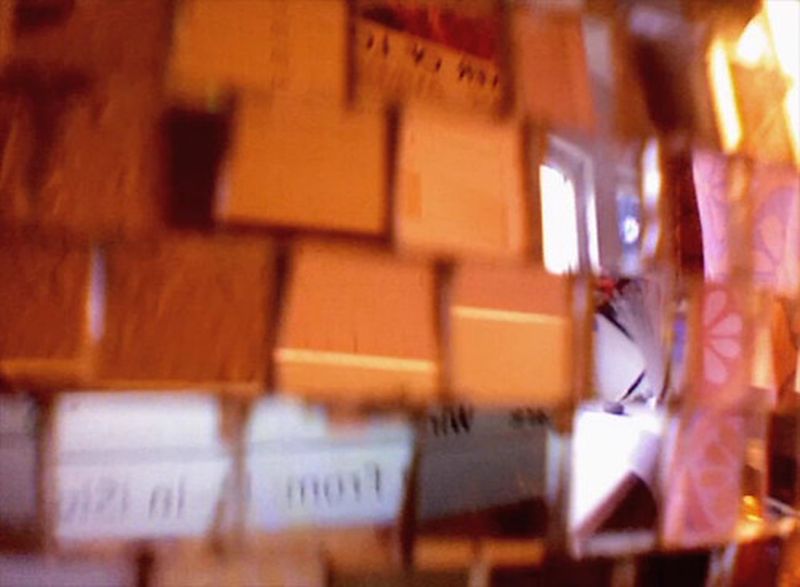
Reproducing pixelation using a disco ball


Pushkin had chosen a lot of content that had a very analogue feel to it. The glitches present represented the types found on VHS tapes and old records rather than compression artifacts or digital errors. She utilised her own Super 8 film footage together with attempting to replicate compression artifacts using analogue techniques.

I tried to replicated [the pixelation effect] using a disco ball and my webcam.

Putting the pixelation effect on the organic pixelation of the disco ball. That’s the sort of thing that, if I was going to take [glitch art] further, that’s the sort of thing I’d be into.

Considering that I had mostly shown her glitch art that had a very digital feel to it (databending, datamoshing etc) I was somewhat surprised by her choice of content. Nonetheless, I’m very pleased that she was able to find a style that she was comfortable working with.

On producing her content Pushkin faced several challenges. As we’ve seen she used analogue methods to produce her footage but she still wanted to make something that could integrate well with the festival and have a digital feel to it.

The first thing that Pushkin did, in order to try and glitch her videos was to “Download stuff wrong”:

The very first thing that I did was downloading stuff wrong. Downloading things […] But then saving it before it was finished in order to see what the results would be

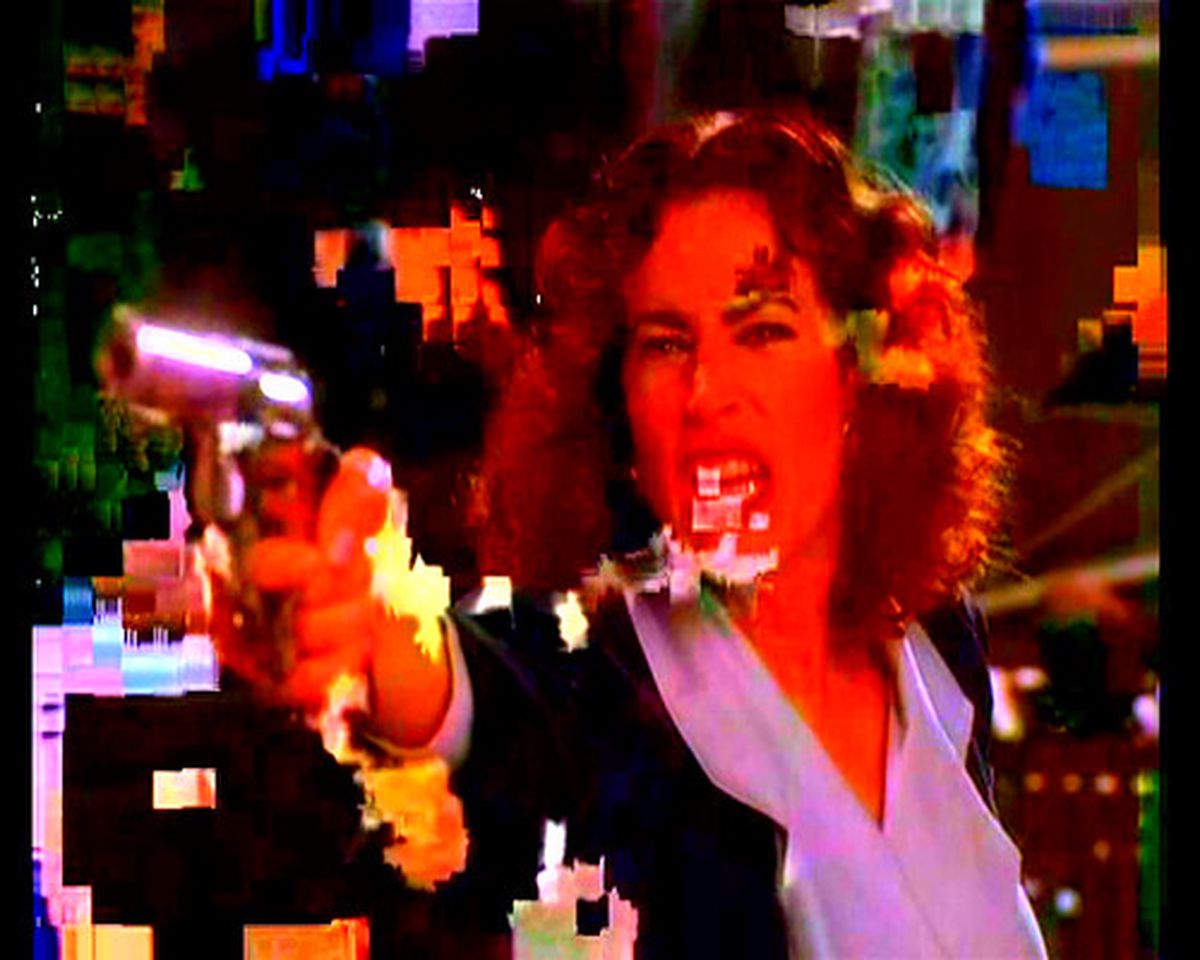
Kate Pushkin at GLI.TC/H

What Pushkin had unknowingly come across was what happens when you remove I-frames from videos, or what is more commonly known as Datamoshing. For Pushkin this was a very much a hit-and-miss operation, with most of her clips being unplayable. To assist her I took some of her content and ran it through the What Glitch? scripts, but it was clear that she was after a more analogue feel.

Below is a sample of some of the content that she produced, together with the audio from her performance:

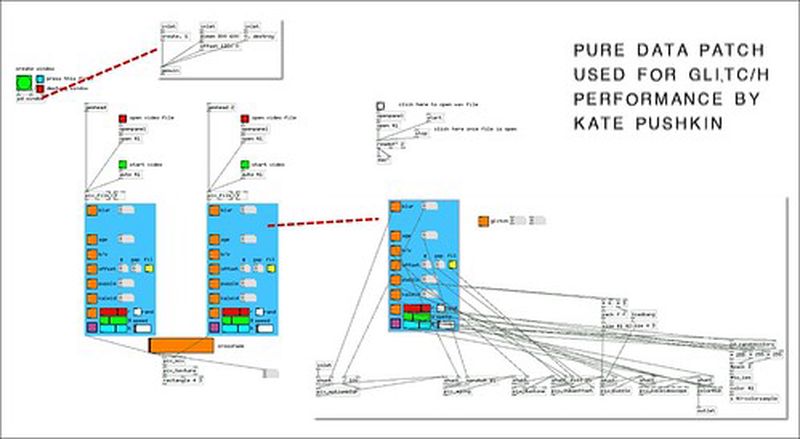
The other challenge came from the software. Pushkin was more akin to using software such as Final Cut Pro to produce videos, but for GLI.TC/H she would be faced with the task of performing live. As a user of Pure Data for nearly all of my performance work I attempted to teach her the basics of this. Although it is a somewhat complicated program, under the right supervision it is very easy to get a video player that has a few basic effects. I gave Pushkin a short tutorial and then later provided her with some abstractions that I use in my video mixer. The resultant patch looked like this:

Kate Pushkin Pure Data Patch
Click to embiggen


As a tool for manipulating videos Pushkin found Pure Data inspiring, but time constraints prevented her from delving further into the software:

I really wanted to be able to make my own patch for my own effect, and I found it quiet frustrating, but at the same time I did give up relatively quickly because it became obvious what is going to possible in the time, given that I’d have to do something other than just make an effect for 20 minutes of entertainment.

Also technical problems sometimes arose that threatened her performance:

I had a lot of trouble with crossfading and my computer. And every time I’ve ever done it except the actual performance my computer crashed when I first faded too much. But I learnt how to get it running again in 35 seconds, so that’s a good lesson for life!

Despite all of this, it all came together on the day of GLI.TC/H. You can watch her whole performance below:

(The other videos from the event are also available online)

I’m really very pleased with her performance. Pushkin is by no means a novice in producing artwork, but to tackle a whole new style of art in a few days and then perform in front of nearly 70 people is quite an achievement.

I wonder, is glitch art (and circuit bending) something that could/should be taught at art institutions?


Notes on Notes on Glitch

Hugh S. Manon and Daniel Temkin recently published a great paper on glitch art called “Notes on Glitch”. It reads more like a collection of thoughts than one concise paper, but it’s still an awesome read.

Glitch Safari (from myself and noteNdo) and Dataface both receive a mention in the gallery, along with other awesome works.

Notes on Notes on Glitch

Out of all of the notes there were a couple of points that stood out to me, which I’d like to add my own thoughts to.

24. At the same time, because glitch artists may optionally “save a copy” before making alterations, there is something disturbingly low-stakes about any particular attempt at glitching. One wishes this were not so, since the appearance of glitch is highly untame. Driven as it is by limitations of all sorts, many of the most agitating examples of Modernist art—works which, in Susan Sontag’s terms, “overstrain” the medium7—would never have existed with an undo button at their creators’ disposal. Indeed the art historian of the future will recognize the rise of unlimited, one-click “undo” as being on par with the most major technological and phenomenological changes in the history of representation.

At GLI.TC/H 2010 Riley Harmon introduced me to the game lose/lose from Zach Gage. In this game destroying an alien results in a random file being deleted from your computer.

lose/lose from zach gage on Vimeo.

It’s this kind of risk that I feel is missing from the process of making glitch art. If a glitch artist only had one copy of an image/file to work from would they glitch it? If something of great importance or value was at risk would it result in “better” artwork? It’s exciting and scary to think about…

My first proper discovery of glitch art was the result of such a risk. In 2008 I was attempting to photograph AAS:

Insectoid recording session

My intention with this shot was to document the day accurately but instead I got a glitched photograph (the error occurred within the camera). Luckily, I received a positive response from AAS and others, so I decided to keep it. Had the photo been of more importance - for example, a picture of a wedding - then greater emphasis would be placed on producing clear, error-free photographs, and there would be greater disappointment and distress if any errors did occur.

So, intention comes into it quite a bit…

49. Glitch has embraced the open-source mentality of sharing knowledge, which is rooted in the DIY tradition of punk. When a glitch artist refuses to reveal how work was made, it not only raises a question of whether it is “really” glitch—as opposed to a Photoshopped simulation—but also whether the artist is selfishly hiding their technique in a refusal to contribute to the collective knowledge. This all reflects an anxiety over authenticity and the underlying politics of glitch—something not strictly defined, but which favors cooperation and community over the proprietary motivations of any individual auteur.

My practice is deeply rooted in open source software and collaborative practices. As such I always endeavour to share the source-code to all of my work. This doesn’t always happen immediately, but I eventually often write a tutorial, explain the process behind the artwork, or package the code that created the artwork into something reusable. As a result, I don’t look favourably upon (glitch) artists that are very secretive about their methods.

With that said, I do not want to become a help-desk for those wanting to do glitch art, which unfortunately has happened a lot in the past. Circuit bending and glitch art are very much about discovery, and I feel that holding someone’s hand and taking them through the A-Z of glitch wont result in an artist discovering their own style or reasons for doing glitch art. Tutorials that I write on my site aren’t meant to be a definitive guide on how to glitch, more of a starting point for the artist’s own personal discovery.

There’s more I could say about many of the other notes in that paper, but I’ll save that for discussions over dinner ;-)


Exhibition Catalogues!

After a few hiccups at the post office the catalogues from some exhibitions and festivals where my work was shown have arrived!

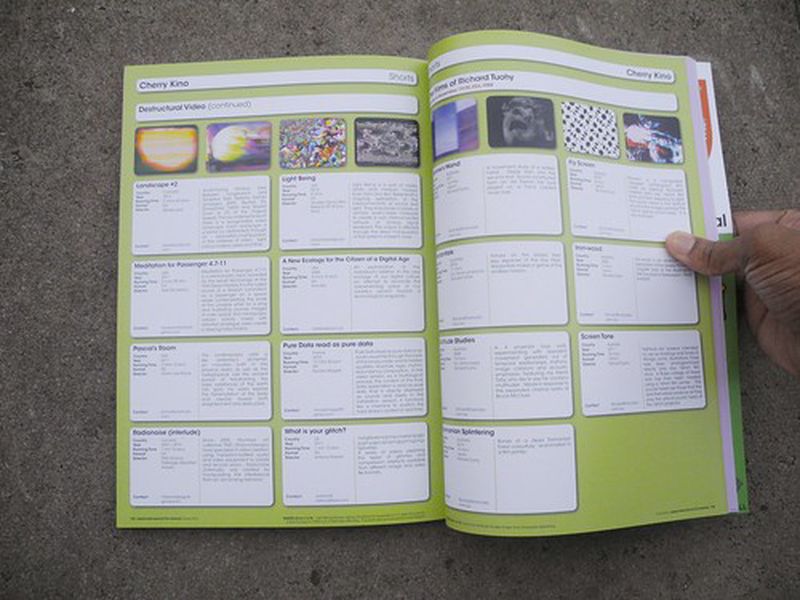
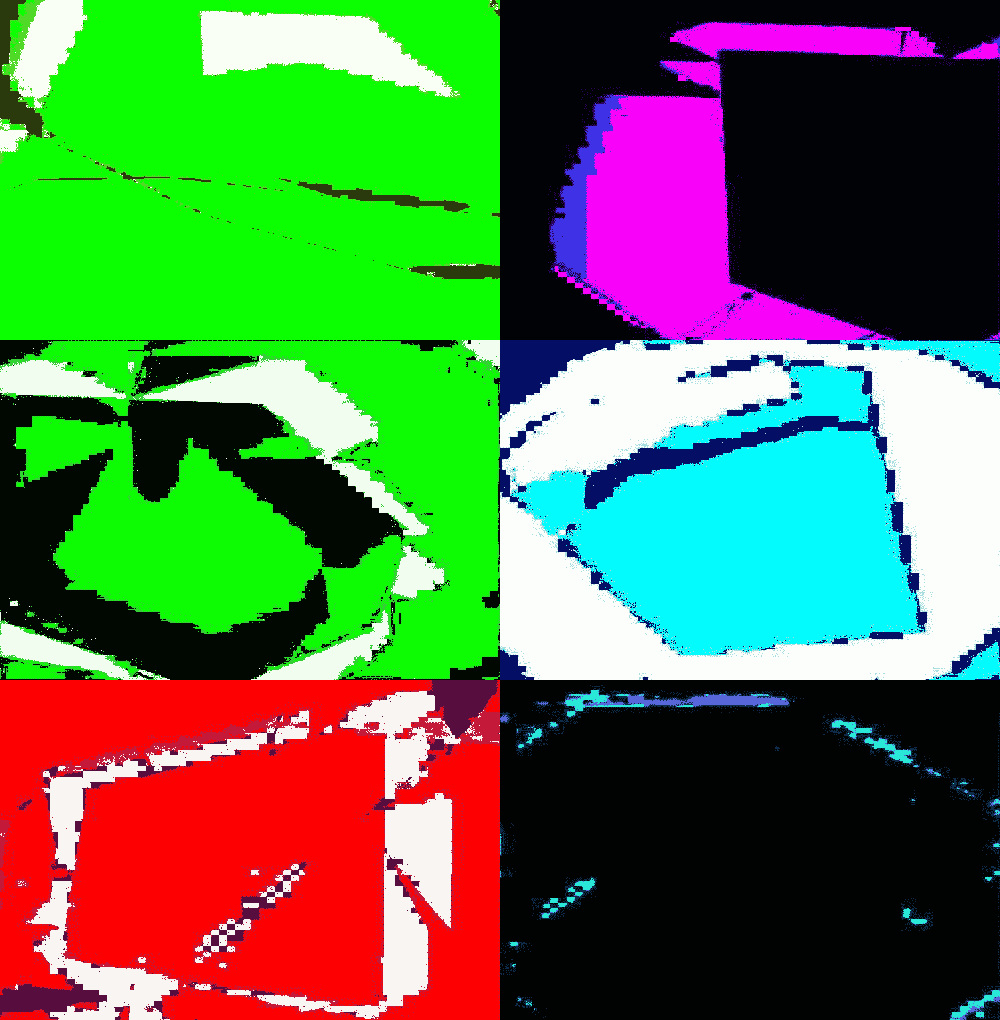
What is your glitch? 1bitgifavibmpbmpcmykbmprgbjpgmpgpcxpixpngppmsgisvgtgawebp was shown alongside a host of really awesome glitch videos at Leeds International Film Festival last November.

Leeds International Film Festival programme

Leeds International Film Festival programme
I’m on the bottom-right, first page


Thanks to John McAndrew for organising the screening and for sending me to catalogue.

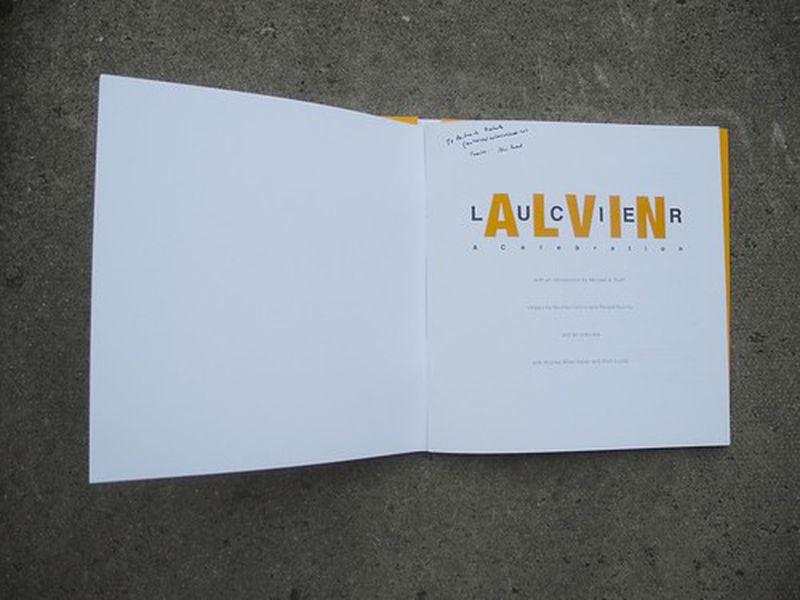
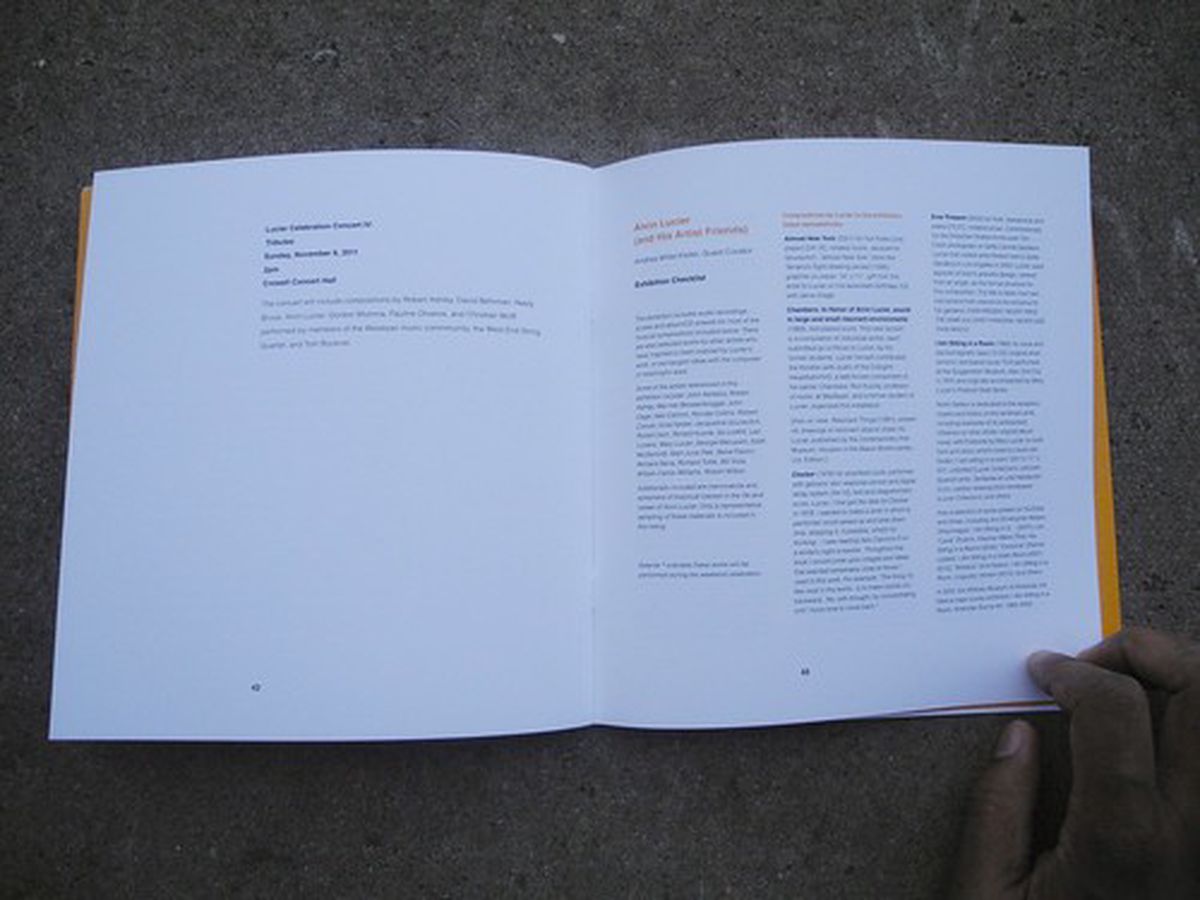
The second catalogue comes all the way from Connecticut! I Am Sitting in a Room was shown at a celebration of Alvin Lucier’s life and work last Novemeber (it was a busy month):

Alvin Lucier: A Celebration programme
OMFG an autograph!


Alvin Lucier: A Celebration programme

Thanks to Andrea Miller-Keller at Wesleyan University for curating that part of the show and to Alvin Lucier for signing the booklet!


2012