Week of Patching Day 2
July 6th - 12th was a self-directed Week of Patching, initiated by Paloma Kop.

Week of Patching is a playful invitation to spend a week, in parallel with other people across the internet, engaging with a patching-based practice.
[…]
Each day, create a patch and then make a recording of its output.
At the end of the week, take pieces of all of those recordings and edit them together into a single composition. (It doesn’t have to be long; for example, you could take 30 seconds of each patch in series to create a 3.5 minute composition.)
From my earliest days of doing creative coding I have been really interested in patching environments, specifically Pure Data. I like how I can trace the flow of data by simply looking at patch cable, even if the actual patch ends up being a mess!
Since 2023 I’ve also been into hardware video synthesis via LZX/Syntonie Eurorack modules, which I really love for the same reason, but also because, unlike software, you can really just plug something in and see what happens. As long as you’re not literally giving something too much electricity it’s pretty hard to generate no output.
I go through phases of being really into patching and then not touching it for weeks or months. Seeing the announcement of Week of Patching I was excited to get the motivation to do it again. Alas, life always finds a way to interfere with plans, so in the end I only did day #2.
The tl;dr is that I wish I dedicated more time to experimenting and not try and rush something to meet a deadline. I should also try and decide on a recording setup ahead of time. And finally, I also think the heatwave massively affected my ability to think and deal with technical issues.
Cardinal (VCV Rack), TidalCycles, monome grid
Creating the Cardinal patch was initially quite challenging. I had big ideas but hadn’t patched in a month or two so spent most of time was spent remembering what modules do. Eventually I settled on a very simple but effective ambient pad sound with some modulation.
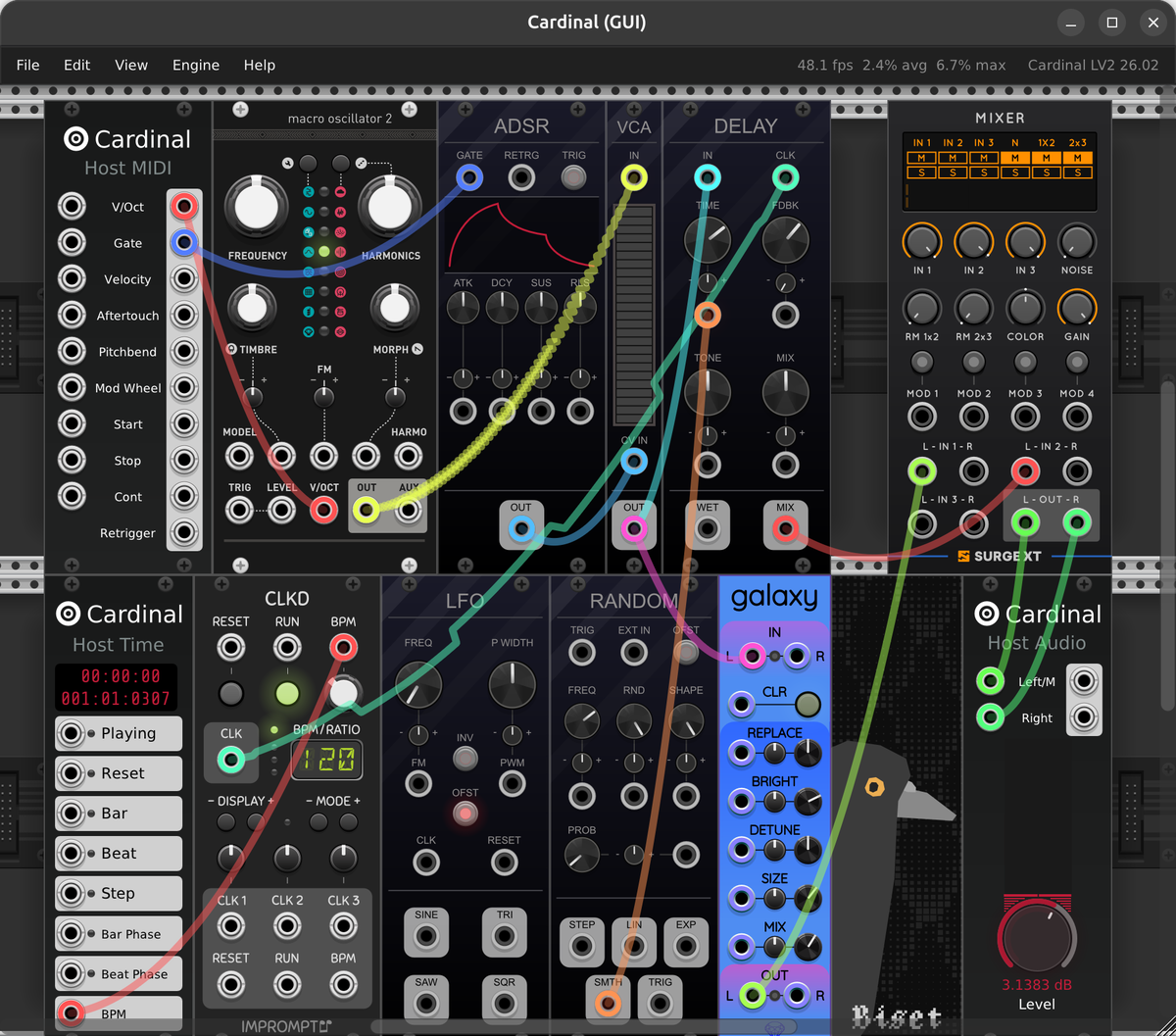
To create melody I had a couple of options. In most situations I would just use TidalCycles to generate a melody and send midi to Cardinal, but in the spirit of experimentation and using things I already own I opted to use the monome grid. Early in 2026 they released iii, which basically turns the grid into a standalone instrument. I loaded it with the wake script (a standalone variation of awake) which let me play some nice generative melodies.
Next I wanted to add some percussion and granular sounds using TidalCycles. On paper this was very simple but in trying to keep everything in sync I resurfaced a bug that I discovered in 2020. TidalCycles can use AbletonLink for its clock and bpm syncing. Carla is a plugin host (think virtual pedalboard) which can also use AbletonLink. What this means is that any vsts/lv2s that you load in Carla that use clock/bpm will now all be in sync with TidalCycles. Great!
I used Carla to host the Cardinal lv2 plugin. In Cardinal I used delay modules which used the host’s (Carla) bpm. So far no issues. I then wanted to send the clock, bpm and transport information to the monome grid so that it’s melody (generated via wake) would be in sync with everything else. x42 had made a very useful plugin for sending clock, transport, and bpm over midi called mclk.
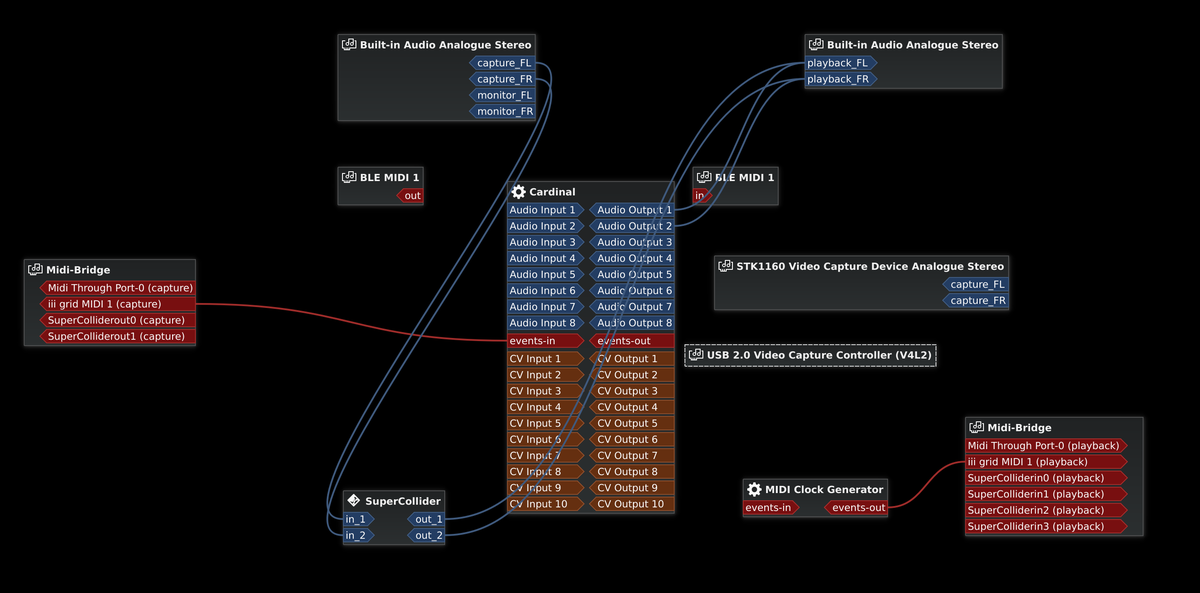
There is, however, one massive catch: The moment you enable “Use Ableton Link” in Carla the mclk plugin stops working. Or maybe it’s Carla that stops working. Either way, the result is that the clock/bpm doesn’t get sent to the monome grid. When I reported this “bug” in 2020 a fix for mclk was proposed but ultimately not implemented, with x42 saying that it’s an issue with Carla. Yay. With time running out and the heatwave reducing my patience for tech issues to zero I just ditched the idea of integrating TidalCycles.
Video patching
I similarly had quite big ambitions for creating visuals with the video synth which failed to materialise. What I wanted to do was control my video synth modules with either the monome grid or Cardinal. I would have achieved this by using the Univer Inter module to convert usb midi to CV, and then the SCA-5 Voltage Scaler to scale those voltages down to 0-1v.
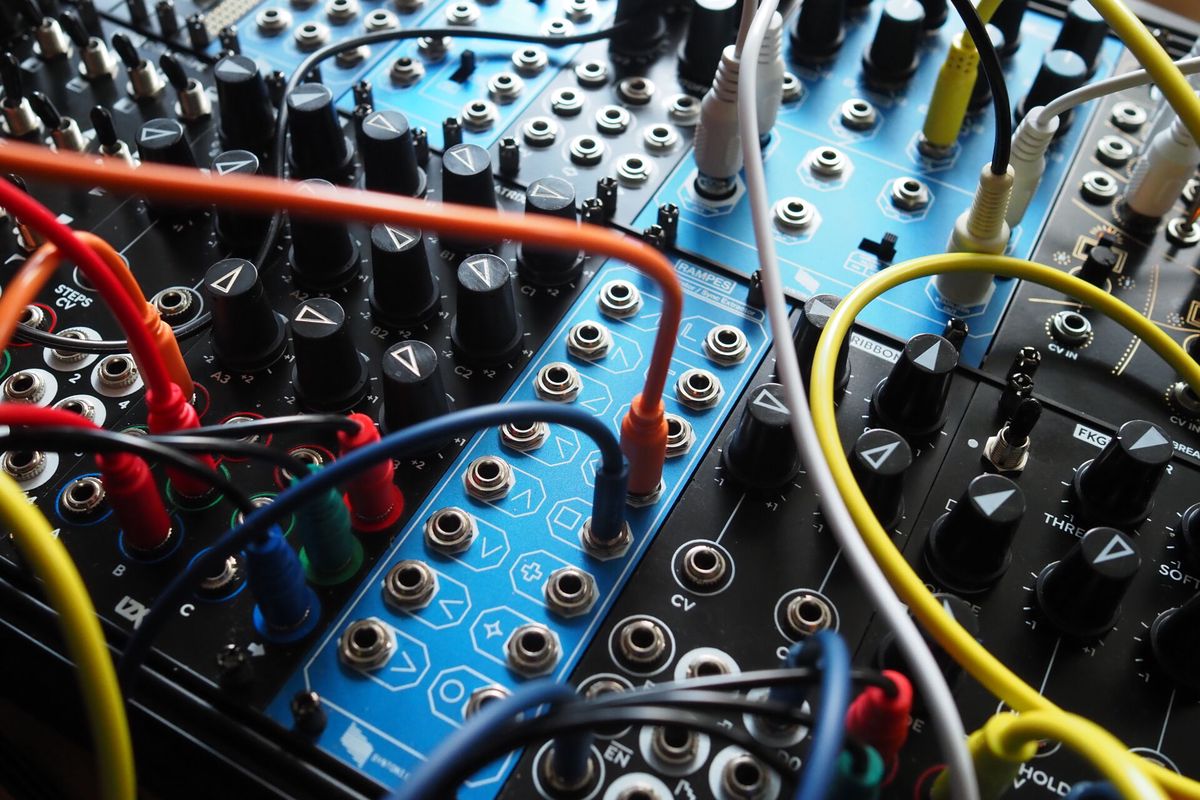
I didn’t want to do audio-reactive visuals, but instead have the visuals be closely tied to the audio. In reality, like the audio, I rushed and put a bit too much pressure on myself to create something interesting. A thing that I have learnt about my creative process is that some of my best or most fun work comes out of free experimentation. The moment that I am faced with any deadlines and expectations I essentially freeze up.
I remember reading an interview with Sarah GHP where she talks about her process and has a similar outlook:
So have a goal, have a bunch of happy accidents, and then try to understand things so you can recreate the accidents. You will have more accidents and grow your list of things to understand.
[…]
So, I guess my advice is:
- Look for your starting point. What do you actually like? What do you like that isn’t what everyone else likes? Being a bit of a hater (in your head!) is also a good way to find a starting point. Don’t be mean, but it is useful to know what you do not want to do, especially if you aren’t sure what you want to do.
- Go out and fuck up a lot.
- Find a balance between exploration and deliberation. Don’t try to save everything because you will drive yourself mad.
- Focus on understanding and avenues will open up around that.
The video patch I created was still really nice and gave me room to play, but there’s definitely some playfulness missing.
Patching it together
I haven’t done many at-home recordings of synth jams but this seemed like a good opportunity to do so even if the conditions were not ideal. An issue that I, and many others living in small apartments, faced is I don’t have a dedicated space where I can leave all of my equipment permanently set up. I have to wait for any shared space to become available and then reconstruct my setup each time. It’s inconvenient and takes time away from creating.
Eventually I found a spot on the dining table to film. I spent more time than I should have arranging the synths and laptop so that everything was in shot.
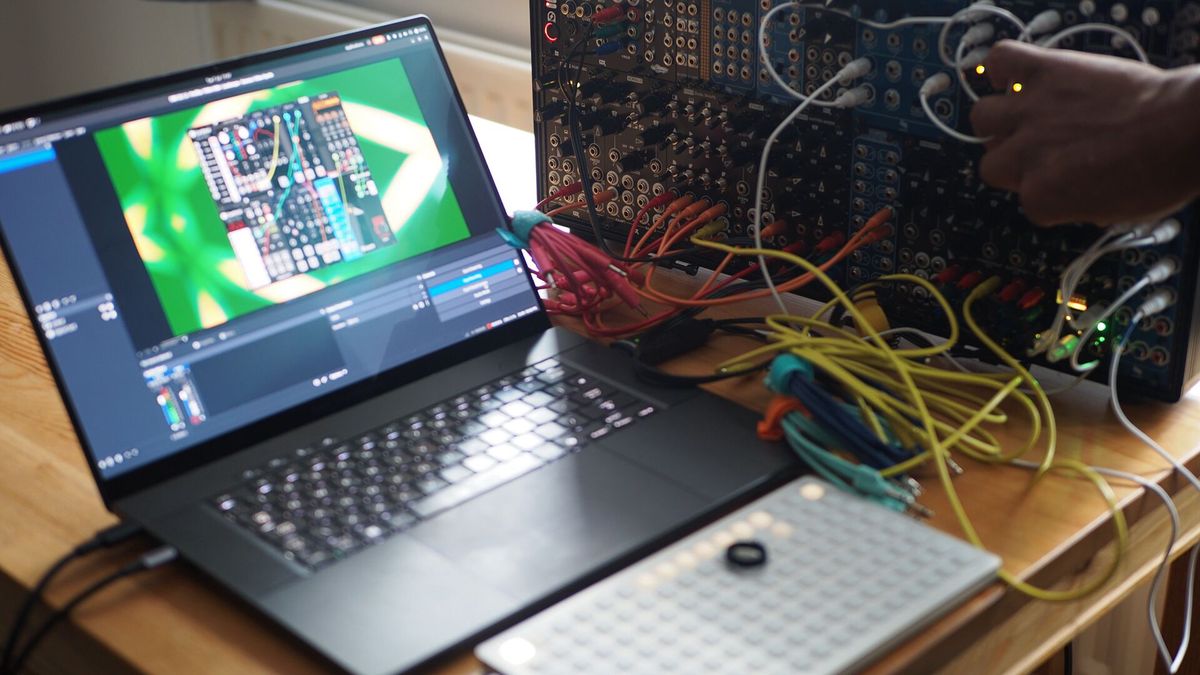
The layout meant that using the video synth was actually kinda difficult. I couldn’t see all of the modules and had to reach over quite far to turn some knobs.
After about 30 minutes of arranging I settled on a setup, sat down and hit record! Enjoy 8ish minutes of me pressing buttons and twiddling knobs.
I should do this more often
The result was quite pleasant though not musically or visually very interesting. In an ideal world this would have served as day 0 of the Week of Patching, a day to make sure all of the hardware and software was working as expected and create an environment that I could comfortably create in. But, as the saying goes, life… finds a way to mess up your plans!
Hopefully this will serve as a reminder to me to do more experiments so that I’m not caught off guard for the next Week of Patching. Thanks to Paloma Kop for starting this initiative, it was still a fun learning experience!